Wilmington in New Hanover County, North Carolina — The American South (South Atlantic)
Wilmington National Cemetery
Photographed by Cosmos Mariner, May 15, 2023
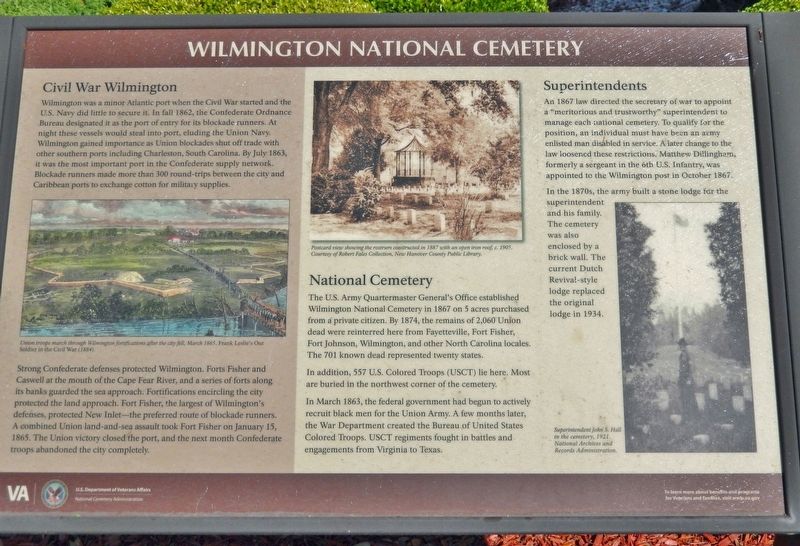
1. Wilmington National Cemetery Marker
Civil War Wilmington
Wilmington was a minor Atlantic port when the Civil War started and the U.S. Navy did little to secure it. In fall 1862, the Confederate Ordnance Bureau designated it as the port of entry for its blockade runners. At night these vessels would steal into port, eluding the Union Navy. Wilmington gained importance as Union blockades shut off trade with other southern ports including Charleston, South Carolina. By July 1863, it was the most important port in the Confederate supply network. Blockade runners made more than 300 round-trips between the city and Caribbean ports to exchange cotton for military supplies.
Strong Confederate defenses protected Wilmington. Forts Fisher and Caswell at the mouth of the Cape Fear River, and a series of forts along its banks guarded the sea approach. Fortifications encircling the city protected the land approach. Fort Fisher, the largest of Wilmington's defenses, protected New Inlet — the preferred route of blockade runners. A combined Union land-and-sea assault took Fort Fisher on January 15, 1865. The Union victory closed the port, and the next month Confederate troops
this page online
National Cemetery
The U.S. Army Quartermaster General's Office established Wilmington National Cemetery in 1867 on 5 acres purchased from a private citizen. By 1874, the remains of 2,060 Union dead were reinterred here from Fayetteville, Fort Fisher, Fort Johnson, Wilmington, and other North Carolina locales. The 701 known dead represented twenty states.
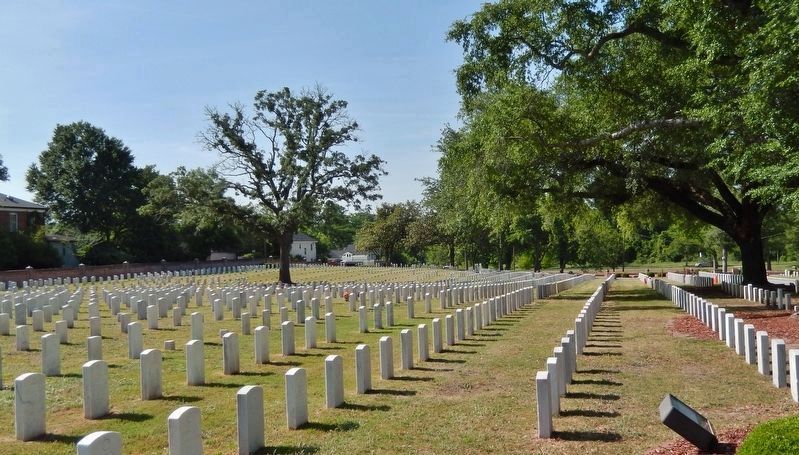
In addition, 557 U.S. Colored Troops (USCT) lie here. Most are buried in the northwest corner of the cemetery.
In March 1863, the federal government had begun to actively recruit black men for the Union Army. A few months later, the War Department created the Bureau of United States Colored Troops. USCT regiments fought in battles and engagements from Virginia to Texas.
Superintendents
An 1867 law directed the secretary of war to appoint a "meritorious and trustworthy" superintendent to manage each national cemetery. To qualify for the position, an individual must have been an army enlisted man disabled in service. A later change to the law loosened these restrictions. Matthew Dillingham, formerly a sergeant in the 6th U.S. Infantry, was appointed to the
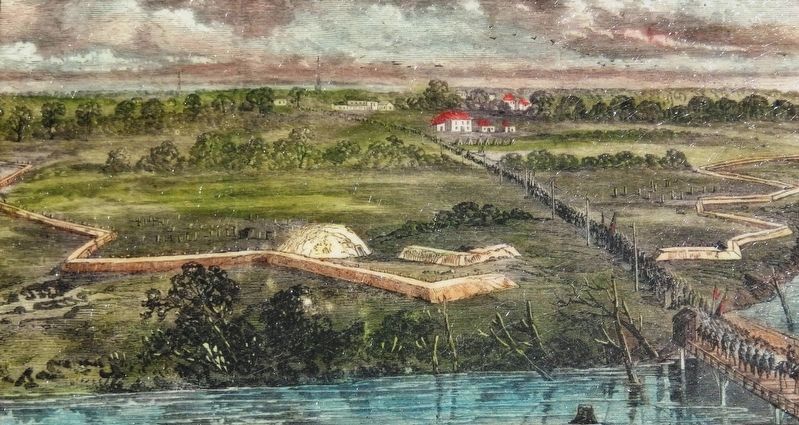
Frank Leslie's Our Soldier in the Civil War (1884)
2. Marker detail: Union Troops in Wilmington, March 1865
Union troops march through Wilmington fortifications after the city fell, March 1865.
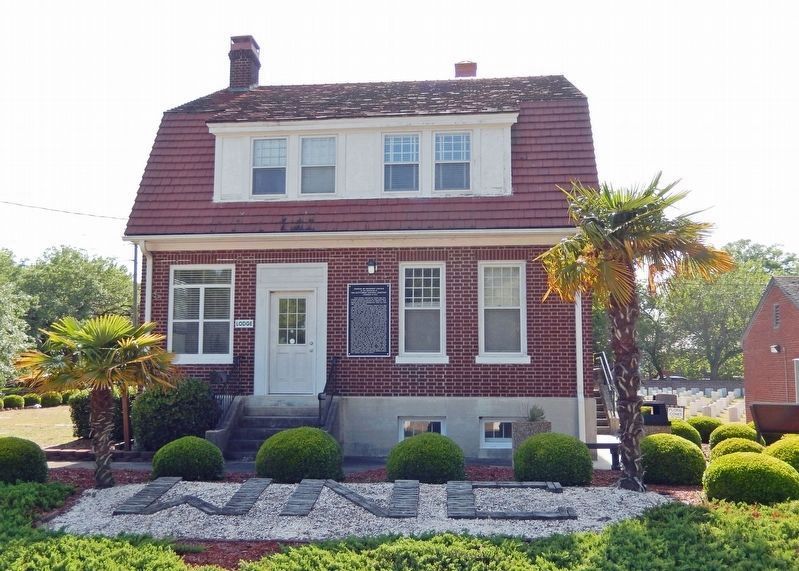
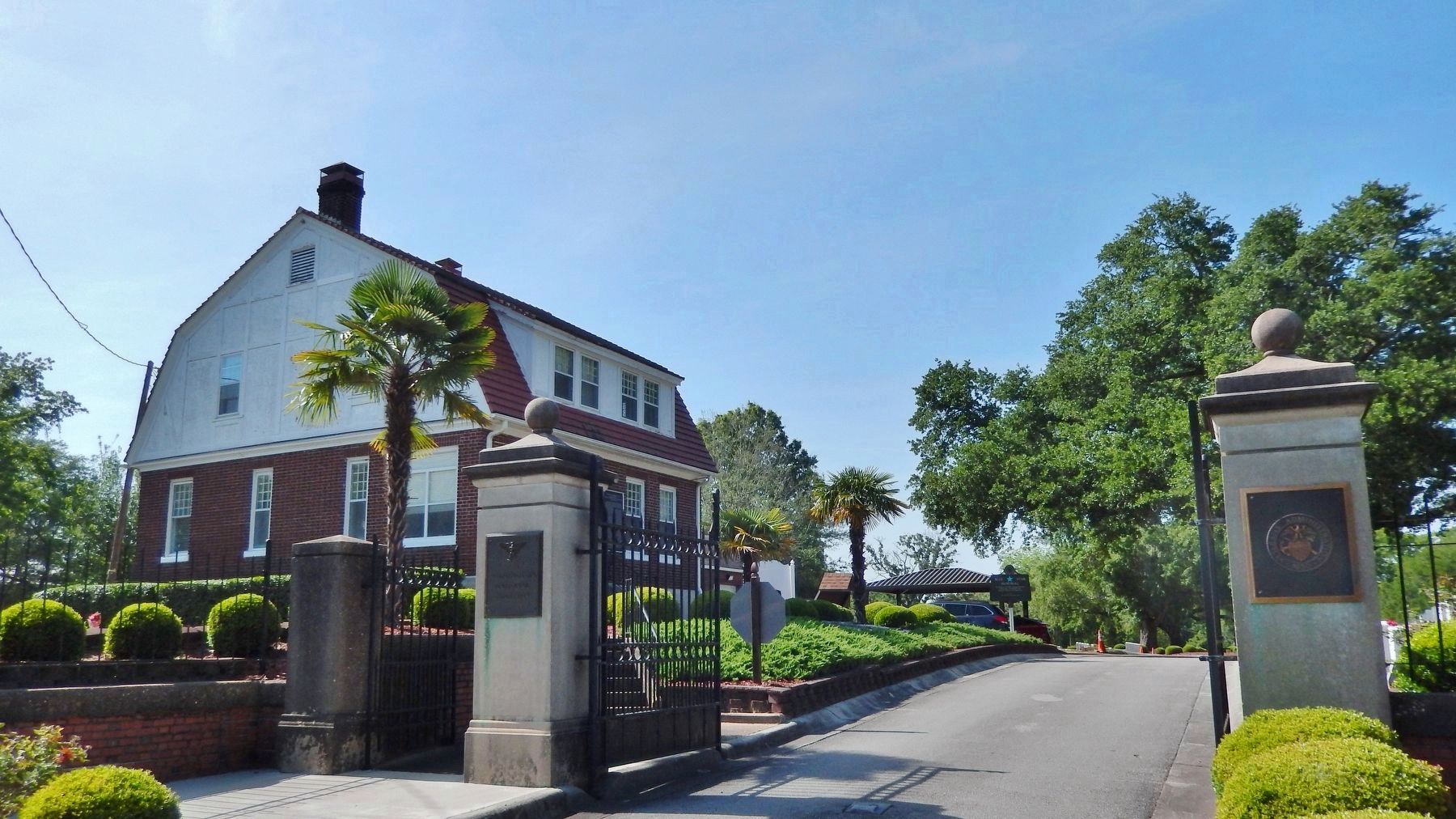
In the 1870s, the army built a stone lodge for the superintendent and his family. The cemetery was also enclosed by a brick wall. The current Dutch Revival-style lodge replaced the original lodge in 1934.
[other photo captions]
• Postcard view showing the rostrum constructed in 1887 with an open iron roof c. 1905.
• Superintendent John S. Hall in the cemetery, 1921.
Erected by U.S. Department of Veterans Affairs and National Cemetery Administration.
Topics and series. This historical marker is listed in these topic lists: African Americans • Cemeteries & Burial Sites • War, US Civil • Waterways & Vessels. In addition, it is included in the National Cemeteries series list. A significant historical year for this entry is 1867.
Location. 34° 14.27′ N, 77° 55.365′ W. Marker is in Wilmington, North Carolina, in New Hanover County. It can be reached from Market Street (Business U.S. 17) just east of North 20th Street, on the left when traveling east. The marker is located on the Wilmington National Cemetery grounds, near the northeast corner of the cemetery lodge building. Touch for map. Marker
Photographed by Cosmos Mariner, May 15, 2023
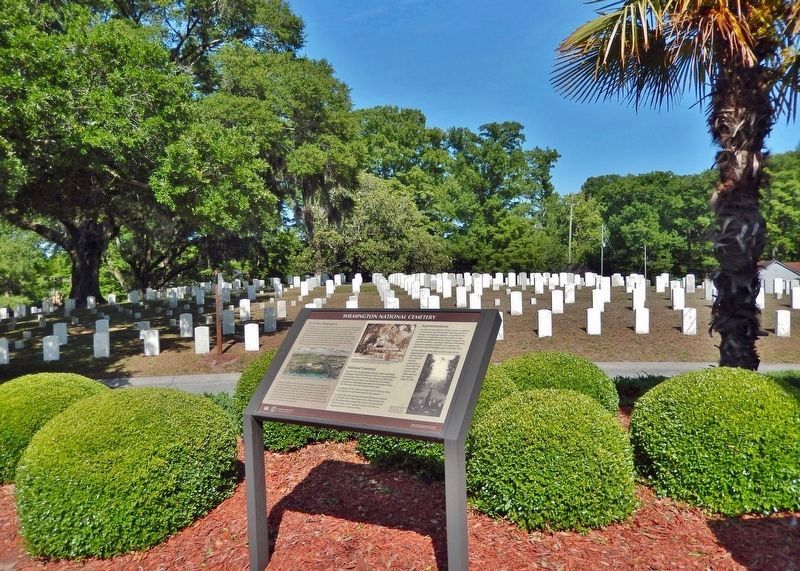
3. Wilmington National Cemetery Marker

Regionally, this marker is in the Coastal Plain and on the Cape Fear Coast. It is also in the American South, specifically in the Upper South, in the Tidewater, and on the Eastern Seaboard. Globally, it is in the North Atlantic Region, North America, the Western Hemisphere, the Western World, and the Anglosphere. Historically, it finds itself in what was once the territory of the Mississippian Culture, one of the original Thirteen Colonies, one of the Confederate States of America, and the Antebellum South.
Other nearby markers. At least 8 other markers are within walking distance of this marker: A National Cemetery System (here, next to this marker); Address by President Lincoln (a few steps from this marker); United States Colored Troops (within shouting distance of this marker); Struthers-Futrelle House (about 300 feet away, measured in a direct line); Hinton House (about 300 feet away); Collins-Jones House (about 300 feet away); Hazlehurst House (about 400 feet away); Blomme House (about 400
Photographed by Cosmos Mariner, May 15, 2023
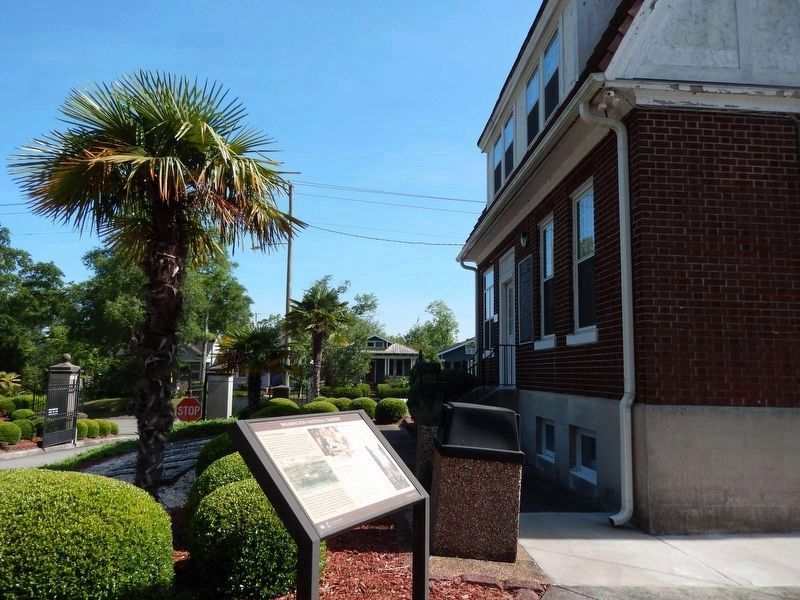
4. Wilmington National Cemetery Marker
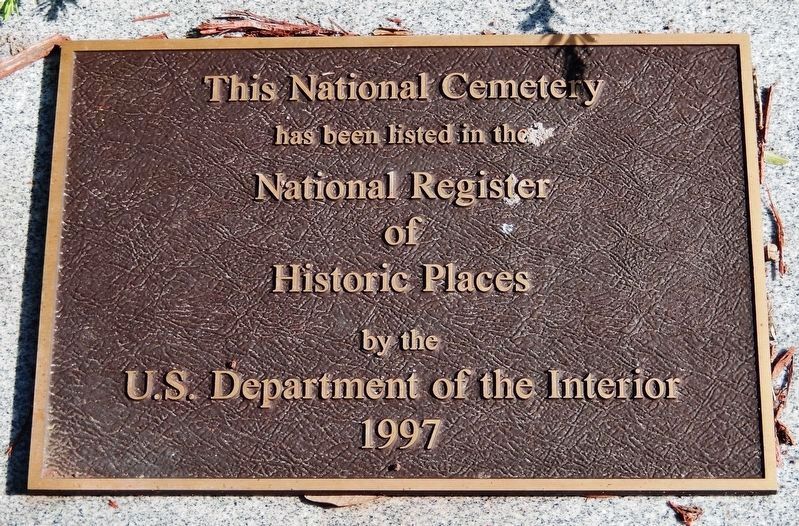
Regarding Wilmington National Cemetery. National Register of Historic Places #97000021.
Related markers. Click here for a list of markers that are related to this marker. Wilmington National Cemetery
Also see . . .
1. Wilmington National Cemetery. Wikipedia entry:
Most of the original interments were remains moved from Wilmington City Cemetery and nearby forts, such as Fort Fisher. By 1870 there were over 2,000 interments. Administered by the United States Department of Veterans Affairs, it encompasses 5.1 acres, and as of the end of 2005, had over 6,000 interred remains.(Submitted on May 21, 2023, by Cosmos Mariner of Cape Canaveral, Florida.)
2. Wilmington National Cemetery. National Cemetery Administration website entry:
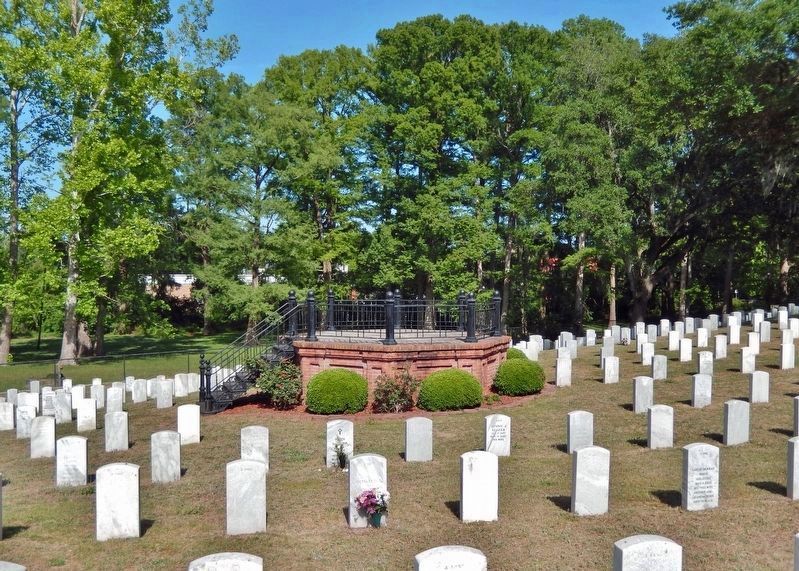
Also buried in Wilmington National Cemetery are the remains of a group of Puerto Rican laborers who fell victim to the great influenza epidemic of 1918. On Nov. 14, 1918, the Wilmington Morning Star reported an outbreak of influenza on a ship docked in the Cape Fear River. The government vessel, City of Savannah,(Submitted on May 21, 2023, by Cosmos Mariner of Cape Canaveral, Florida.)had arrived two days earlier carrying 1,900 Puerto Ricans to Fayetteville to aid in the construction of Camp Bragg. By the time the ship left Wilmington harbor, 28 of the Puerto Rican laborers had been buried at the national cemetery.Photographed by Cosmos Mariner, May 15, 20235. 1887 Cemetery Rostrum(looking east from near marker)
Photographed by Cosmos Mariner, May 15, 2023
6. Wilmington National Cemetery Superintendent’s Lodge
Photographed by Cosmos Mariner, May 15, 2023
7. National Register of Historic Places Marker
has been listed in the
National Register
of
Historic Places
by the
U.S. Department of the Interior
1997
Photographed by Cosmos Mariner, May 15, 2023
8. Wilmington National Cemetery (northwest corner)
557 U.S. Colored Troops (USCT) lie here. Most are buried in the northwest corner of the cemetery.
Photographed by Cosmos Mariner, May 15, 2023
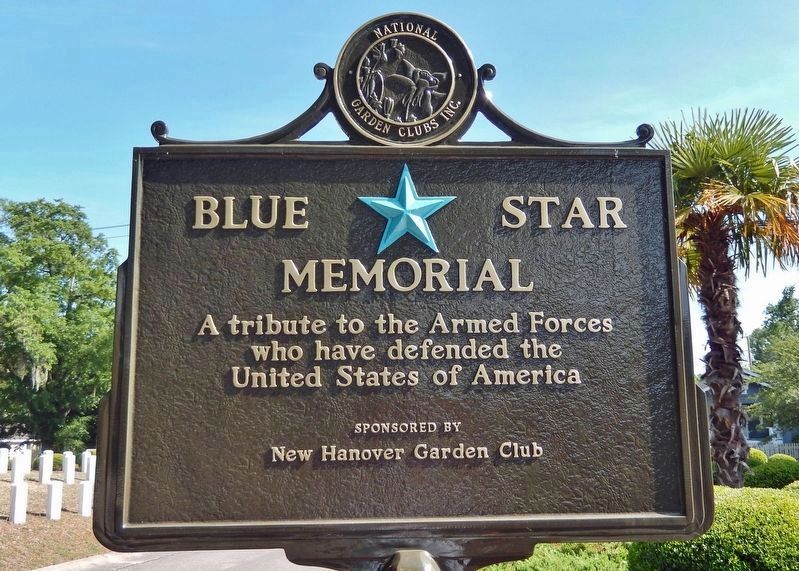
9. Blue Star Memorial Marker
A tribute to the Armed Forces
who have defended the
United States of America
Sponsored by
New Hanover Garden Club
Photographed by Cosmos Mariner, May 15, 2023
10. Wilmington National Cemetery Entrance & Superintendent’s Lodge
Credits. This page was last revised on June 25, 2024. It was originally submitted on May 21, 2023, by Cosmos Mariner of Cape Canaveral, Florida. This page has been viewed 456 times since then and 59 times this year. Photos: 1, 2, 3, 4, 5, 6, 7, 8, 9, 10. submitted on May 21, 2023, by Cosmos Mariner of Cape Canaveral, Florida.
