
Durham in Strafford County, New Hampshire — The American Northeast (New England)
Oyster River Massacre
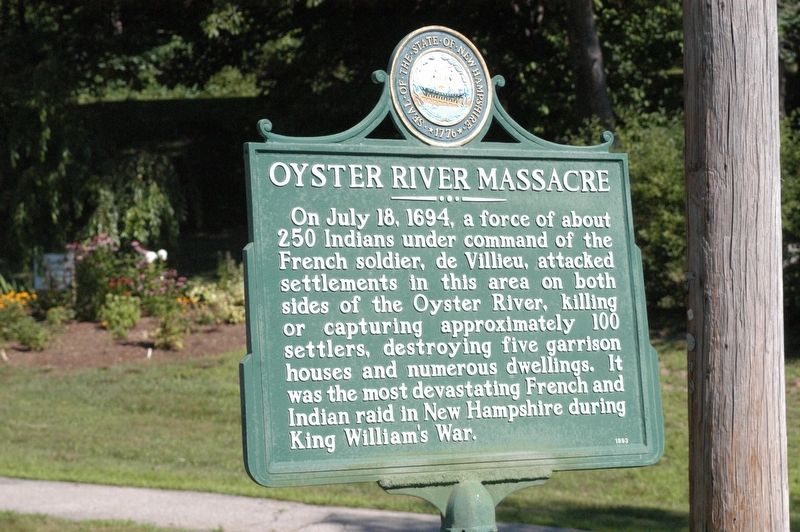
Photographed by James R. Murray, August 3, 2016
1. Oyster River Massacre Marker
Erected 1993 by New Hampshire Division of Historical Resources. (Marker Number 050.)
Topics. This historical marker is listed in these topic lists: Colonial Era • Indigenous Peoples and Communities • Wars, US Indian. A significant historical date for this entry is July 18, 1694.
Location. Marker has been permanently removed. It was located near 43° 7.868′ N, 70° 55.111′ W. Marker was in Durham, New Hampshire, in Strafford County. It was on Newmarket Road (New Hampshire Route 108), on the right when traveling west. Touch for map. Marker was in this post office area: Durham NH 03824, United States of America.
We have been informed that this marker is no longer there and will not be replaced. This page is an archival view of what was.
Regionally, this marker
this page online

Other nearby markers. At least 8 other markers are within 4 miles of this location, measured as the crow flies: Terminal of Coos Road (within shouting distance of this marker); Major General John Sullivan (about 300 feet away, measured in a direct line); Major General John Sullivan Memorial (about 400 feet away); Lafayette's Tour (about 800 feet away); Durham New Hampshire War Memorial Marker (approx. 0.4 miles away); Packer's Falls (approx. 1.2 miles away); The Alexander Scammell Bridge over the Bellamy River (approx. 3.3 miles away); Cpl. Robert F. White Memorial (approx. 3.4 miles away). Touch for a list and map of all markers in Durham.
More about this marker. Marker was on the right heading westerly, just over the bridge by the Oyster River.
Also see . . .
1. Raid on Oyster River.
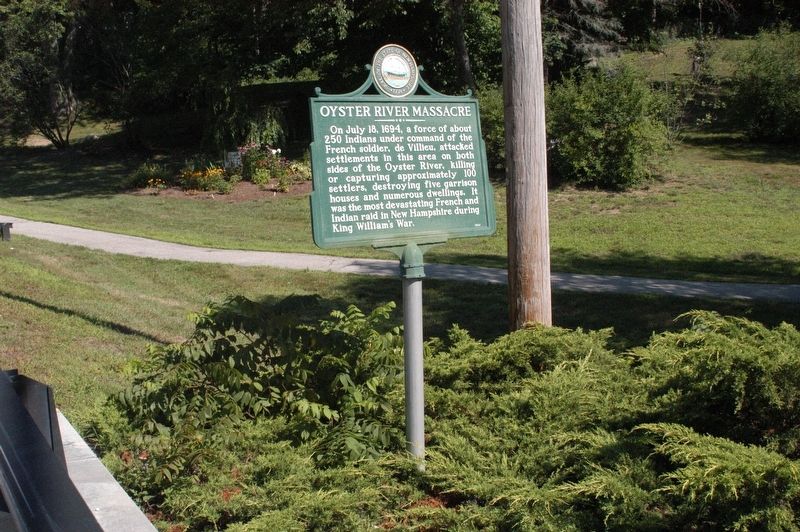
Photographed by James R. Murray, August 3, 2016
2. Oyster River Massacre Marker
2. How the removal of a Durham historical marker sparked debate about who gets to write history. NHPR website entry:
The marker was removed by the state in 2021 after a state commission deemed the language needed a revision. (Submitted on May 10, 2024, by Mark Hilton of Montgomery, Alabama.)
Credits. This page was last revised on May 14, 2025. It was originally submitted on August 3, 2016, by James R. Murray of Elkton, Florida. This page has been viewed 2,354 times since then and 109 times this year. Last updated on March 12, 2024, by Kevin Klasman of Nashua, New Hampshire. Photos: 1, 2. submitted on August 3, 2016, by James R. Murray of Elkton, Florida. • Devry Becker Jones was the editor who published this page.
