Jackson in Jackson County, Ohio — The American Midwest (Great Lakes)
The Scioto Salt Licks
⎯⎯⎯
The Scioto Salt Works
Photographed by William Fischer, Jr., August 15, 2009
1. The Scioto Salt Licks Marker Side
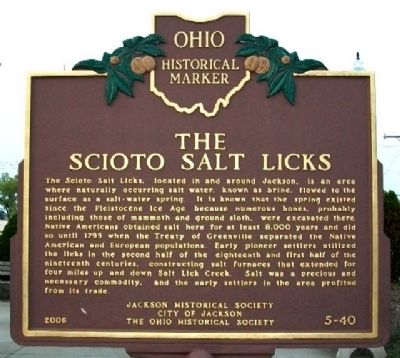
Scioto Salt Licks. The Scioto Salts Licks, located in and around Jackson, is an area where naturally occurring salt water, known as brine, flowed to the surface as a salt-water spring. It is known that the spring existed since the Pleistocene Ice Age because numerous bones, probably including those of mammoth and ground sloth, were excavated there. Native Americans obtained salt here for at least 8,000 years and did so until 1795 when the Treaty of Greenville separated the Native American and European populations. Early pioneer settlers utilized the licks in the second half of the eighteenth and first half of the nineteenth centuries, constructing salt furnaces that extended for four miles up and down Salt Lick Creek. Salt was a precious and necessary commodity, and the early settlers in the area profited from its trade.
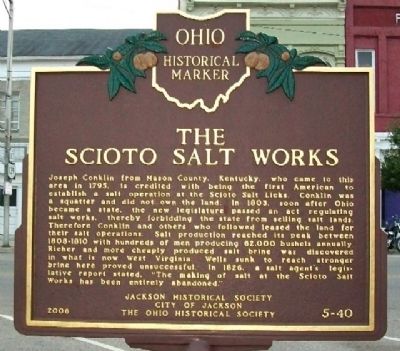
The Scioto Salt Works. Joseph Conklin from Mason County, Kentucky, who came to this area in 1795, is credited with being the first American to establish a salt operation at the Scioto Salt Licks. Conklin was a squatter and did not own the land. In 1803, soon after Ohio became a state, the new legislature
this page online
Erected 2006 by Jackson Historical Society, City of Jackson, and The Ohio Historical Society. (Marker Number 5-40.)
Topics and series. This historical marker is listed in these topic lists: Government & Politics • Indigenous Peoples and Communities • Industry & Commerce • Natural Features • Natural Resources • Political Subdivisions • Settlements & Settlers • Wars, US Indian. In addition, it is included in the Ohio Historical Society / The Ohio History Connection series list. A significant historical year for this entry is 1795.
Location. 39° 3.159′ N, 82° 38.254′ W.
Photographed by William Fischer, Jr., August 15, 2009
2. The Scioto Salt Licks Marker Side

Regionally, this marker is in Southern Ohio Hill Country. It is also in the American Midwest, in Appalachia, and specifically in Northern Appalachia. Globally, it is in North America, the Western Hemisphere, the Western World, and the Anglosphere. Historically, it finds itself in what was once the Haudenosaunee (Iroquois) Confederacy, the territory of the Mississippian Culture, and the Northwest Territory.
Other nearby markers. At least 8 other markers are within walking distance of this marker: Jackson (a few steps from this marker); Commercial Apple Orchards in Jackson County / The Jackson County Apple Festival (a few steps from this marker); James A. Rhodes (within shouting distance of this marker); Jackson County Veterans Flagpole
Photographed by William Fischer, Jr., August 15, 2009
3. The Scioto Salt Licks Marker
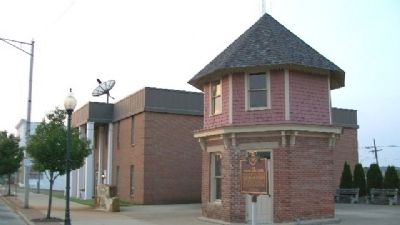
The Round House Museum is behind the marker.
Also see . . . Scioto Salt Reservation. Excerpt:
The reservation was in the survey called the Congress Lands East of Scioto River in present-day Jackson County, Ohio. It consisted of eight sections of township 6, range 18, four sections of township 6, range 19, sixteen sections of township 7, range 18, and eight sections of township 7, range 19. 39°02′53″N 82°38′02″W.(Submitted on April 27, 2025, by J.T. Lambrou of New Boston, Michigan.)
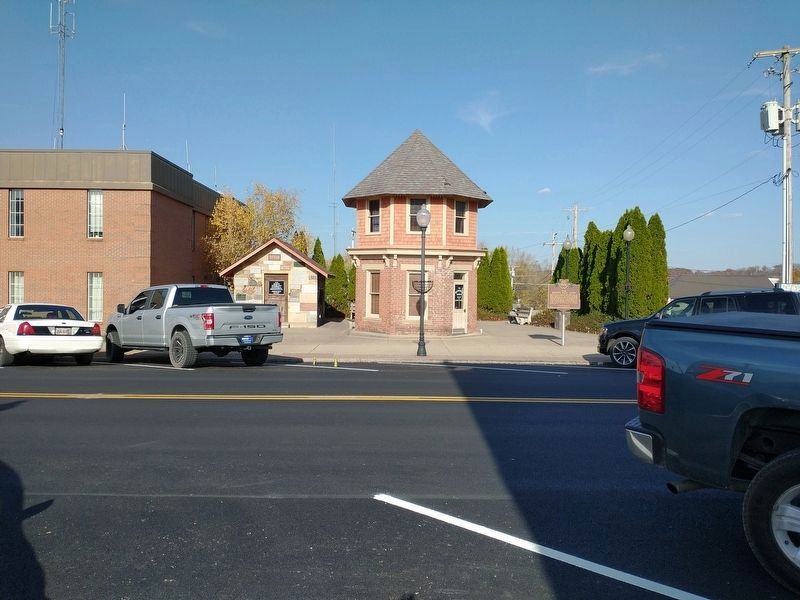
By 1816, a settlement had grown around the spring, and Ohio wished to form Jackson county. They petitioned Congress to allow sale of a section of salt land to pay for a county courthouse. The Act of April 16, 1816 allowed this action, and section 29 of township 7 of range 18 was sold for $7,169.00 and the town of Jackson was erected there. The remainder of the reservewas surveyed into 80-acre (320,000 m2) tracts, numbered in each township in a like manner as the sections.Photographed by Craig Doda, October 22, 20224. The Scioto Salt Licks / The Scioto Salt Works Marker
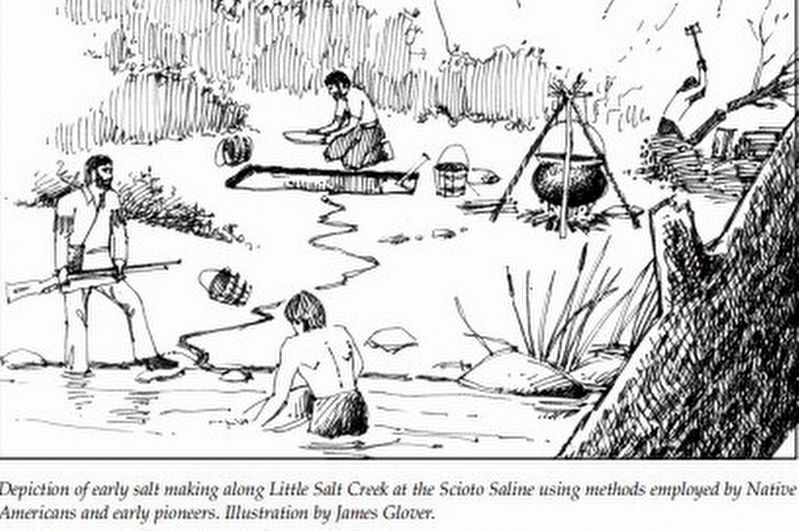
via GeoFacts, unknown
5. The Scioto Saline - Ohio's Early Salt Industry
GeoFacts PDF
Click for more information.
Click for more information.
Credits. This page was last revised on April 27, 2025. It was originally submitted on November 23, 2009, by William Fischer, Jr. of Reynoldsburg, Ohio. This page has been viewed 3,536 times since then and 173 times this year. Photos: 1, 2, 3. submitted on November 23, 2009, by William Fischer, Jr. of Reynoldsburg, Ohio. 4. submitted on October 28, 2022, by Craig Doda of Napoleon, Ohio. 5. submitted on January 4, 2024, by Larry Gertner of New York, New York.
