Near Sharpsburg in Washington County, Maryland — The American Northeast (Mid-Atlantic)
The Battle of Antietam
⎯⎯⎯
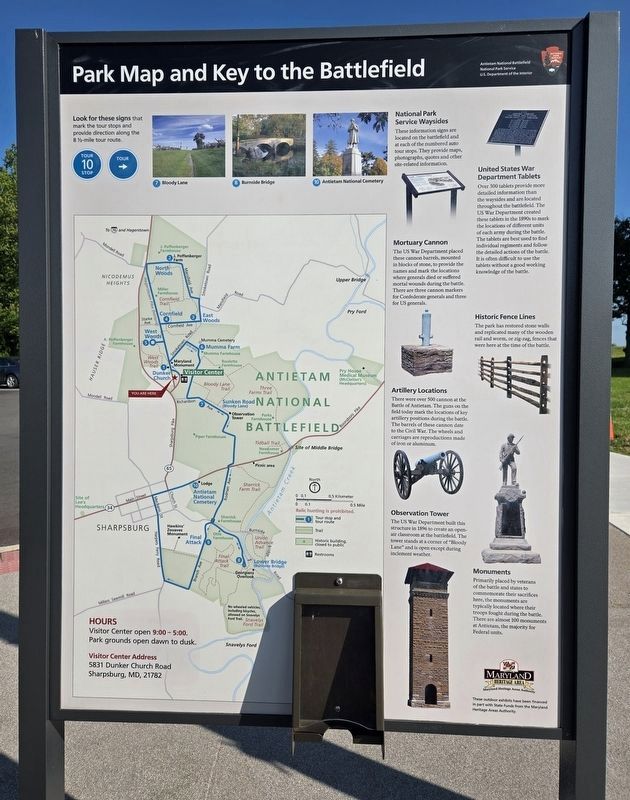
Park Map and Key to the Battlefield

Photographed by Bradley Owen, May 30, 2024
1. The Battle of Antietam side of the marker
Confederate and Federal forces clashed at the Battle of Antietam on September 17, 1862, transforming the local community and the nation. Sharpsburg families hid from the carnage, suffering damage to their homes and farms. Bodies and bullets littered the landscape after the war's bloodiest day. These sacrifices led to a breakthrough-five days after the battle, President Abraham Lincoln issued the preliminary Emancipation Proclamation. The Civil War had transformed from a struggle for reunification into a war to also end slavery. Today, Antietam serves as a site for reflection and remembrance of the battle and its legacy.
"As night drew nearer, whispers of a great battle to be fought the next day grew louder, and we shuddered at the prospect, for battles had come to mean to us, as they never had before, blood, wounds, and death."
Mary Bedinger Mitchell
Resident of nearby Shepherdstown
(Captions):
Confederate soldiers deliberately burned a farm owned by Samuel and Elizabeth Mumma to prevent US sharpshooters from using it. The Mummas rebuilt their farm in 1863. After the war, the Federal government only paid residents for damages caused by US soldiers, which made the Mummas ineligible for compensation.
Following the US victory at Antietam, President Abraham Lincoln issued the preliminary Emancipation Proclamation, calling for the freedom of enslaved people in the states in rebellion. The proclamation also called for the recruitment and establishment of Black units in the US military.
The colossal Private Soldier Monument that stands in the center of Antietam National Cemetery was carved in Rhode Island. Dedicated in 1880, it is over 44 feet tall and weighs 250 tons. The inscription on the monument aptly describes the 5,000 war-time casualties and veterans buried around its base - "Not For Themselves, But For Their Country."
Beginning just two days after the battle, photographer Alexander Gardner captured 70 images depicting the tremendous losses at Antietam. This photograph shows more than a dozen dead Confederate soldiers lined up for burial on the battlefield.
Library of Congress, Prints & Photographs Division, Civil War Photographs, LC-DIG-cwpb-01094
Look
this page online
National Park Service Waysides
These information signs are located on the battlefield and at each of the numbered auto tour stops. They provide maps, photographs, quotes and other site-related information.
Mortuary Cannon
The US War Department placed these cannon barrels, mounted in blocks of stone, to provide the names and mark the locations where generals died or suffered mortal wounds during the battle. There are three cannon markers for Confederate generals and three for US generals.
Artillery Locations
There were over 500 cannon at the Battle of Antietam. The guns on the field today mark the locations of key artillery positions during the battle. The barrels of these cannon date to the Civil War. The wheels and carriages are reproductions made of iron or aluminum.
Observation Tower
The US War Department built this structure in 1896 to create an open- air classroom at the battlefield. The tower stands at a corner of "Bloody Lane" and is open except during inclement weather.
United States War Department Tablets
Over
Photographed by Bradley Owen, May 30, 2024
2. Park Map and Key to the Battlefield side of the marker
Historic Fence Lines
The park has restored stone walls and replicated many of the wooden rail and worm, or zig-zag, fences that were here at the time of the battle.
Monuments
Primarily placed by veterans of the battle and states to commemorate their sacrifices here, the monuments are typically located where their troops fought during the battle. There are almost 100 monuments at Antietam, the majority for Federal units.
Hours
Visitor Center open 9:00-5:00.
Park grounds open dawn to dusk.
Visitor Center Address
5831 Dunker Church Road
Sharpsburg, MD, 21782
Erected by National Park Service, U.S. Department of the Interior.
Topics. This historical marker is listed in these topic
Photographed by Bradley Owen, May 30, 2024
3. The Battle of Antietam/Park Map and Key to the Battlefield Marker
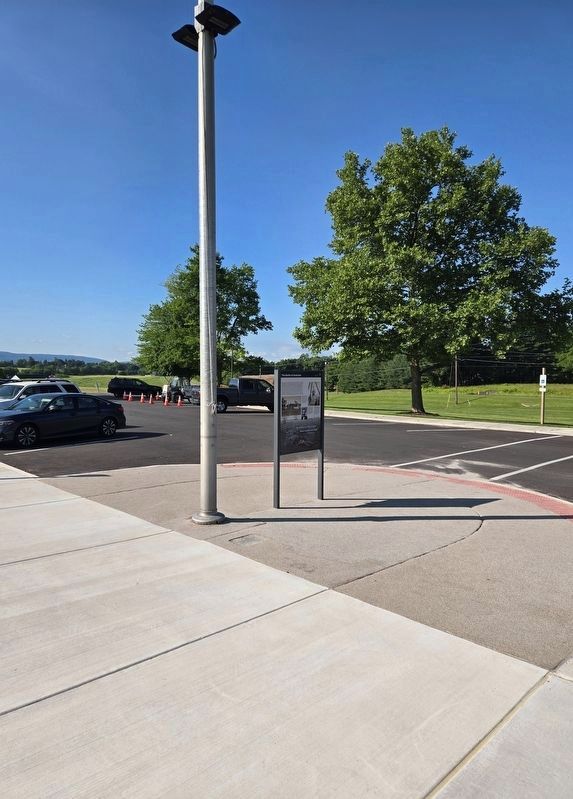
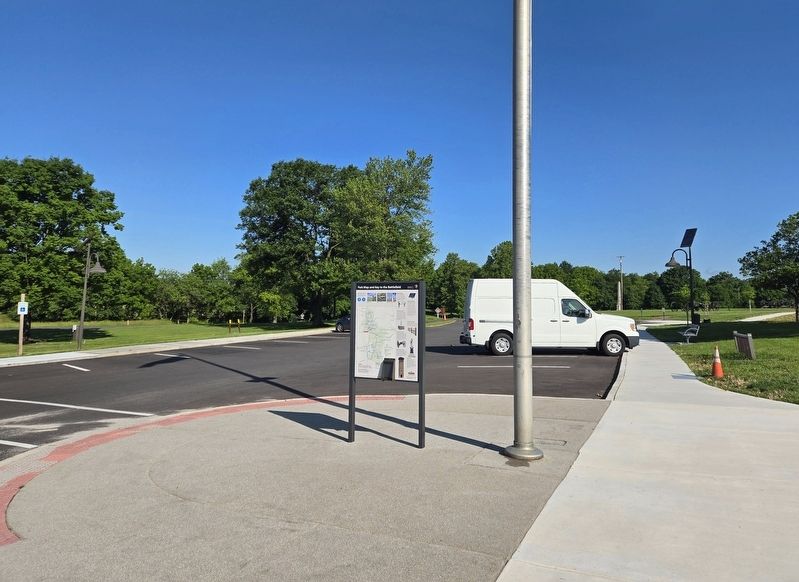
Location. 39° 28.44′ N, 77° 44.704′ W. Marker is near Sharpsburg, Maryland, in Washington County. It is on Dunker Church Road north of Sharpsburg Pike (Maryland Route 65), on the right when traveling north. Marker is located at the parking lot in front of the Antietam National Battlefield Visitor Center. Touch for map. Marker is at or near this postal address: 5831 Dunker Church Road, Sharpsburg MD 21782, United States of America. Touch for directions.

Regionally, this marker is in Western Maryland. It is also in the American Mid-Atlantic, in Appalachia, and specifically in Northern Appalachia. Globally, it is in North America, the Western Hemisphere, the Western World, and the Anglosphere. Historically, it finds itself in what was once one of the original Thirteen Colonies.
Other nearby markers. At least 8 other markers are within walking distance of this marker: A Deadly Struggle (within shouting distance of this marker); The Maryland Campaign of 1862 (within shouting
Photographed by Bradley Owen, May 30, 2024
4. The Battle of Antietam/Park Map and Key to the Battlefield Marker
Another marker is no longer nearby. Battlefield Namesake (was within shouting distance of this marker but has been confirmed missing).
Regarding The Battle of Antietam / Park Map and Key to the Battlefield. Rear side of the marker has a map of Antietam National Battlefield including the driving tour route.
Credits. This page was last revised on July 15, 2024. It was originally submitted on May 30, 2024, by Bradley Owen of Morgantown, West Virginia. This page has been viewed 647 times since then and 47 times this year. Photos: 1, 2, 3, 4. submitted on May 30, 2024, by Bradley Owen of Morgantown, West Virginia.
