Ventura in Ventura County, California — The American West (Pacific Coastal)
The Channel Islands
Photographed by Craig Baker, July 9, 2024
1. The Channel Islands Marker
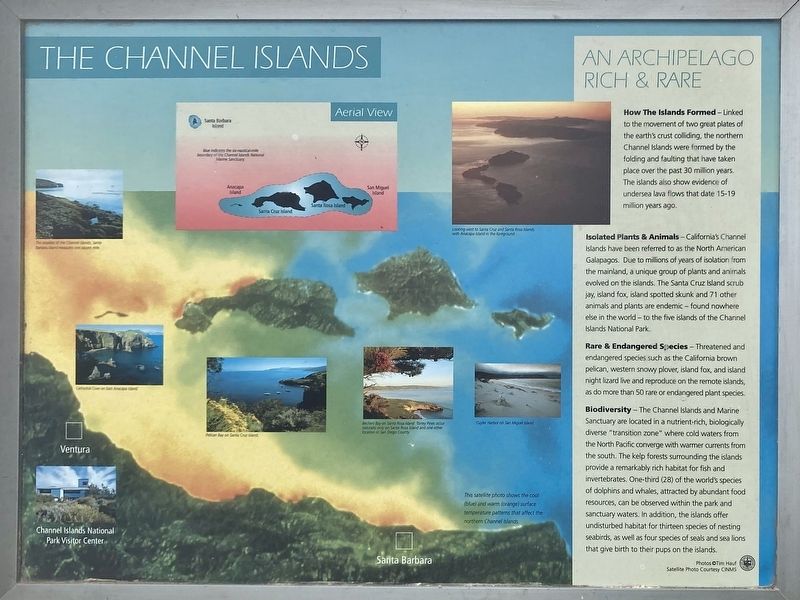
How The Islands Formed -
Linked to the movement of two great plates of the earth's crust colliding, the norther Channel Islands were formed by the folding and faulting that have taken place over the past 30 million years. The islands also show evidence of undersea lava flows that date 15-19 million years ago.
Isolated Plants & Animals -
California's Channel Islands have been referred to as the North American Galapagos. Due to millions of years of isolation from the mainland, a unique group of plants and animals evolved on the islands. The Santa Cruz Island scrub jay, island fox, island spotted skunk and 71 other animals and plants are endemic-found nowhere else in the world-to the five islands of the Channel Islands National Park.
Rare & Endangered Species -
Threatened and endangered species such as the California brown pelican, western snowy plover, island fox, and island night lizard live and reproduce on the remote islands, as do more than 50 rare or endangered plant species.
Biodiversity -
The Channel Islands and Marine Sanctuary are located in a nutrient-rich, biologically diverse
this page online
Anacapa Island
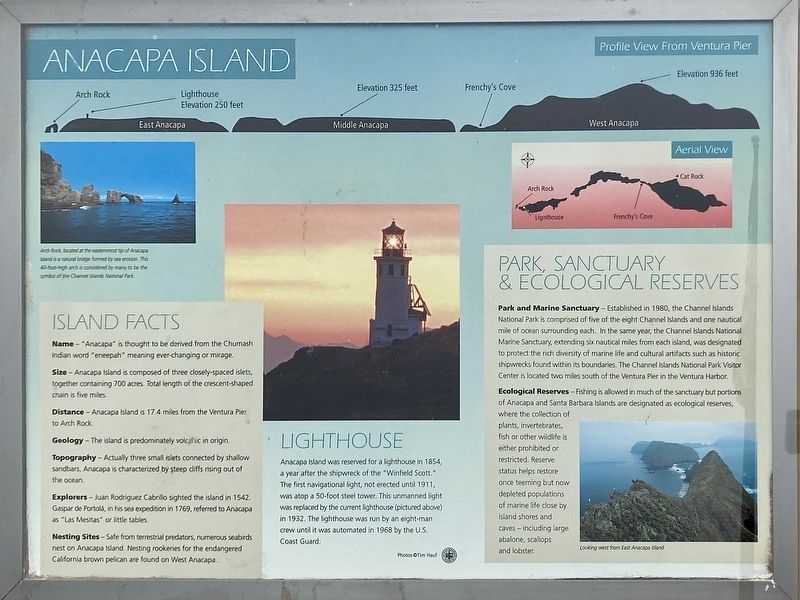
Island Facts:
Name - "Anacapa" is thought to be derived from the Chumash Indian word "eneepah" meaning ever-changing or mirage.
Size - Anacapa Island is composed of three closely-spaced islets, together containing 700 acres. Total length of the crescent-shaped chain is five miles.
Distance - Anacapa Island is 17.4 miles from the Ventura Pier to Arch Rock.
Geology - The island is predominately volcanic in origin.
Topography - Actually three small islets connected by shallow sandbars, Anacapa is characterized by steep cliffs rising out of the
Photographed by Craig Baker, July 9, 2024
2. Anacapa Island Marker
Explorers - Juan Rodriguez Cabrillo sighted the island in 1542.
Gaspar de Portola, in his sea expedition in 1769, referred to Anacapa as "Las Mesitas" or little tables.
Nesting Sites - Safe from terrestrial predators, numerous seabirds nest on Anacapa Island. Nesting rookeries for the endangered California brown pelican are found on West Anacapa.
Lighthouse
Anacapa Island was reserved for a lighthouse in 1854, a year after the shipwreck of the "Winfield Scott." The first navigational light, not erected until 1911, was atop a 50-foot steel tower. This unmanned light was replaced by the current lighthouse (pictured above) in 1932. The lighthouse was run by an eight-man crew until it was automated in 1968 by the U.S. Coast Guard.
Park and Marine Sanctuary -
Established in 1980, the Channel Islands National Park is comprised of five of the eight Channel Islands and one nautical mile of ocean surrounding each. In the same year, the Channel Islands National Marine Sanctuary, extending six nautical miles from each island, was designated to protect the rich diversity of marine life and cultural
Photographed by Craig Baker, July 9, 2024
3. Santa Cruz Island Marker
Ecological Reserves -
Fishing is allowed in much of the sanctuary but portions of Anacapa and Santa Barbara Islands are designated as ecological reserves, where the collection of plants, invertebrates, fish or other wildlife is either prohibited or restricted. Reserve status helps restore once teeming but now depleted populations of marine life close by island shores and caves - including large abalone, scallops and lobster.
Arch Rock, located at the easternmost tip of Anacapa Island is a natural bridge formed by sea erosion. This 40-foot-high arch is considered by many to be the symbol of the Channel Islands National Park.
Santa Cruz Island
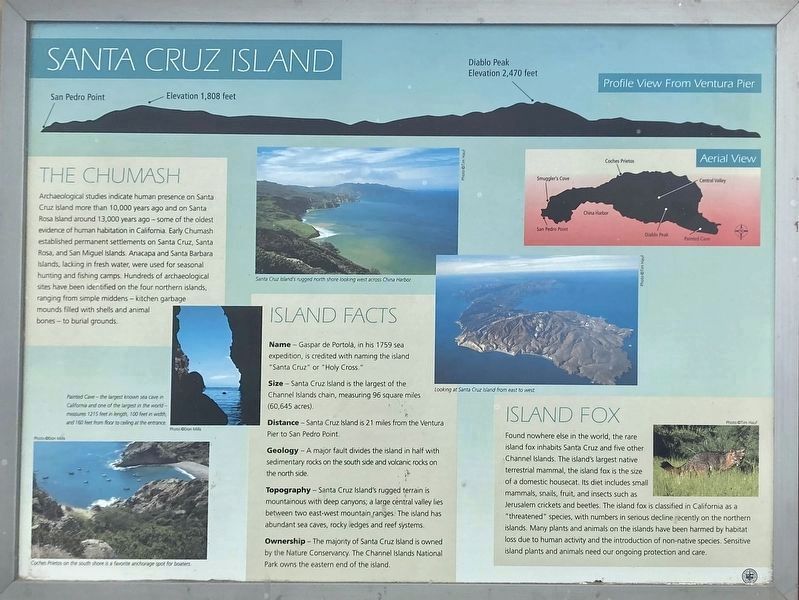
The Chumash
Archaeological studies indicate human presence on Santa Cruz Island more than 10,000 years ago and on Santa Rosa Island around 13,000 years ago - some of the oldest evidence of human habitation in California. Early Chumash established permanent settlements
Photographed by Craig Baker, July 9, 2024
4. Channel Islands Marker
Island Facts
Name - Gaspar de Portola, in his 1759 sea expedition, is credited with naming the island "Santa Cruz" or "Holy Cross."
Size - Santa Cruz Island is the largest of the Channel Islands chain, measuring 96 square miles (60,645 acres).
Distance - Santa Cruz Island is 21 miles from the Ventura Pier to San Pedro Point.
Geology - A major fault divides the island in half with sedimentary rocks on the south side and volcanic rocks on the north side.
Topography - Santa Cruz Island's rugged terrain is mountainous with deep canyons; a large central valley lies between two east-west mountain ranges. The island has abundant sea caves, rocky ledges and reef systems.
Ownership - The majority of Santa Cruz Island is owned by the Nature Conservancy.
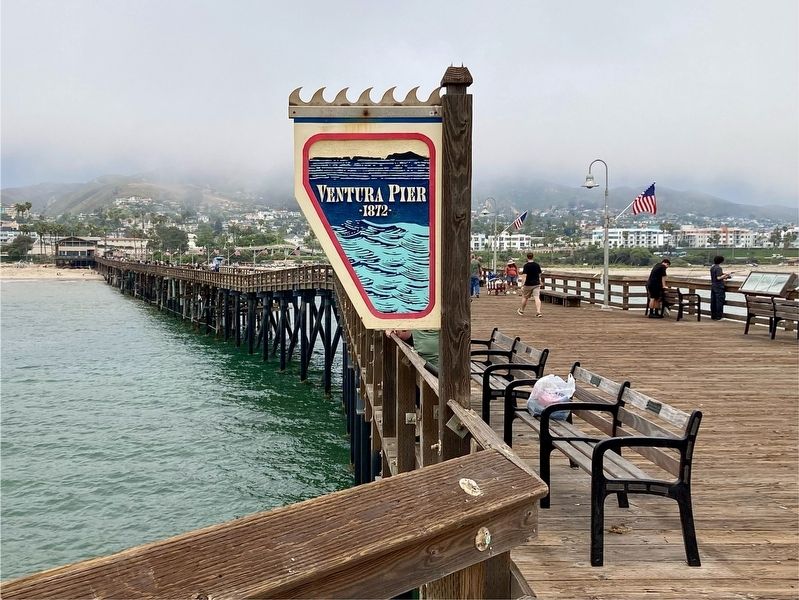
Photographed by Craig Baker
5. Ventura Pier
Island Fox
Found nowhere else in the world, the rare island fox inhabits Santa Cruz and five other Channel Islands. The island's largest native terrestrial mammal, the island fax is the size of a domestic housecat. Its diet includes small mammals, snails, fruit, and insects such as Jerusalem crickets and beetles. The island fox is classified in California as a "threatened" species, with numbers in serious decline recently on the northern islands. Many plants and animals on the islands have been harmed by habitat loss due to human activity and the introduction of non-native species. Sensitive island plants and animals need our ongoing protection and care.
Topics and series. This historical marker is listed in these topic lists: Indigenous Peoples and Communities • Landmarks • Natural Features • Waterways & Vessels. In addition, it is included in the Lighthouses series list.
Location. 34° 16.334′ N, 119° 17.564′ W. Marker is in Ventura, California, in Ventura County. It can be reached
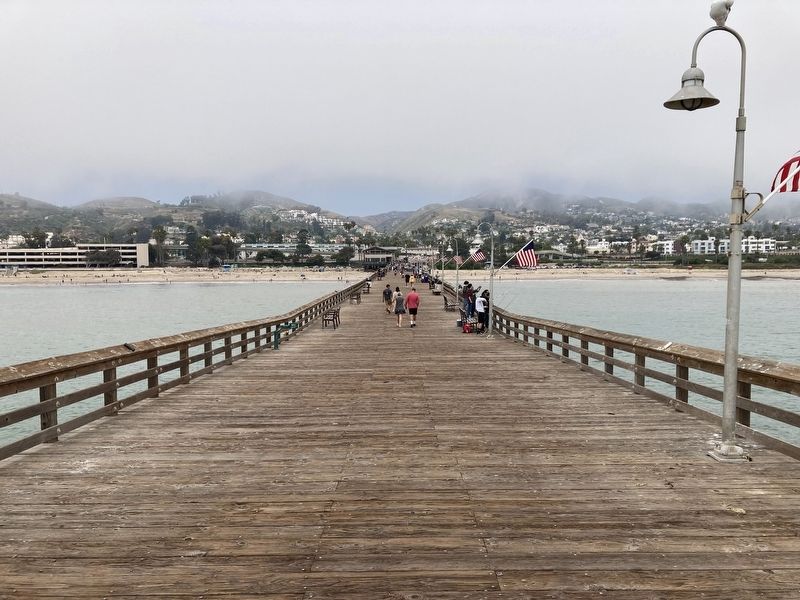
Photographed by Craig Baker, July 9, 2024
6. Ventura Pier

Regionally, this marker is in Greater Los Angeles, on the Central Coast, and in the Transverse Ranges. It is also on the American Pacific Coast. Globally, it is in North America, on the Ring of Fire, in the Pacific Rim, in the Western Hemisphere, in the Western World, and in the Anglosphere. Historically, it finds itself in what was once New Spain and also Mexico’s Alta California.
Other nearby markers. At least 8 other markers are within walking distance of this marker: Ventura’s Pierside Bathhouse (within shouting distance of this marker); Ventura Pier (approx. 0.2 miles away); The First Community (approx. ¼ mile away); 632 E. Thompson Boulevard (approx. 0.4 miles away); Dacy Fazio House (approx. 0.4 miles away); 682 East Thompson Boulevard (approx. 0.4 miles away); Ventura Veterans Memorial (approx. 0.4 miles away); Jesse Owens (approx. 0.4 miles away). Touch for a list and map of all markers
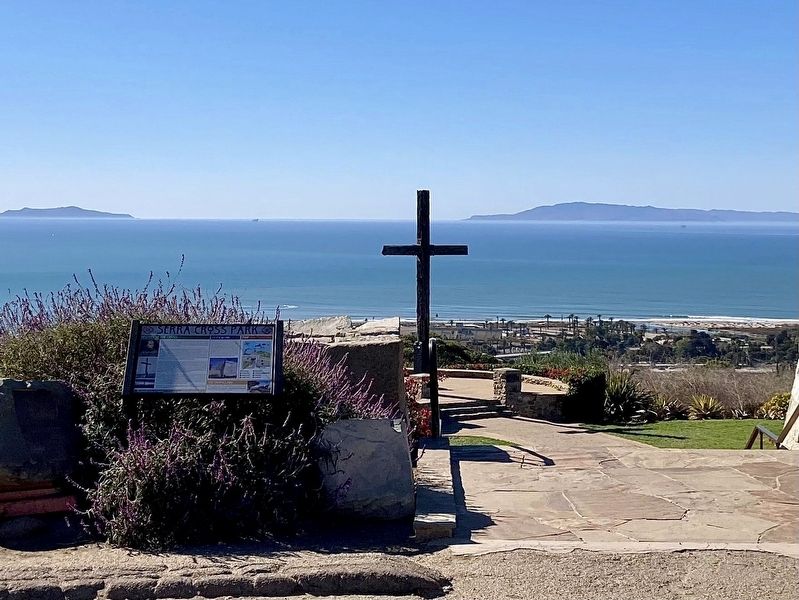
Photographed by Craig Baker, November 8, 2023
7. Anacapa & Santa Cruz Islands
Viewed from the Serra Cross above Ventura.
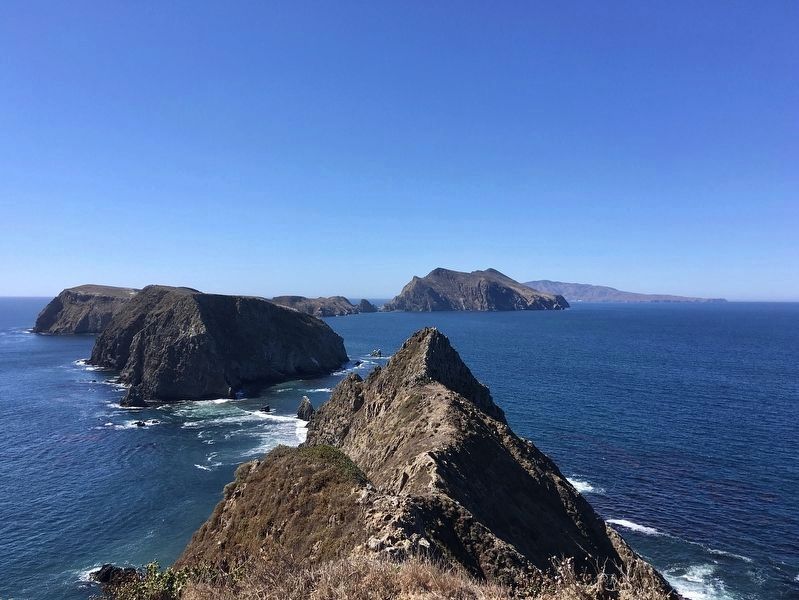
Photographed by Craig Baker, October 18, 2019
8. Anacapa Island
On the horizon is Santa Cruz Island.
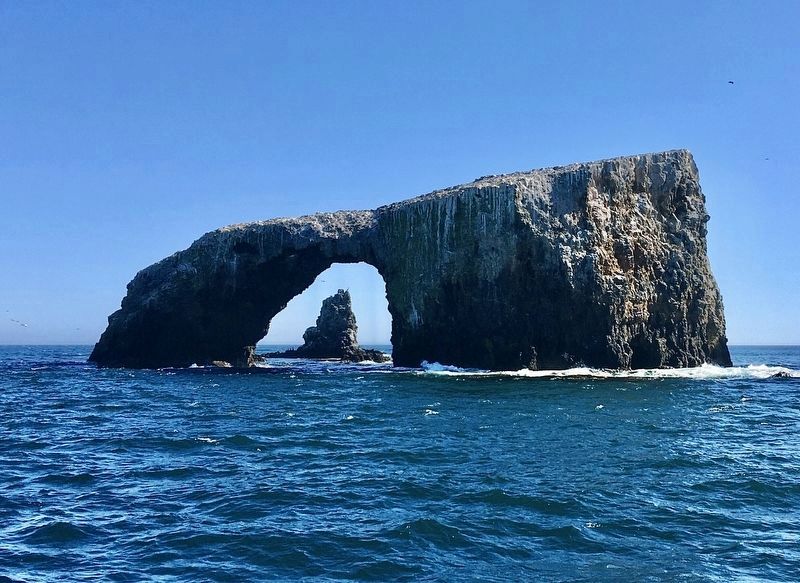
Photographed by Craig Baker, October 18, 2019
9. Arch Rock - Anacapa Island
Credits. This page was last revised on August 4, 2024. It was originally submitted on August 3, 2024, by Craig Baker of Sylmar, California. This page has been viewed 194 times since then and 27 times this year. Photos: 1, 2, 3, 4, 5, 6. submitted on August 3, 2024, by Craig Baker of Sylmar, California. 7. submitted on November 9, 2023, by Craig Baker of Sylmar, California. 8, 9. submitted on August 3, 2024, by Craig Baker of Sylmar, California.
