
Near San Antonio in Socorro County, New Mexico — The American Mountains (Southwest)
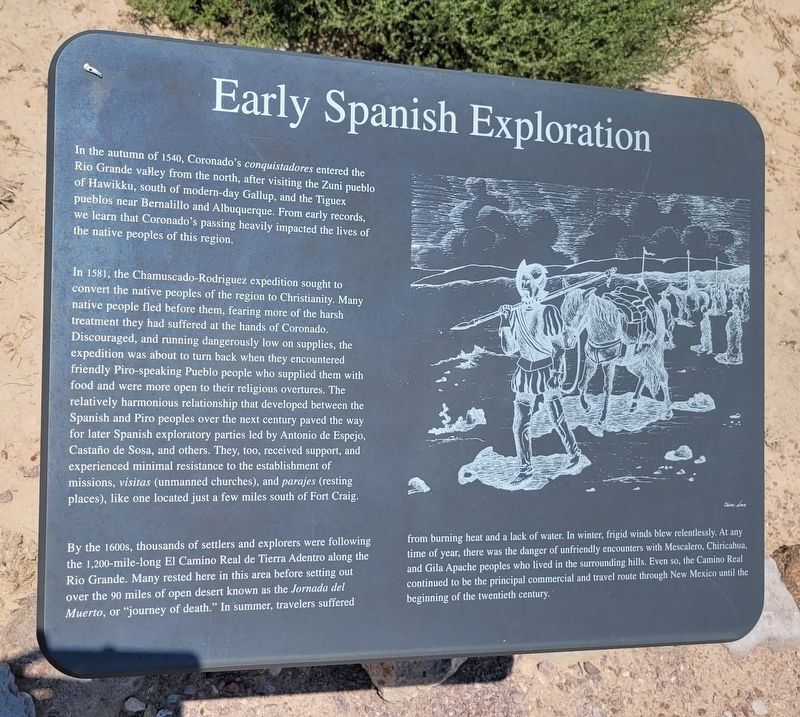
Early Spanish Exploration
Photographed by James Hulse, July 23, 2024
1. Early Spanish Exploration Marker
In 1581, the Chamuscado-Rodriguez expedition sought to convert the native peoples of the region to Christianity. Many native people fled before them, fearing more of the harsh treatment they had suffered at the hands of Coronado. Discouraged, and running dangerously low on supplies, the expedition was about to turn back when they encountered friendly Piro-speaking Pueblo people who supplied them with food and were more open to their religious overtures. The relatively harmonious relationship that developed between the Spanish and Piro peoples over the next century paved the way for later Spanish exploratory parties led by Antonio de Espejo, Castaño de Sosa, and others. They, too, received support, and experienced minimal resistance to the establishment of missions, visitas (unmanned
this page online
By the 1600s, thousands of settlers and explorers were following the 1,200-mile-long El Camino Real de Tierra Adentro along the Rio Grande. Many rested here in this area before setting out over the 90 miles of open desert known as the Jornada del Muerto, or "journey of death." In summer, travelers suffered from burning heat and a lack of water. In winter, frigid winds blew relentlessly. At any time of year, there was the danger of unfriendly encounters with Mescalero, Chiricahua, and Gila Apache peoples who lived in the surrounding hills. Even so, the Camino Real continued to be the principal commercial and travel route through New Mexico until the beginning of the twentieth century.
Topics. This historical marker is listed in these topic lists: Colonial Era • Exploration • Indigenous Peoples and Communities • Roads & Vehicles. A significant historical year for this entry is 1540.
Location. 33° 38.118′ N, 107° 0.891′ W. Marker is near San Antonio, New Mexico, in Socorro County. It is on Fort Craig Road 4½ miles south of Old
Photographed by James Hulse, July 23, 2024
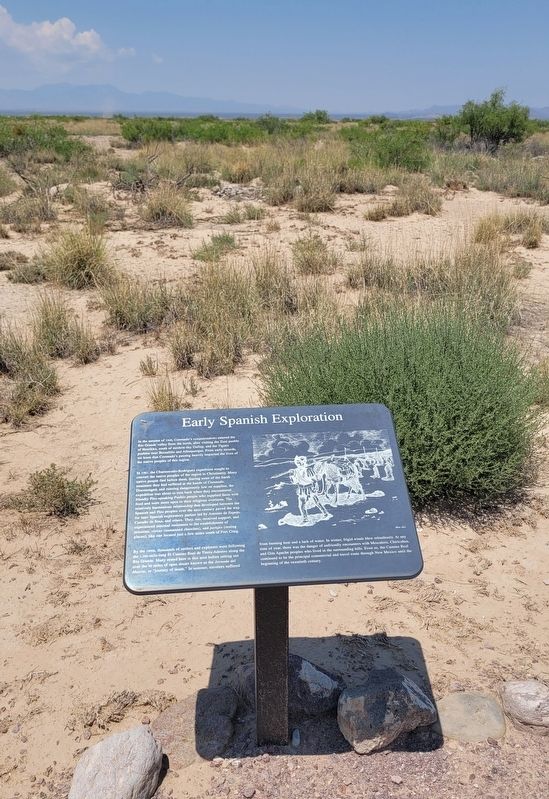
2. Early Spanish Exploration Marker

Regionally, this marker is in Southwest New Mexico and in the Rio Grande Valley. It is also in the American Southwest. Globally, it is in North America, the Western Hemisphere, the Western World, and the Anglosphere. Historically, it finds itself in what was once New Spain and also the Republic of Texas.
Other nearby markers. At least 8 other markers are within walking distance of this marker: The Establishment of Fort Craig (here, next to this marker); Fort Craig (a few steps from this marker); Prehistoric Peoples (within shouting distance of this marker); El Camino Real (within shouting distance of this marker); Battle of Valverde (within shouting distance of this marker); a different marker also named Fort Craig (within shouting distance of this marker); Commanding Officer's Quarters (about 300 feet away, measured in a direct line); Store Houses (about 300 feet away).
Photographed by James Hulse, July 23, 2024
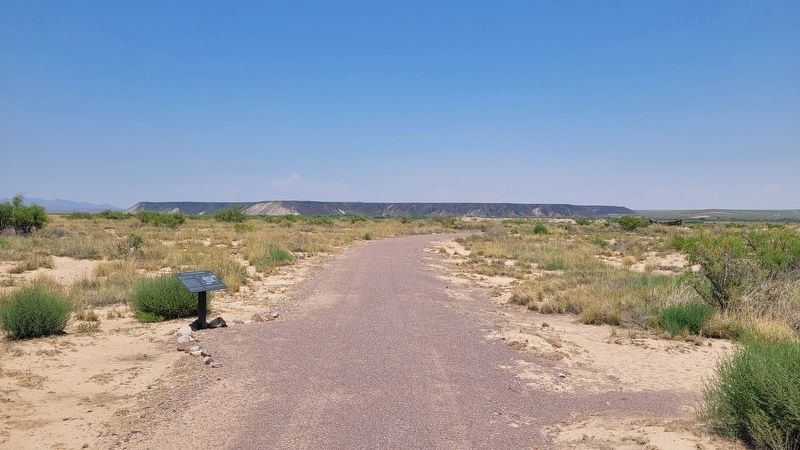
3. The view of the Early Spanish Exploration Marker along the trail
More about this marker. At Fort Craig Historic Site, an ADA accessible, self-guided interpretive trail is open seven days a week, from 8:00 a.m. to one-hour before sunset. The visitor’s center is open Thursday through Monday from 8:00 a.m. to 5:00 p.m.
Also see . . . Fort Craig Historic Site. blm.gov
Fort Craig, established in 1854, was one of the largest and most important frontier forts in the West. Set in the rugged beauty of Socorro County, N.M., it was one of the eight forts situated along the primary north-south road in the Rio Grande Valley. Fort Craig played a crucial role in Indian campaigns and the Civil War.(Submitted on August 5, 2024, by James Hulse of Medina, Texas.)
Credits. This page was last revised on August 6, 2024. It was originally submitted on August 4, 2024, by James Hulse of Medina, Texas. This page has been viewed 183 times since then and 16 times this year. Photos: 1, 2, 3. submitted on August 5, 2024, by James Hulse of Medina, Texas.
