Walker in Cass County, Minnesota — The American Midwest (Upper Plains)
Gaa-zagaskwaajimekaag
Leech Lake Band of Ojibwe
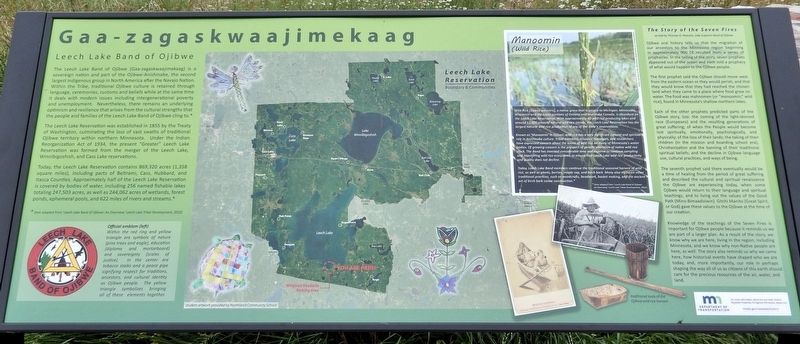
Photographed by Cosmos Mariner, June 26, 2024
1. Gaa-zagaskwaajimekaag Marker
The Leech Lake Band of Ojibwe (Gaa-zagaskwaajimekaag) is a sovereign nation and part of the Ojibwe-Anishinabe, the second largest indigenous group in North America after the Navajo Nation. Within the Tribe, traditional Ojibwe culture is retained through language, ceremonies, customs and beliefs while at the same time it deals with modern issues including intergenerational poverty and unemployment. Nevertheless, there remains an underlying optimism and resilience that arises from the cultural strengths that the people and families of the Leech Lake Band of Ojibwe cling to.*
The Leech Lake Reservation was established in 1855 by the Treaty of Washington, culminating the loss of vast swaths of traditional Ojibwe territory within northern Minnesota. Under the Indian Reorganization Act of 1934, the present "Greater" Leech Lake Reservation was formed from the merger of the Leech Lake, Winnibigoshish, and Cass Lake reservations.
Today, the Leech Lake Reservation contains 869,320 acres (1,358 square miles), including parts of Beltrami, Cass, Hubbard, and Itasca Counties. Approximately half of the Leech Lake Reservation is covered
this page online
* (text adapted from 'Leech Lake Band of Ojibwe: An Overview,' Leech Lake Tribal Development, 2022)
[sidebar] Manoomin (Wild Rice)
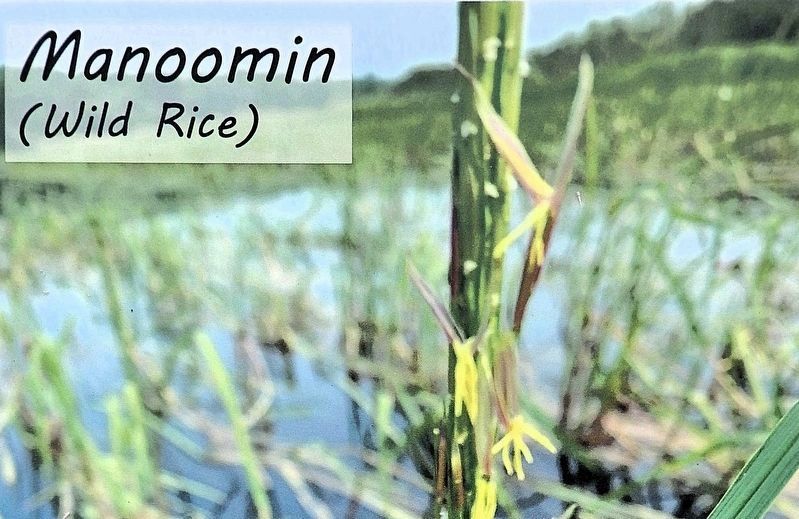
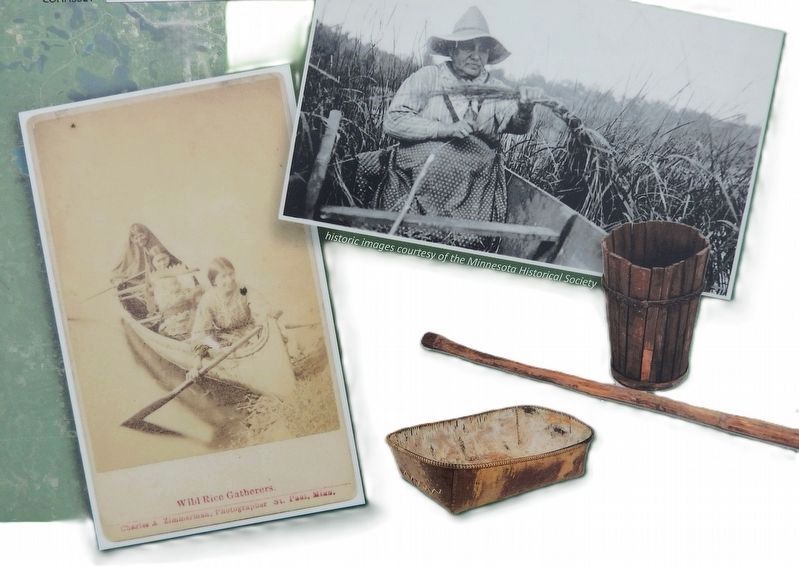
Wild Rice (Zizania palustris), a native grass that is unique to Michigan, Minnesota, Wisconsin and the lower portions of Ontario and Manitoba Canada, is abundant on the Leech Lake Reservation. With approximately 40-wild rice producing lakes and around 13,000 acres of natural wild rice stands, the Leech Lake Reservation has the largest natural wild rice production of any of the state's reservations.
Known as 'Manoomin' in Ojibwe, wild rice has a very significant cultural and spiritual role in Anishinabe culture. Tribal members, resource managers, and researchers have expressed concern about the losses of wild rice on many of Minnesota's water bodies. Of growing concern is the prospect of genetic alteration of native wild rice stock. The Band has invested considerable time and expense to continue sampling and monitoring wild
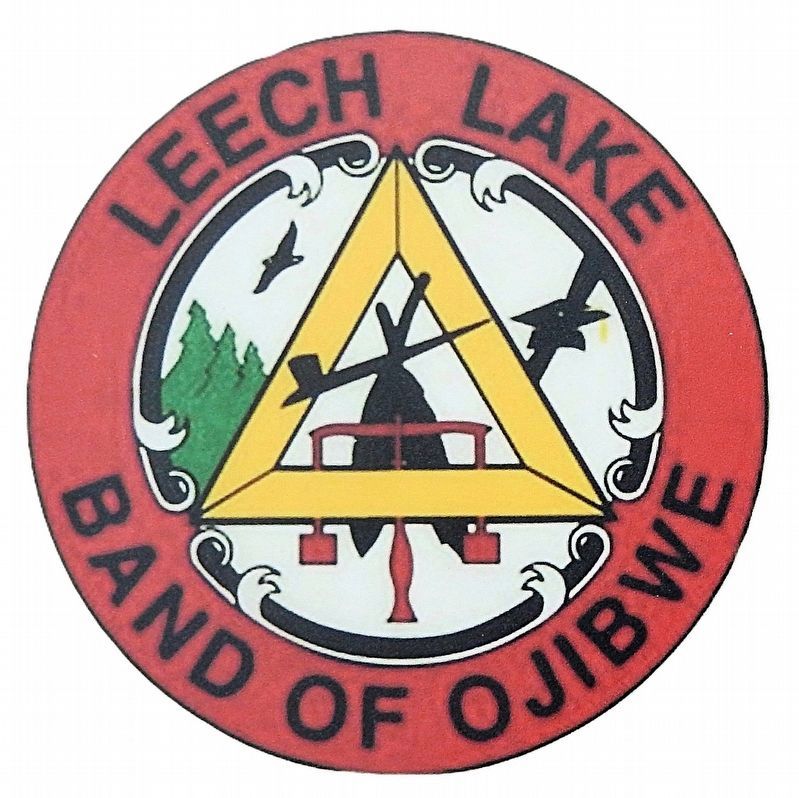
2. Marker detail: Official Emblem
Within the red ring and yellow triangle are symbols of nature (pine trees and eagle), education (diploma and mortarboard) and sovereignty (scales of justice). In the center are tobacco stalks and a peace pipe signifying respect for traditions, ancestors, and cultural identity as Ojibwe people. The yellow triangle symbolizes bringing all of these elements together.
Today, Leech Lake Band members continue the traditional seasonal harvest of wild rice, as well as plants, berries, maple sap, and birch bark. Many also maintain other traditional practices, such as woodcrafts, beadwork, basket making, and the ancient art of birch bark canoe construction. *
* (text adapted from 'Leech Lake Band of Ojibwe: An Overview,' Leech Lake Tribal Development, 2022)
[sidebar] The Story of the Seven Fires
—as told by Thomas D. Peacock, Lake Superior Band of Ojibwe.
Ojibwe oral history tells us that the migration of our ancestors to the Minnesota region beginning in approximately 900 CE resulted from a series of prophecies. In the telling of the story, seven prophets appeared out of the ocean and each told a prophecy of what would happen to the Ojibwe people.
The first prophet said the Ojibwe should move west from the eastern ocean or they would perish, and that they would know that they had reached the chosen land when they came to a place where food grew on water. The food was mahnomen (or "manoomin," wild rice), found
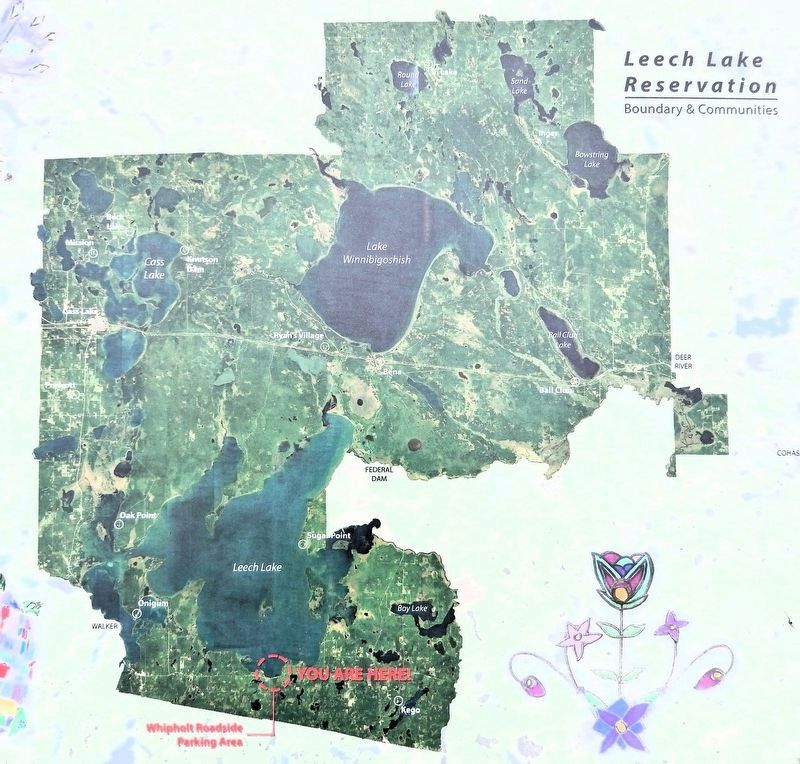
3. Marker detail: Leech Lake Reservation
Each of the other prophets predicted parts of the Ojibwe story, too: the coming of the light-skinned race (Europeans) and the resulting generations of great suffering; of when the People would become lost spiritually, emotionally, psychologically, and physically; of the loss of their lands; the taking of their children (in the mission and boarding school era); Christianization and the banning of their traditional spiritual beliefs; and the decline in Ojibwe language use, cultural practices, and ways of being.
The seventh prophet said there eventually would be a time of healing from the period of great suffering and described the cultural and spiritual renaissance the Ojibwe are experiencing today, when some Ojibwe would return to their language and spiritual teachings, and to living out the values of the Good Path (Mino-Bimaadiziwin). Gitchi Manito (Great Spirit, or God) gave these values to the Ojibwe at the time of our creation.
Knowledge of the teachings of the Seven Fires is important for Ojibwe people because it reminds us we are part of a larger plan. As a result of the story, we know why
Courtesy Minnesota Department of Transportation
4. Marker detail: Manoomin (Wild Rice)
[artwork caption] Student artwork [turtle] provided by Northland Community School.
For more information about this and other Historic Roadside Properties throughout Minnesota, please visit: mndot.gov/roadsides/historic
Erected by Minnesota Department of Transportation.
Topics. This historical marker is listed in these topic lists: Agriculture • Anthropology & Archaeology • Indigenous Peoples and Communities. A significant historical year for this entry is 1855.
Location. 47° 3.005′ N, 94° 21.438′ W. Marker is in Walker, Minnesota, in Cass County. It is on Whipholt Beach Road (Maple Leaf Drive) (State Highway 200) 0.4 miles east of 16th Avenue (Pine Lake Road) (County Road 2108), on the left when traveling east. The marker is located in the Whipholt Roadside
Minnesota Historical Society
5. Marker detail: Historic Images

Regionally, this marker is in the Northland. It is also in the American Midwest, in the Corn Belt, and in the Great River Road Region. Globally, it is in North America, the Great North Woods, the Western Hemisphere, the Western World, and the Anglosphere. Historically, it finds itself in what was once Rupert’s Land, the territory of the Mississippian Culture, and the Northwest Territory.
Other nearby markers. At least 3 other markers are within 12 miles of this marker, measured as the crow flies: Sugar Point Battle (a few steps from this marker); The Battle of Sugar Point (within shouting distance of this marker); Lucette Diana Kensack (approx. 11.4 miles away).
Photographed by Cosmos Mariner, June 26, 2024
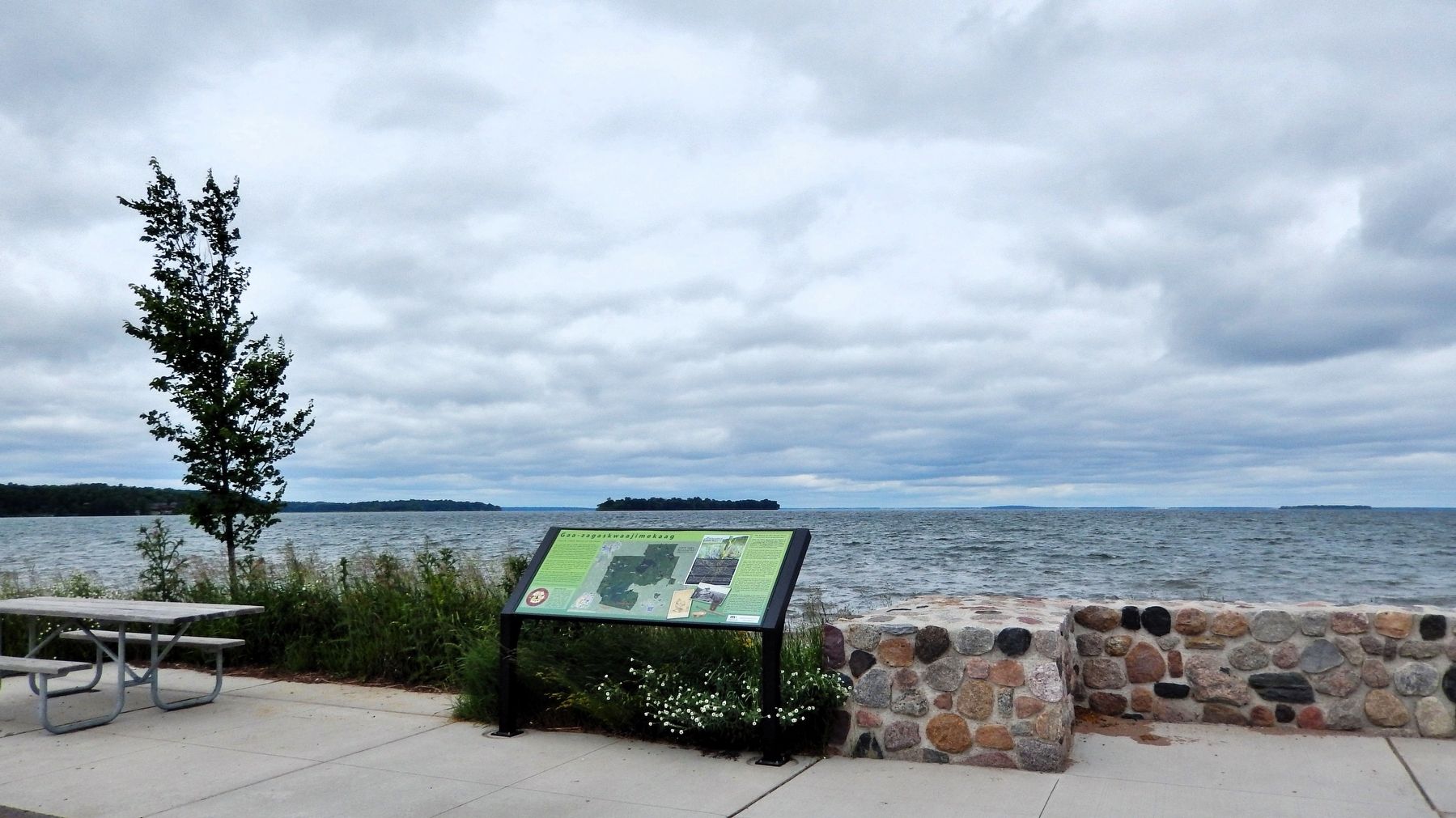
6. Gaa-zagaskwaajimekaag Marker
Looking northwest from the Whipholt Roadside Parking Area; Leach Lake is in the background.
Credits. This page was last revised on February 25, 2025. It was originally submitted on February 23, 2025, by Cosmos Mariner of Cape Canaveral, Florida. This page has been viewed 260 times since then and 46 times this year. Photos: 1, 2, 3, 4, 5, 6. submitted on February 24, 2025, by Cosmos Mariner of Cape Canaveral, Florida.
