
Kissimmee in Osceola County, Florida — The American South (South Atlantic)
Shingle Creek
Yesterday & Today
Photographed by Craig Baker, February 25, 2025
1. Shingle Creek Marker
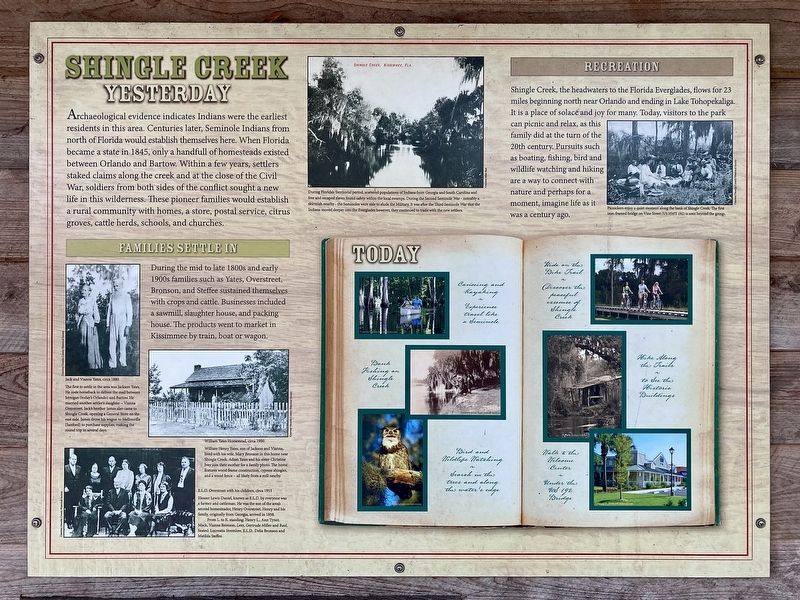
Archaeological evidence indicates Indians were the earliest residents in this area. Centuries later, Seminole Indians from north of Florida would establish themselves here. When Florida became a state in 1845, only a handfull of homesteads existed between Orlando and Bartow. Within a few years, settlers staked claims along the creek and at the close of the Civil War, soldiers from both sides of the conflict sought a new life in this wilderness. These pioneer families would establish a rural community with homes, a store, postal service, citrus groves, cattle herds, schools, and churches.
Families Settle In
During the mid to late 1800s and early 1900s families such as Yates, Overstreet, Bronson, and Steffee sustained themselves. with crops and cattle. Businesses included a sawmill, slaughter house, and packing house. The products went to market in Kissimmee by train, boat or wagon.
Recreation
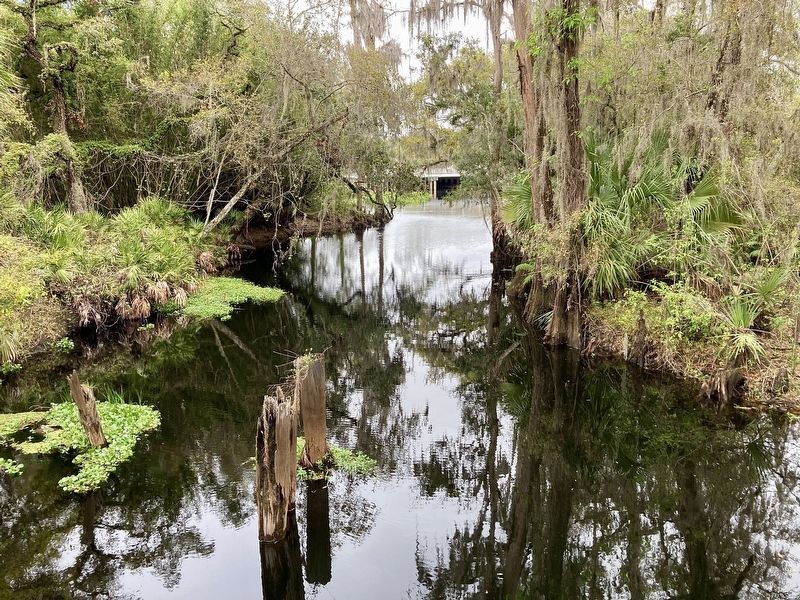
Shingle Creek, the headwaters to the Florida Everglades, flows for 23 miles beginning north near Orlando and ending in Lake Tohopekaliga. It is a place of solace and joy for many. Today,
this page online
photo captions:
During Florida's Territorial period, scattered populations of Indians from Georgia and South Carolina and free and escaped slaves found safety within the local swamps. During the Second Seminole War - noteably a skirmish nearby - the Seminoles were able to elude the Military. It was after the Third Seminole War that the Indians moved deeper into the Everglades. However, they continued to trade with the new settlers.
Jack and Vianna Yates, circa 1880.
The first to settle in the area was Jackson Yates. He rode horseback to deliver the mail between Jernigan (today's Orlando) and Bartow. He married another settler's daughter - Vianna Overstreet. Jack's brother James also came to Shingle Creek, opening a General Store on the east side, James drove his wagon to Mellonville (Sanford) to purchase supplies, making the round trip in
Photographed by Craig Baker, February 25, 2025
2. Shingle Creek Marker
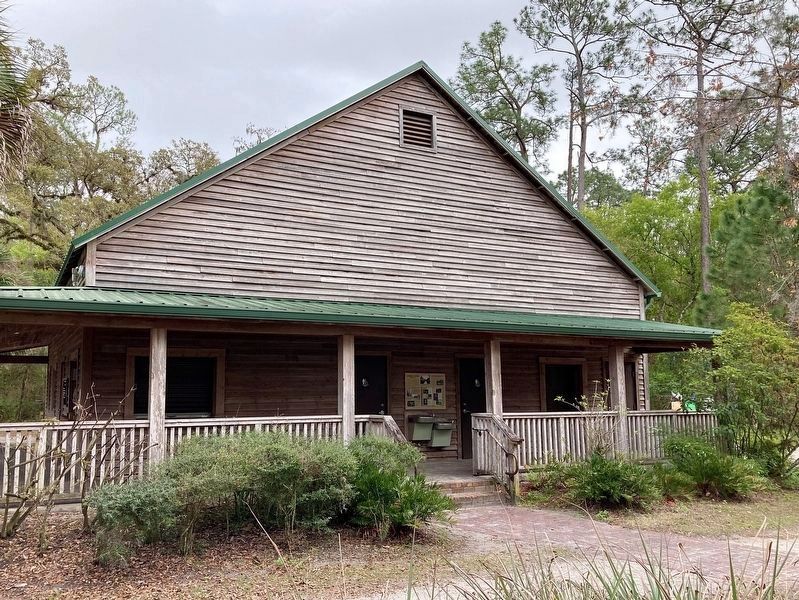
Located at the Paddling Center restrooms.
William Yates Homestead, circa 1900.
William Henry Yates, son of Jackson and Vianna, lived with his wife, Mary Bronson in this home near Shingle Creek. Adam Yates and his sister Christine Ivey join their mother for a family photo. The home features wood frame construction, cypress shingles, and a wood fence - all likely from a mill nearby.
E.L.D. Overstreet with his children, circa 1915.
Eleazer Lewis Daniel, known as E.LD. by everyone was ,a farmer and cattleman. He was the son of the area's second homesteader, Henry Overstreet. Henry and his family, originally from Georgia, arrived in 1858.
From L. to R. standing: Henry L., Ann Tyner, Mack, Vianna Bronson, Lem, Gertrude Miller and Raul.
Seated: Lucreatia Stremlow, E.L.D.. Delia Bronson and Matilda Steffee.
Picnickers enjoy a quiet moment along the bank of Shingle Creek. The first iron-framed bridge on Vine Street (US HWY 192) is seen beyond the group.
Topics. This historical marker is listed in these topic lists: Anthropology & Archaeology • Parks & Recreational Areas • Settlements & Settlers • Waterways
Photographed by Craig Baker, February 25, 2025
3. Shingle Creek
Location. 28° 18.187′ N, 81° 27.072′ W. Marker is in Kissimmee, Florida, in Osceola County. It can be reached from Vine Street (U.S. 192) east of Yates Road, on the right when traveling east. Touch for map. Marker is at or near this postal address: 4266 W Vine St, Kissimmee FL 34746, United States of America. Touch for directions.

Regionally, this marker is in Greater Orlando and in Central Florida. It is also in the American South. Globally, it is in the North Atlantic Region, North America, a Gulf of Mexico state, the Western Hemisphere, the Western World, and the Anglosphere. Historically, it finds itself in what was once New Spain, the territory of the Mississippian Culture, one of the Confederate States of America, and the Antebellum South.
Other nearby markers. At least 8 other markers are within one mile of this marker, measured as the crow flies: Shingle Creek Regional Park & Trail (within shouting distance of this marker); Fletcher Park (about 800 feet away, measured in a direct line); Lanier Legacy (approx. one mile away); Cattleman’s Barn (approx. one
Photographed by Craig Baker, February 25, 2025
4. The Steffee Place
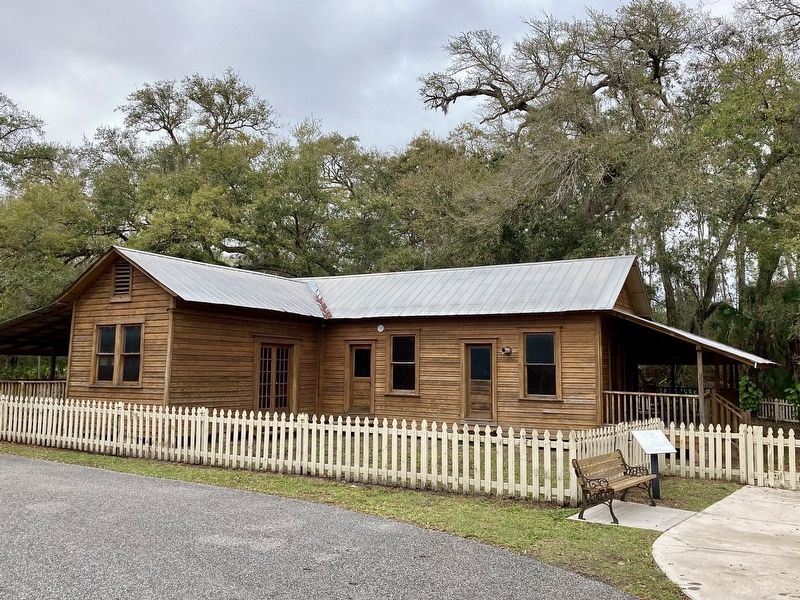
The interpretive sign is no longer readable.
Credits. This page was last revised on June 29, 2025. It was originally submitted on March 7, 2025, by Craig Baker of Sylmar, California. This page has been viewed 499 times since then and 104 times this year. Photos: 1, 2, 3, 4. submitted on March 7, 2025, by Craig Baker of Sylmar, California.
Editor’s want-list for this marker. Photos of the other markers in this area, on their own marker pages. • Can you help?
