St. George on Staten Island in Richmond County, New York — The American Northeast (Mid-Atlantic)
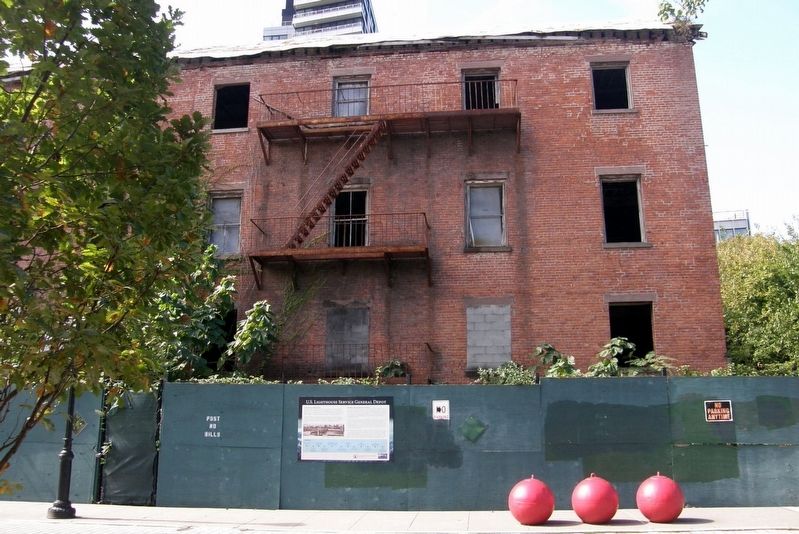
U.S. Lighthouse Service General Depot

Photographed by Larry Gertner, September 30, 2024
1. U.S. Lighthouse Service General Depot wayside
Ancestral Homeland
The National Lighthouse Museum and U>S>L>H>S> General depot historic site is located within Lenapehaking, the ancestral homeland of the Lenape people whose ancestors were the first to inhabit, care for, and live on this land. We recognize and honor the significance of this land and the Lenape communities, their Elders past and present, and future generations. We also wish to extend this respect to all indigenous peoples who are present here today.
Before the Lighthouse Depot
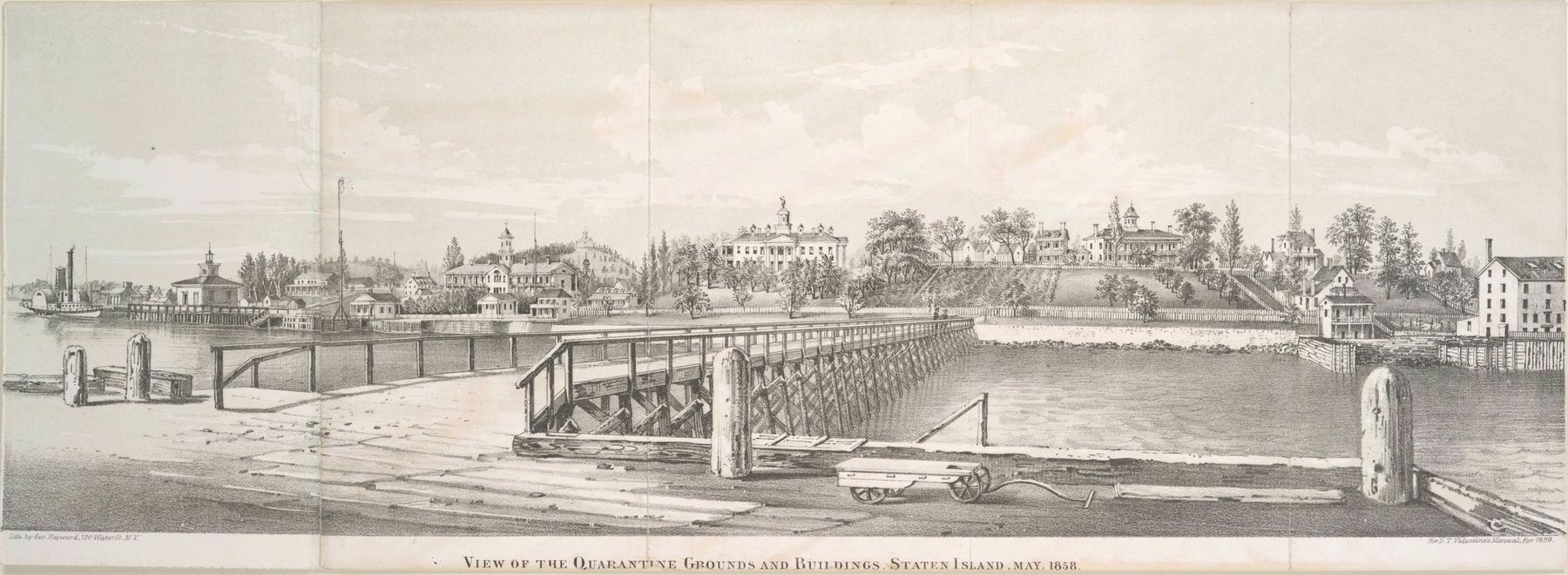
Prior to 1863, the site had a robust history. In the 17th century, the parcel that is now the site of the Museum was part of Justice and Mrs. Duxbury’s 30 acre farm or “glebe,” deeded to Saint Andrew’s Episcopal Church when the Duxburys died without heirs. During the French
this page online
By the mid 1790s, Dr. Bailey had become Health Officer for New York City, dealing with the inadequate quarantine station at Bedloe Island (later the site for that one-time lighthouse, the Statue of Liberty). In 1799, at Dr. Bailey’s suggestion, the Quarantine Station or “lazaretto” was moved to Duxbury’s farmland on Staten Island. Elizabeth Seaton, Dr. Bailey’s married daughter, joined her father at the Hospital. Years later, Elizabeth Seaton converted to Catholicism, founded the American parochial school system – and became the only American-born saint of the Church.
Five of the 30 acres of the farm were reserved for use by the U.S. Revenue Cutter Service which enforced customs and tariffs on maritime commerce – and apprehended smugglers. It also enforces quarantine laws. During the first half of the 19th century, Staten Islanders complained bitterly
Photographed by Larry Gertner, September 30, 2024
2. U.S. Lighthouse Service General Depot wayside site
Erected by National Lighthouse Museum.
Topics and series. This historical marker is listed in these topic lists: Indigenous Peoples and Communities • Science & Medicine • Waterways & Vessels. In addition, it is included in the Lighthouses series list. A significant historical month for this entry is September 1858.
Location. 40° 38.507′ N, 74° 4.444′ W. Marker is on Staten Island, New York, in Richmond County. It is in St. George. It is on Borough Place east of Bay Street, on the right when traveling south. Touch for map. Marker is at or near this postal address: 5A Borough Pl, Staten Island NY 10301, United States of America. Touch for directions.

Regionally, this marker is in New York City. It is also in the American Northeast, in the Mid-Atlantic, and on the Eastern Seaboard. Globally, it is in the North Atlantic Region, North America, the Western Hemisphere, the Western World, and the
via NYPL digital Collegtion, 1858
3. The Quarantine Hospital on Staten Island, 1858
Other nearby markers. At least 8 other markers are within walking distance of this marker: A different marker also named U.S. Lighthouse Service General Depot (a few steps from this marker); a different marker also named U.S. Lighthouse Service General Depot (a few steps from this marker); a different marker also named U.S. Lighthouse Service General Depot (within shouting distance of this marker); a different marker also named U.S. Lighthouse Service General Depot (about 300 feet away, measured in a direct line); HRH The Princess Royal Visit (about 400 feet away); United States Merchant Memorial (about 500 feet away); Memorial to Clarence T. Barrett (about 500 feet away); Giovanni Verrazzano (about 600 feet away). Touch for a list and map of all markers in Staten Island.
Other markers no longer nearby. The Barracks (was a few steps from this marker but has been permanently removed); National Lighthouse Museum (was a few steps from this marker but has been permanently removed); The Administration Building (was within shouting distance of this marker but has been permanently removed); The 1907 Lamp Shop (was about 400 feet away but has been permanently removed); Maritime New York (was about 400 feet away but has been permanently removed).
Regarding U.S. Lighthouse Service General Depot. An inset shows the site's timeline from 1670 to present day.
Also see . . . National Lighthouse Museum (New York City). Wikipedia entry (Submitted on March 30, 2025, by Larry Gertner of New York, New York.)
Credits. This page was last revised on April 26, 2025. It was originally submitted on March 30, 2025, by Larry Gertner of New York, New York. This page has been viewed 191 times since then and 37 times this year. Photos: 1, 2, 3. submitted on March 30, 2025, by Larry Gertner of New York, New York.
