Near Moab in Grand County, Utah — The American Mountains (Southwest)
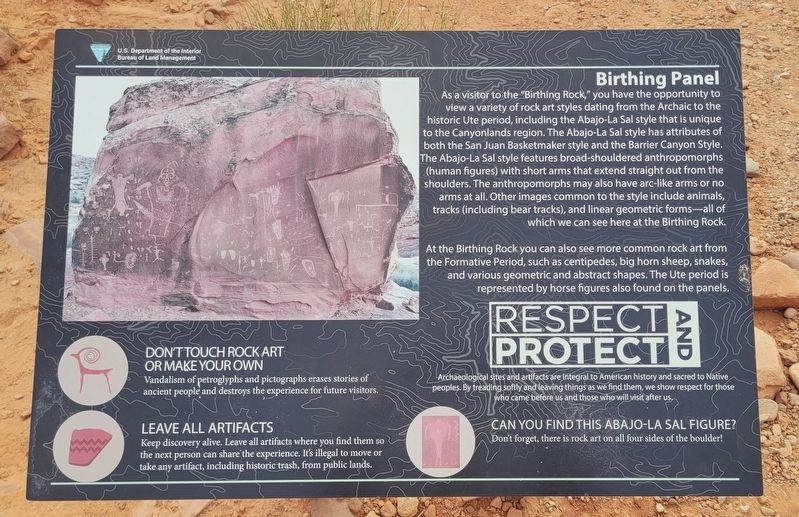
Birthing Panel
Photographed by James Hulse, March 29, 2025
1. Birthing Panel Marker
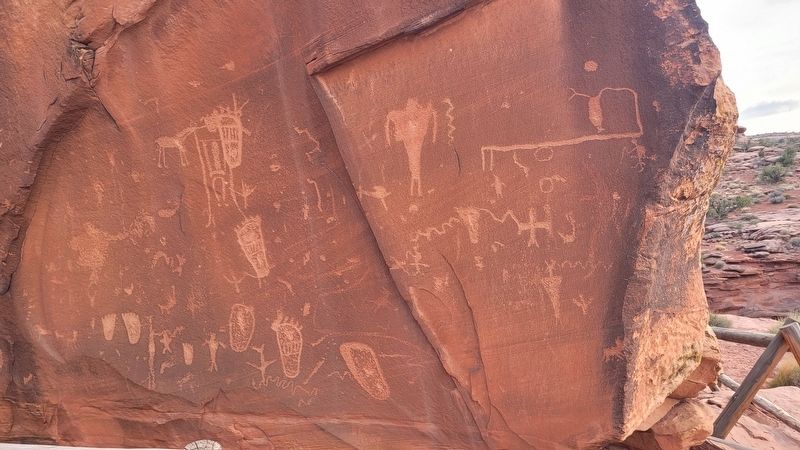
At the Birthing Rock you can also see more common rock art from the Formative Period, such as centipedes, big horn sheep, snakes, and various geometric and abstract shapes. The Ute period is represented by horse figures also found on the panels.
Respect and Protect
Archaeological sites and artifacts are integral to American history and sacred to Native peoples. By treading softly and leaving things as we find them, we show respect
this page online
Don't Touch Rock Art or Make Your Own
Vandalism of petroglyphs and pictographs erases stories of ancient people and destroys the experience for future visitors.
Leave All Artifacts
Keep discovery alive. Leave all artifacts where you find them so the next person can share the experience. It's illegal to move or take any artifact, including historic trash, from public lands.
Can You Find This Abajo-la Sal Figure?
Don't forget, there is rock art on all four sides of the boulder!
Erected by U.S. Department of the Interior Bureau of Land Management.
Topics. This historical marker is listed in these topic lists: Anthropology & Archaeology • Indigenous Peoples and Communities • Parks & Recreational Areas.
Location. 38° 31.321′ N, 109° 36.164′ W. Marker is near Moab, Utah, in Grand County. It is on Kane Springs Road (Moab Kane Creek Blvd) 5½ miles south of 500 W, on the right when traveling south. The marker is located along the road. Touch for map. Marker is in this post office area: Moab UT 84532,
Photographed by James Hulse, March 29, 2025
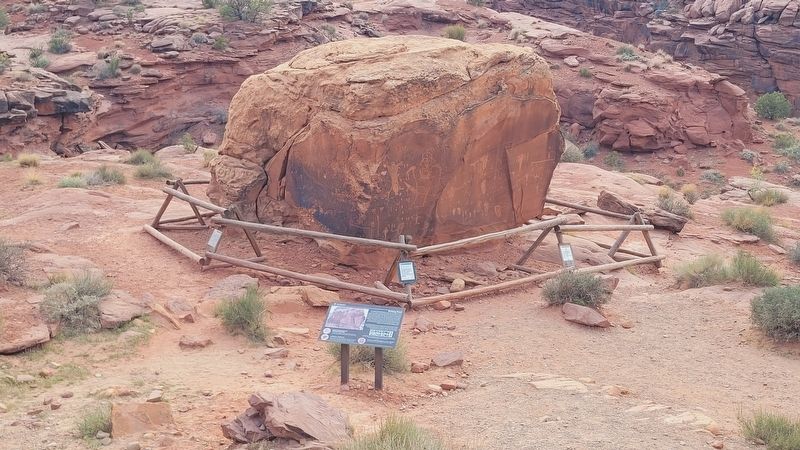
2. The Birthing Panel and Marker

Regionally, this marker is in Canyon Country. It is also in the American Mountain West, on the Colorado Plateau, and at the Four Corners. Globally, it is in North America, the Western Hemisphere, the Western World, and the Anglosphere. Historically, it finds itself in what was once New Spain and also Mexico’s Alta California.

Other nearby markers. At least 8 other markers are within 4 miles of this marker, measured as the crow flies: Base Jumping in Moab (approx. half a mile away); Poison Spider Rock Art (approx. 0.8 miles away); Traces from an Ancient Desert Realm (approx. 0.8 miles away); Poison Spider Paleontology (approx. 0.8 miles away); Prowling Predators (approx. 0.8 miles away); Tracks and Traces (approx. 0.9 miles away); Utah Highway 279 Rock Art Site (approx. 1.6 miles away); The Moab Skyway - High Hopes and Big Risks (approx. 3.9 miles away). Touch for a list and map of all markers in Moab.
Photographed by James Hulse, March 29, 2025
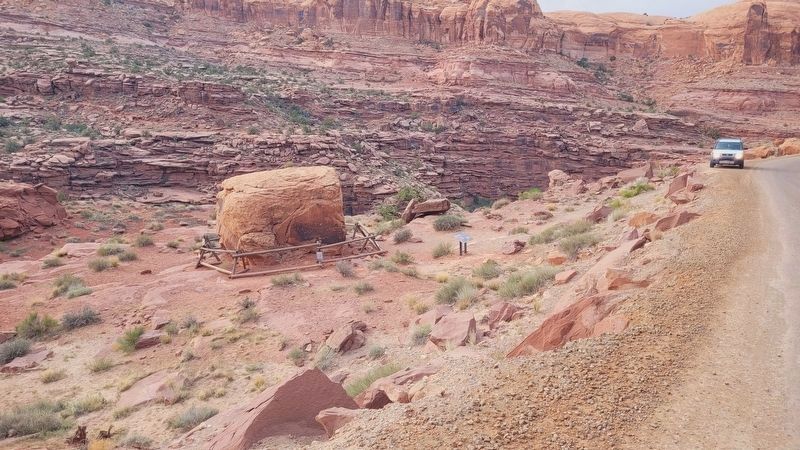
3. The view of the Birthing Panel and Marker along the road
Photographed by James Hulse, March 29, 2025
4. Birthing Panel (right side)
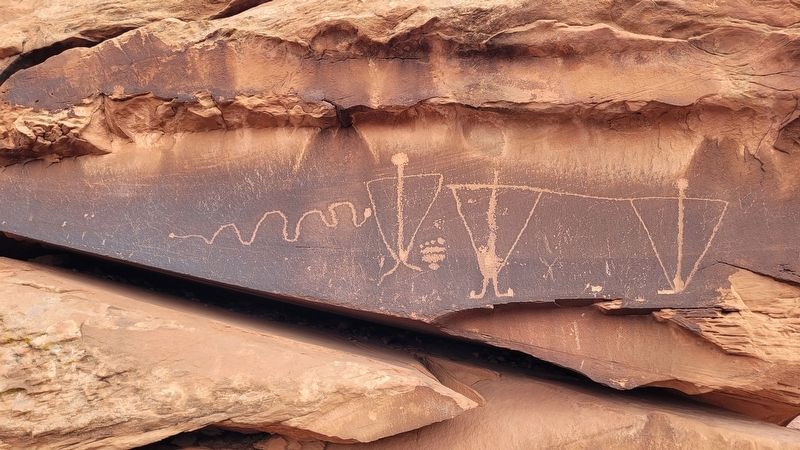
Photographed by James Hulse, March 29, 2025
5. Side panel
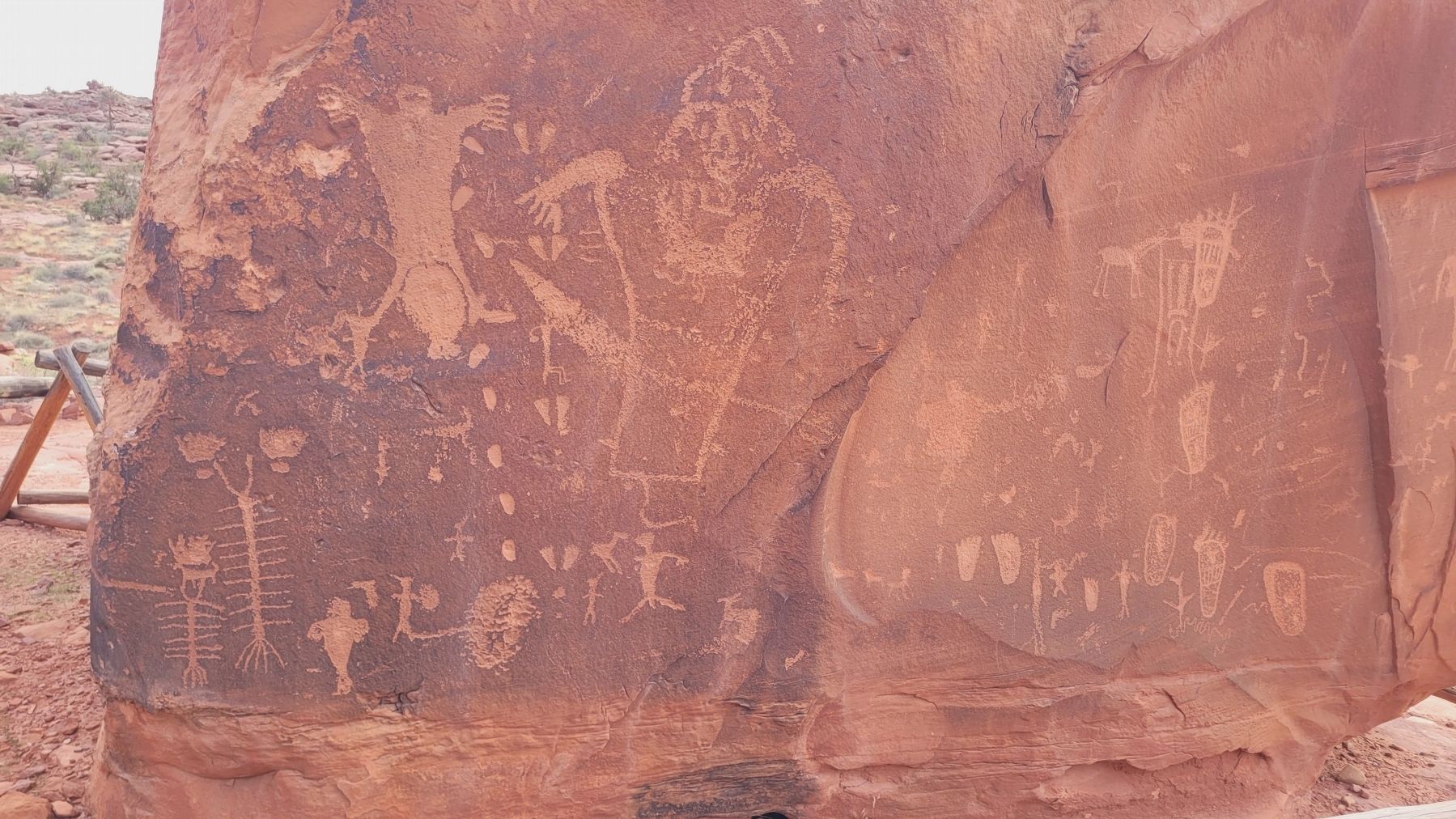
Photographed by James Hulse, March 29, 2025
6. The Birthing Panel (left side)
The Birthing Scene Petroglyph is located at the top left of the panel.
Credits. This page was last revised on April 25, 2025. It was originally submitted on April 25, 2025, by James Hulse of Medina, Texas. This page has been viewed 169 times since then and 27 times this year. Photos: 1, 2, 3, 4, 5, 6. submitted on April 25, 2025, by James Hulse of Medina, Texas.
