Near Moab in Grand County, Utah — The American Mountains (Southwest)
Cultural Connections
Photographed by James Hulse, March 30, 2025
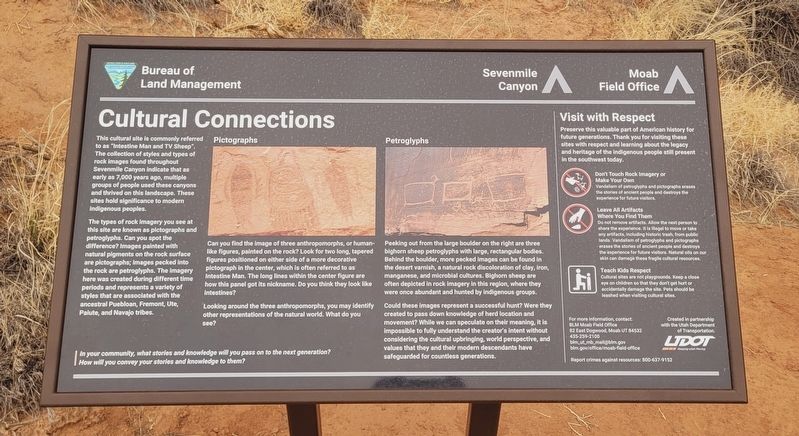
1. Cultural Connections Marker
The types of rock imagery you see at this site are known as pictographs and petroglyphs. Can you spot the difference? Images painted with natural pigments on the rock surface are pictographs; images pecked into the rock are petroglyphs. The imagery here was created during different time periods and represents a variety of styles that are associated with the ancestral Puebloan, Fremont, Ute, Paiute, and Navajo tribes.
Pictographs
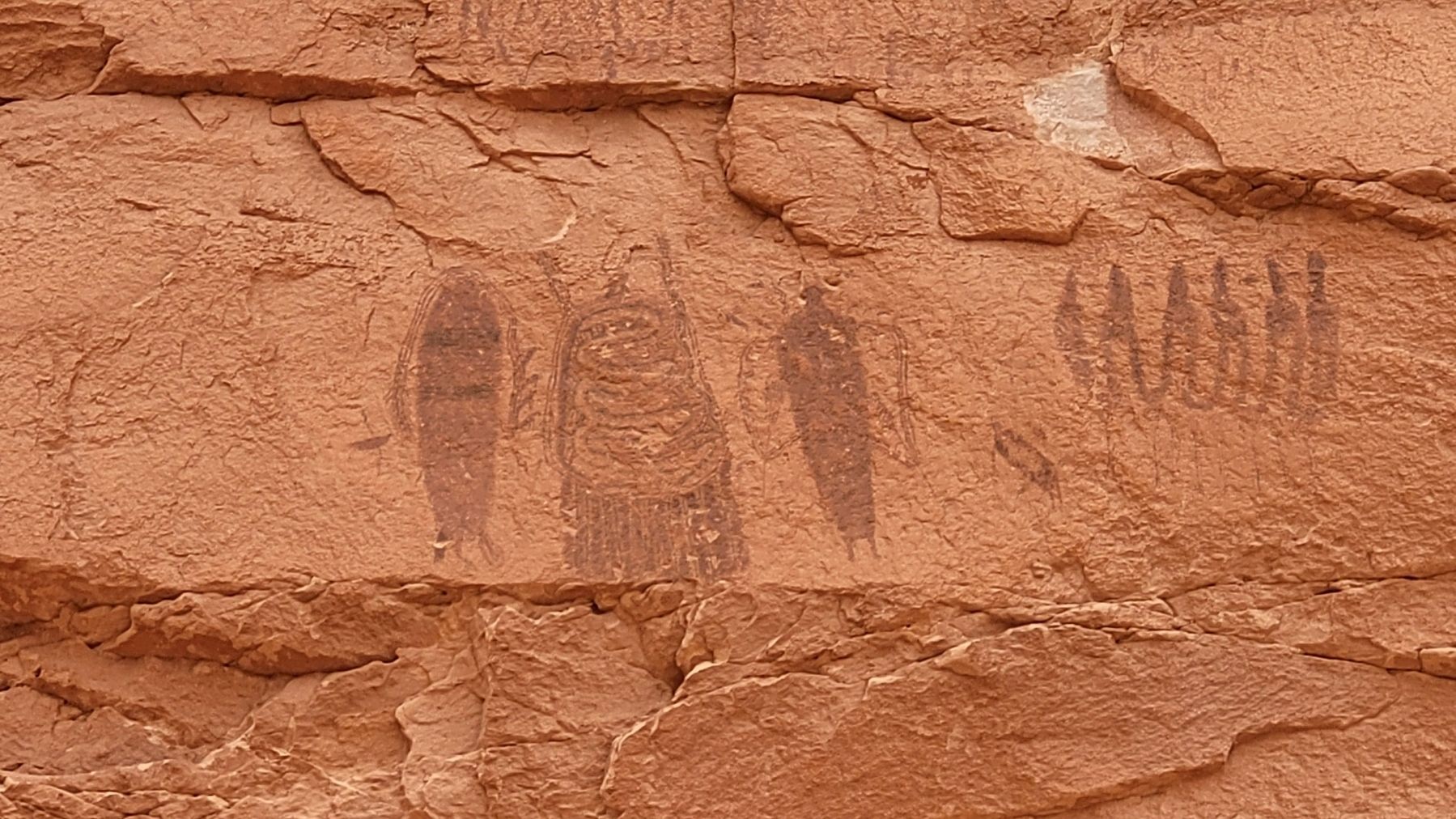
Can you find the image of three anthropomorphs, or human-like figures, painted on the rock? Look for two long, tapered figures positioned on either side of a more decorative pictograph in the center, which is often referred to as Intestine Man. The long lines within the center figure are how this panel got its nickname. Do you think they look like intestines?
Looking
this page online
Petroglyphs
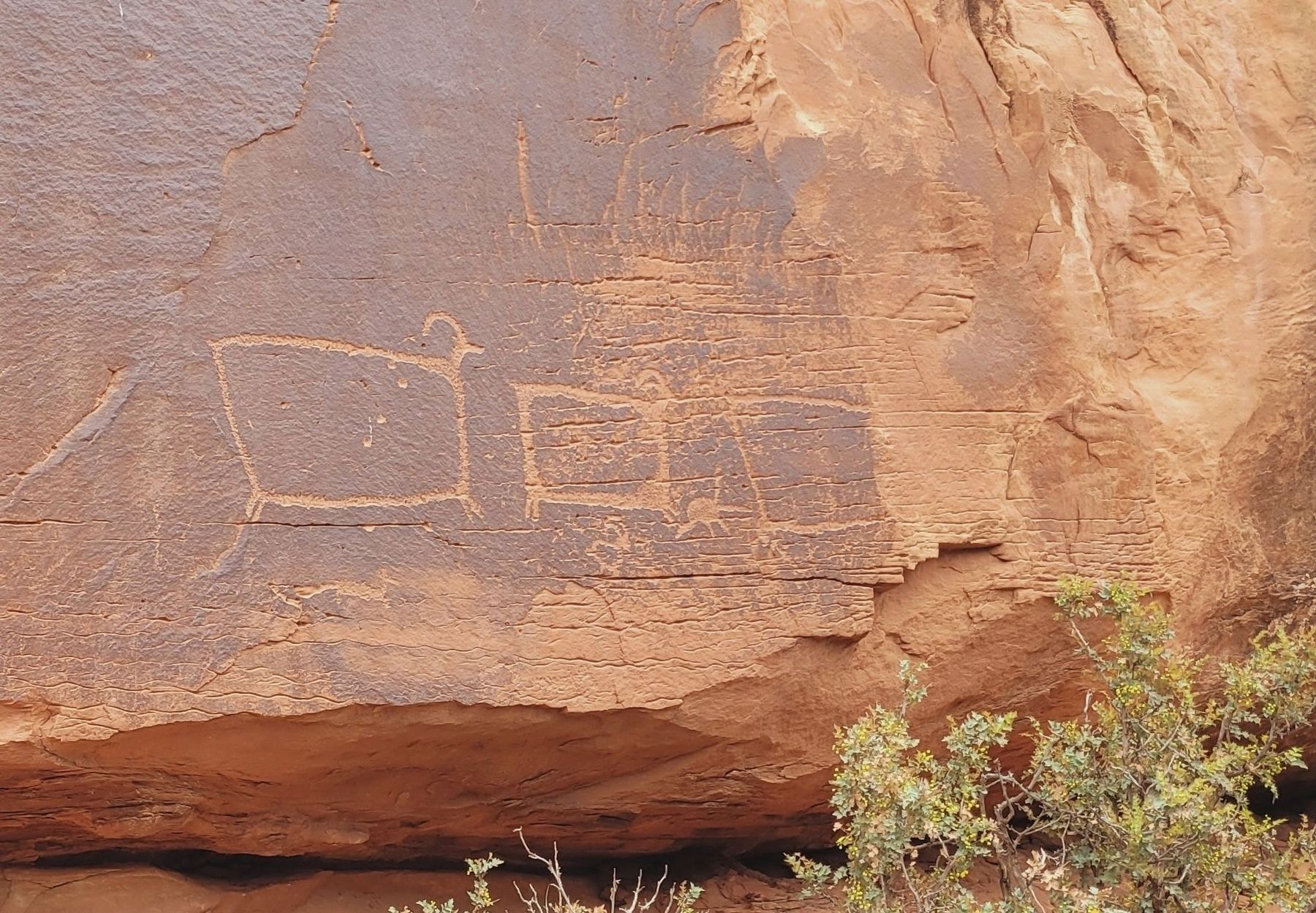
Peeking out from the large boulder on the right are three bighorn sheep petroglyphs with large, rectangular bodies. Behind the boulder, more pecked images can be found in the desert varnish, a natural rock discoloration of clay, iron, manganese, and microbial cultures. Bighorn sheep are often depicted in rock imagery in this region, where they were once abundant and hunted by indigenous groups.
Could these images represent a successful hunt? Were they created to pass down knowledge of herd location and movement? While we can speculate on their meaning, it is impossible to fully understand the creator's intent without considering the cultural upbringing, world perspective, and values that they and their modern descendants have safeguarded for countless generations.
Visit with Respect
Preserve this valuable part of American history for future generations. Thank you for visiting these sites with respect and learning about the legacy and heritage of the indigenous people still present in the southwest today.
Don't Touch Rock Imagery or Make Your Own
Vandalism of petroglyphs and pictographs erases the stories of ancient people and destroys the experience for future visitors.
Leave All Artifacts Where You Find Them
Do not remove artifacts. Allow the next person to share the experience. It is illegal to move or take any artifacts, including historic trash, from public lands. Vandalism of petroglyphs and pictographs erases the stories of ancient people and destroys the experience for future visitors. Natural oils on our skin can damage these fragile cultural resources.
Teach Kids Respect
Cultural sites are not playgrounds. Keep a close eye on children so that they don't get hurt or accidentally damage the site. Pets should be leashed when visiting cultural sites.
For more information, contact: BLM Moab Field Office, 82 East Dogwood, Moab UT 84532 435-259-2100, [email protected] blm.gov/office/moab-field-office, Report crimes against resources: 800-637-9152, Created in partnership with the Utah Department of Transportation. UDOT
Erected by Bureau
Photographed by James Hulse, March 30, 2025
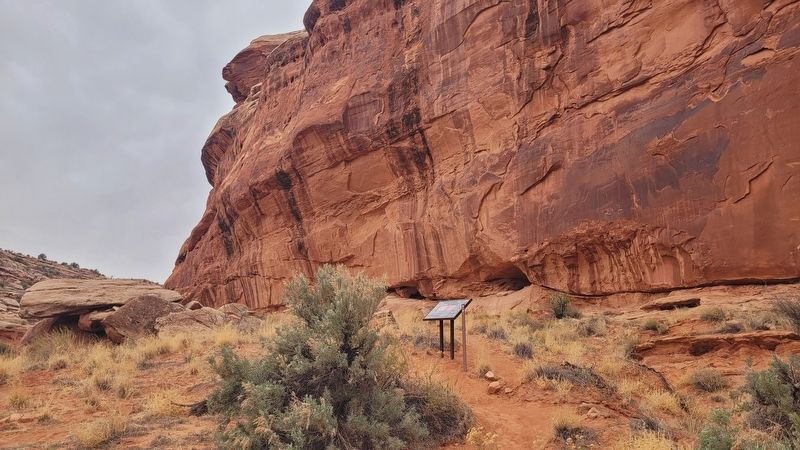
2. The view of the marker along the canyon wall
Topics. This historical marker is listed in these topic lists: Anthropology & Archaeology • Indigenous Peoples and Communities • Parks & Recreational Areas.
Location. 38° 38.913′ N, 109° 43.46′ W. Marker is near Moab, Utah, in Grand County. It is on State Road 313 2.7 miles west of U.S. 191, on the right when traveling south. The marker is located along the road to the Canyonlands National Park. Touch for map. Marker is at or near this postal address: 545 UT-313, Moab UT 84532, United States of America. Touch for directions.

Regionally, this marker is in Canyon Country. It is also in the American Mountain West, on the Colorado Plateau, and at the Four Corners. Globally, it is in North America, the Western Hemisphere, the Western World, and the Anglosphere. Historically, it finds itself in what was once New Spain and also Mexico’s Alta California.

Other nearby markers. At least 8 other markers are within 6 miles of this marker, measured as the crow flies: Monitor and Merrimac (approx. 0.7 miles away); Navajo Sandstone (approx. 0.7 miles away);
Photographed by James Hulse, March 30, 2025
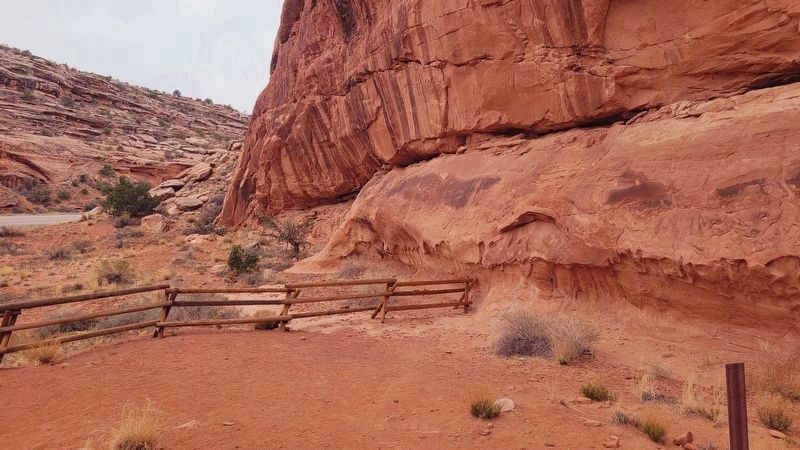
3. Intestine Man Pictographs
The Intestine Man Pictograph is located at the top right of the photograph.
Photographed by James Hulse, March 30, 2025
4. Closeup of the Intestine Man Pictographs
Photographed by James Hulse, March 30, 2025
5. Closeup of the TV Sheep Petroglyphs
Credits. This page was last revised on April 26, 2025. It was originally submitted on April 25, 2025, by James Hulse of Medina, Texas. This page has been viewed 135 times since then and 14 times this year. Photos: 1, 2, 3, 4, 5. submitted on April 26, 2025, by James Hulse of Medina, Texas.
