Near Ramah in Cibola County, New Mexico — The American Mountains (Southwest)
Matilda Coxe Stevenson (1849-1915)
⎯⎯⎯
New Mexico Historic Women Marker Initiative
Photographed by Cosmos Mariner, May 20, 2016
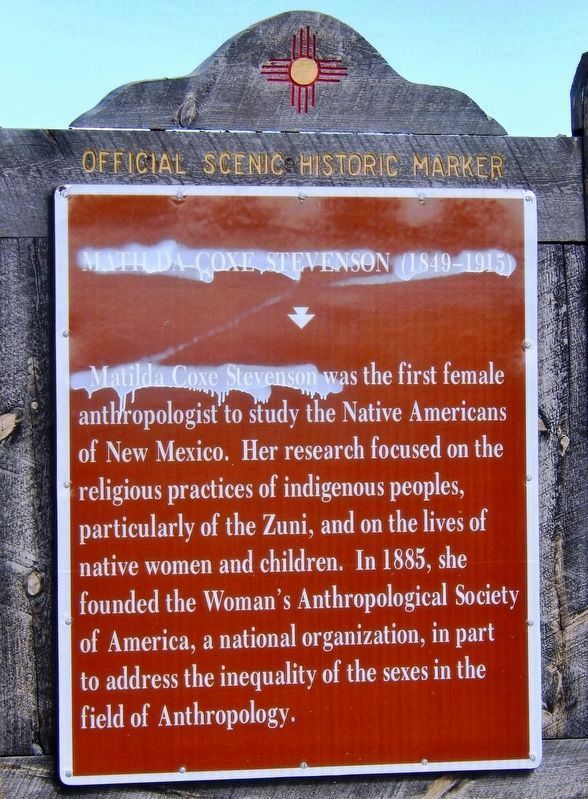
1. Matilda Coxe Stevenson (1849-1915)
(marker east side)
(marker east side)
Matilda Coxe Stevenson (1849-1915). Matilda Coxe Stevenson was the first female anthropologist to study the Native Americans of New Mexico. Her research focused on the religious practices of indigenous peoples, particularly of the Zuni, and on the lives of native women and children. In 1885, she founded the Woman’s Anthropological Society of America, a national organization, in part to address the inequality of the sexes in the field of Anthropology.
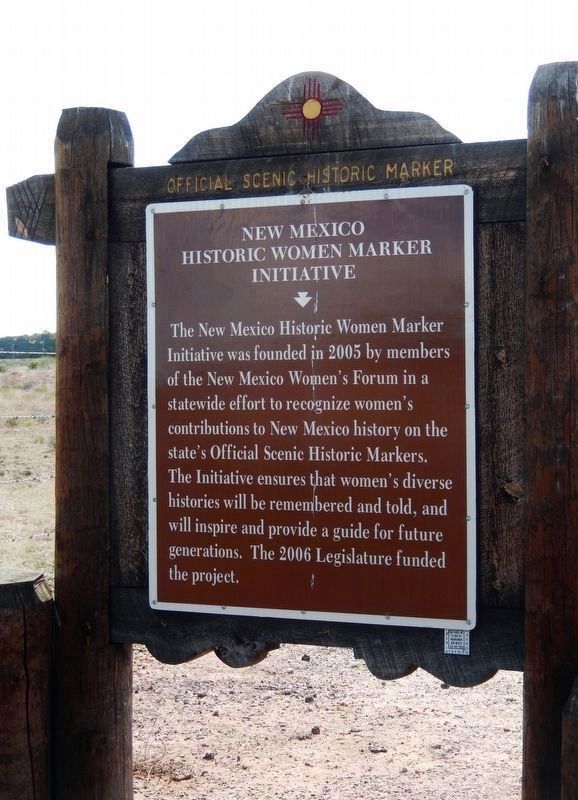
New Mexico Historic Women Marker Initiative. The New Mexico Historic Women Marker Initiative was founded in 2005 by members of the New Mexico Women's Forum in a statewide effort to recognize women's contributions to New Mexico history on the state's Official Scenic Historic Markers. The Initiative ensures that women's diverse histories will be remembered and told, and will inspire and provide a guide for future generations. The 2006 Legislature funded the project.
Erected by New Mexico Historic Preservation Division.
Topics and series. This historical marker is listed in these topic lists: Anthropology & Archaeology • Indigenous Peoples and Communities
this page online
Location. 35° 2.965′ N, 108° 23.012′ W. Marker is near Ramah, New Mexico, in Cibola County. It is on Ice Caves Road (New Mexico Route 53 at milepost 42.2), ¾ mile east of Indian Service Route 125, on the right when traveling east. Marker is located in a pull-out on the south side of the highway. Touch for map. Marker is in this post office area: Ramah NM 87321, United States of America. Touch for directions.

Regionally, this marker is in the Navajo Nation and in the San Juan Basin. It is also in the American Southwest and on the Colorado Plateau. Globally, it is in North America, the Western Hemisphere, the Western World, and the Anglosphere. Historically, it finds itself in what was once New Spain and also the territory of the Ancestral Puebloans.
Other nearby markers. At least 8 other markers are within 3 miles of this marker, measured as the crow flies: Atsinna (approx. 1.9 miles away); Lemonade Sumac (approx. 1.9 miles away); Oasis (approx. 1.9 miles away); Preserving Our Heritage
Photographed by Cosmos Mariner, May 20, 2016
2. New Mexico Historic Women Marker Initiative
(marker west side)
(marker west side)
Also see . . .
1. Matilda Coxe Stevenson. Matilda devoted her life to the study of the Native Americans of New Mexico. She started by assisting her husband and preparing catalogues of artifacts collected in the early expeditions to New Mexico. In 1879, she studied at Zuni Pueblo for six months and visited most of the other pueblos as well as Canyon de Chelly and Rito de los Frijoles (Bandelier National Park). (Submitted on December 23, 2020, by Cosmos Mariner of Cape Canaveral, Florida.)
2. Matilda Coxe Stevenson (Wikipedia). She spent 13 years in explorations of the Rocky Mountain region with her husband. In the 1880s, the Stevensons "formed the first husband-wife team in anthropology." In 1885, Matilda Coxe Stevenson became the first President of the Women's Anthropological Society of America. (Submitted on December 23, 2020, by Cosmos Mariner of Cape Canaveral, Florida.)
3. Matilda Coxe Evans Stevenson.
Photographed by Cosmos Mariner, May 20, 2016
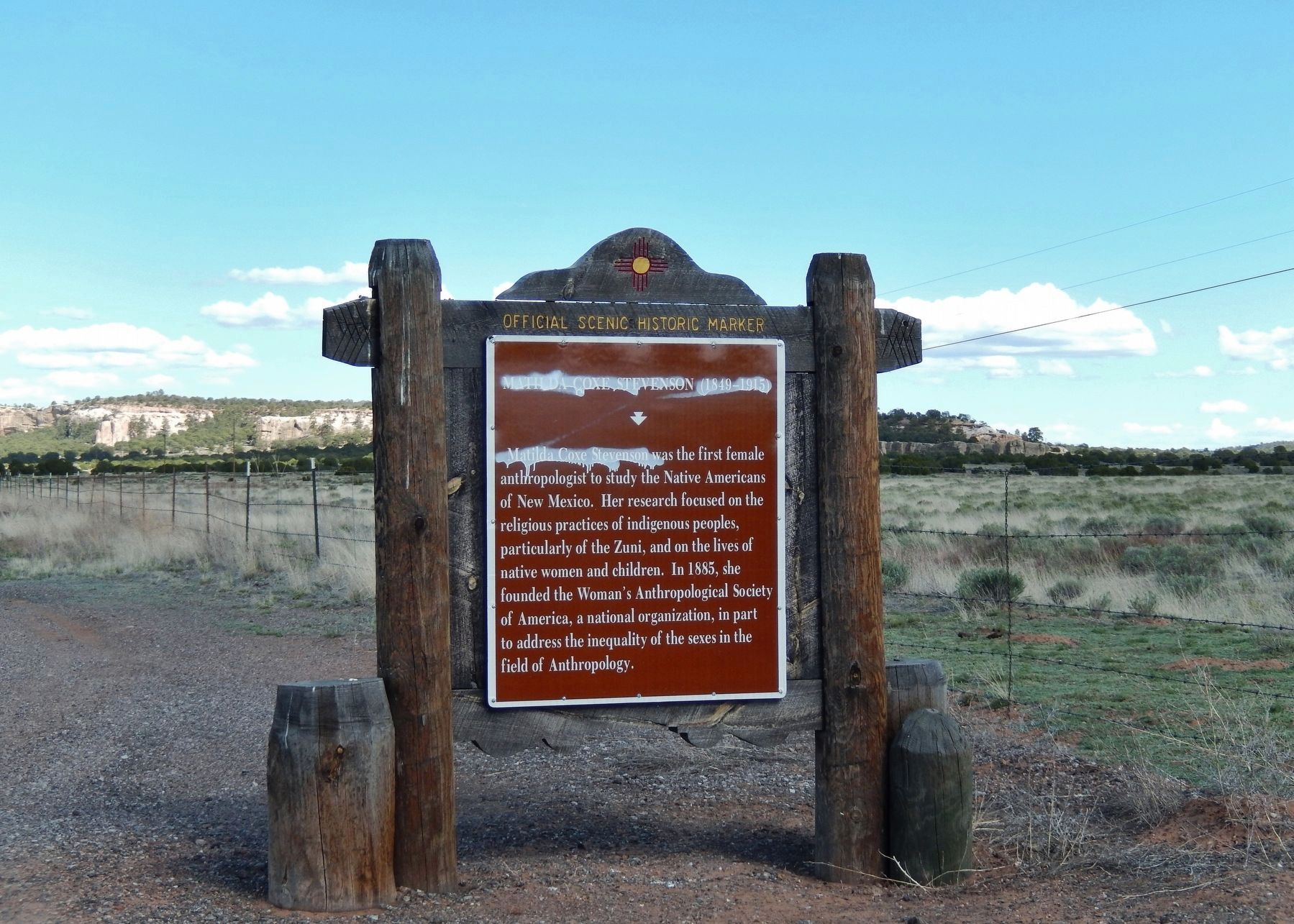
3. Matilda Coxe Stevenson (1849-1915) Marker
Credits. This page was last revised on August 6, 2025. It was originally submitted on December 23, 2020, by Cosmos Mariner of Cape Canaveral, Florida. This page has been viewed 489 times since then and 46 times this year. Last updated on July 30, 2025, by Bill Wingate of Albuquerque, New Mexico. Photos: 1, 2, 3. submitted on December 23, 2020, by Cosmos Mariner of Cape Canaveral, Florida. • Devry Becker Jones was the editor who published this page.
