Near Niagara-on-the-Lake in Niagara Region, Ontario — Central Canada (North America)
Chloe Cooley and the 1793 Act to Limit Slavery in Upper Canada
Chloe Cooley Et La Loi De 1793 Visant À Restreindre L'Esclavage Dans Le Haut-Canada
Photographed by Dale K. Benington, June 11, 2012
1. Chloe Cooley and the 1793 Act to Limit Slavery in Upper Canada Marker
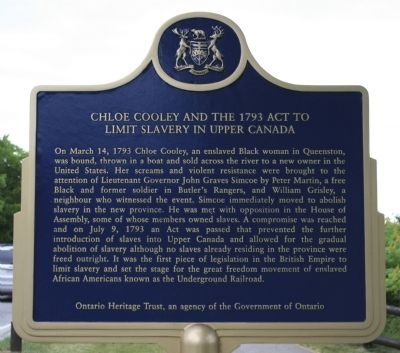
View of the English text side of the historical marker.

On March 14, 1793 Chloe Cooley, an enslaved Black woman in Queenston, was bound, thrown in a boat and sold across the river to a new owner in the United States. Her screams and violent resistance were brought to the attention of Lieutenant Governor John Graves Simcoe by Peter Martin, a free Black and former soldier in Butler's Rangers, and William Grisley, a neighbour who witnessed the event. Simcoe immediately moved to abolish slavery in the new province. He was met with opposition in the House of Assembly, some of whose members owned slaves. A compromise was reached and on July 9, 1793 an Act was passed that prevented the further introduction of slaves into Upper Canada and allowed for the gradual abolition of slavery although no slaves already residing in the province were freed outright. It was the first piece of legislation in the British Empire to limit slavery and set the stage for the great freedom movement of enslaved African Americans known as the Underground Railroad.
this page online
Erected by Ontario Heritage Trust, an agency of the Government of Ontario.
Topics and series. This historical marker is
Photographed by Dale K. Benington, June 11, 2012
2. Chloe Cooley and the 1793 Act to Limit Slavery in Upper Canada Marker
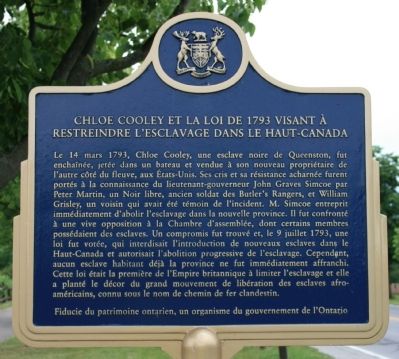
View of the French text side of the historical marker.
Location. 43° 11.164′ N, 79° 3.476′ W. Marker is near Niagara-on-the-Lake, Ontario, in Niagara Region. It is on Niagara River Parkway 0.1 kilometers south of Line 6 Rd, on the right when traveling north. Marker is on the east side (the river side) of Niagara River Parkway, 3 km north of York Road (Road 81) in Queenston. Touch for map. Marker is at or near this postal address: 14940 Niagara River Parkway, Niagara-on-the-Lake ON L0S 1J0, Canada. Touch for directions.

Regionally, this marker is on the Golden Horseshoe and in Niagara Canada. It is also in Central Canada. Globally, it is in North America, on the Great Lakes, in the Western Hemisphere, in the Western World, and in the Anglosphere. Historically, it finds itself in what was once a British colony, the Viceroyalty of New France, the Haudenosaunee (Iroquois) Confederacy, and Rupert’s Land.
Other nearby markers. At least 8 other markers
Photographed by Dale K. Benington, June 11, 2012
3. Chloe Cooley and the 1793 Act to Limit Slavery in Upper Canada Marker
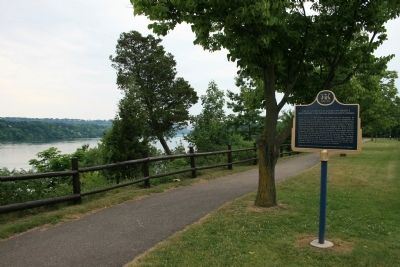
View of the historical marker looking south along the Niagara River where the Chloe Cooley incident took place.
Regarding Chloe Cooley and the 1793 Act to Limit Slavery in Upper Canada. The anti-slavery law that resulted from this incident did not benefit Miss Cooley herself; she was taken to the American side of the river, and continued her life of slavery.
Also see . . .
1. Chloe Cooley. This is a link to information provided by the Black History Canada website. (Submitted on June 18, 2013, by Dale K. Benington of Toledo, Ohio.)
2. Chloe Cooley Incident.
Photographed by Dale K. Benington, June 11, 2012
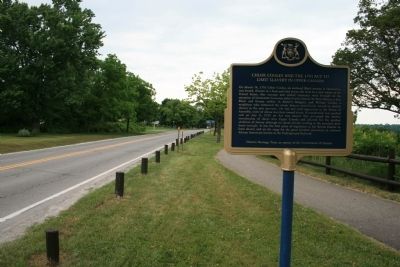
4. Chloe Cooley and the 1793 Act to Limit Slavery in Upper Canada Marker
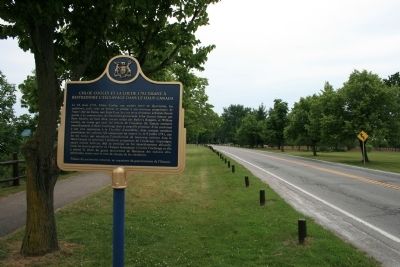
View of the historical marker looking south along the Niagara Parkway.
3. Chloe Cooley and the 1793 Act to Limit Slavery in Upper Canada. This is a link to information provided by The Ontario Heritage Trust. (Submitted on June 18, 2013, by Dale K. Benington of Toledo, Ohio.)
4. Act Against Slavery. This is a link to information provided by Wikipedia, the free encyclopedia. (Submitted on June 18, 2013, by Dale K. Benington of Toledo, Ohio.)
5. Upper Canadian Act Against Slavery. This is a link to information provided by Wikisource. (Submitted on June 18, 2013, by Dale K. Benington of Toledo, Ohio.)
Photographed by Dale K. Benington, June 11, 2012
5. Chloe Cooley and the 1793 Act to Limit Slavery in Upper Canada Marker
View of the historical marker looking north along the Niagara Parkway.
Credits. This page was last revised on October 24, 2025. It was originally submitted on June 18, 2013, by Dale K. Benington of Toledo, Ohio. This page has been viewed 2,073 times since then and 106 times this year. Last updated on August 30, 2025, by Kevin Westell of St. Catharines, Ontario. Photos: 1, 2, 3, 4, 5. submitted on June 18, 2013, by Dale K. Benington of Toledo, Ohio. • Devry Becker Jones was the editor who published this page.
