Grimsby in Niagara Region, Ontario — Central Canada (North America)
Bell Park
The Heart of Grimsby Park
| — | Grimsby Remembers | — |
Photographed by Tim Boyd, June 15, 2024
1. Bell Park Marker
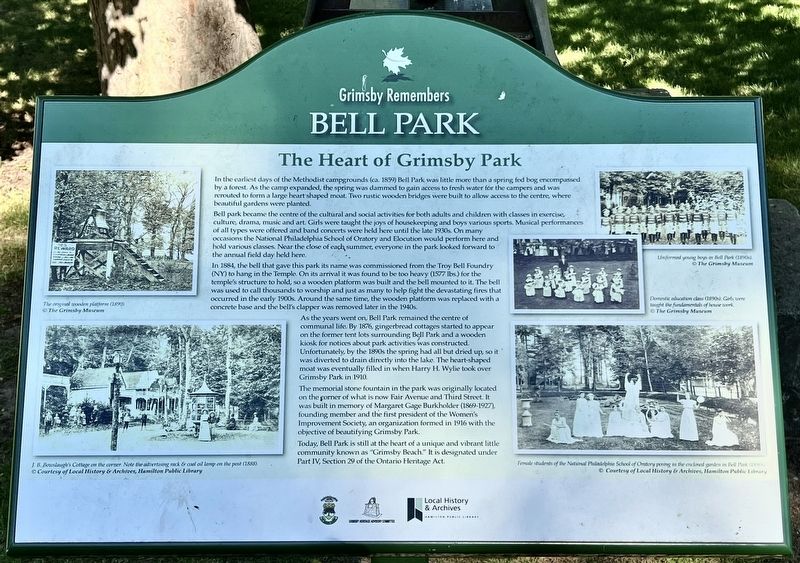
In the earliest days of the Methodist campgrounds (ca. 1859) Bell Park was little more than a spring fed bog encompassed by a forest. As the camp expanded, the spring was dammed to gain access to fresh water for the campers and was rerouted to form a large heart shaped moat. Two rustic wooden bridges were built to allow access to the centre, where beautiful gardens were planted.
Bell park became the centre of the cultural and social activities for both adults and children with classes in exercise, culture, drama, music and art. Girls were taught the joys of housekeeping and boys various sports. Musical performances of all types were offered and band concerts were held here until the late 1930s. On many occasions the National Philadelphia School of Oratory and Elocution would perform here and hold various classes. Near the close of each summer, everyone in the park looked forward to the annual field day held here.
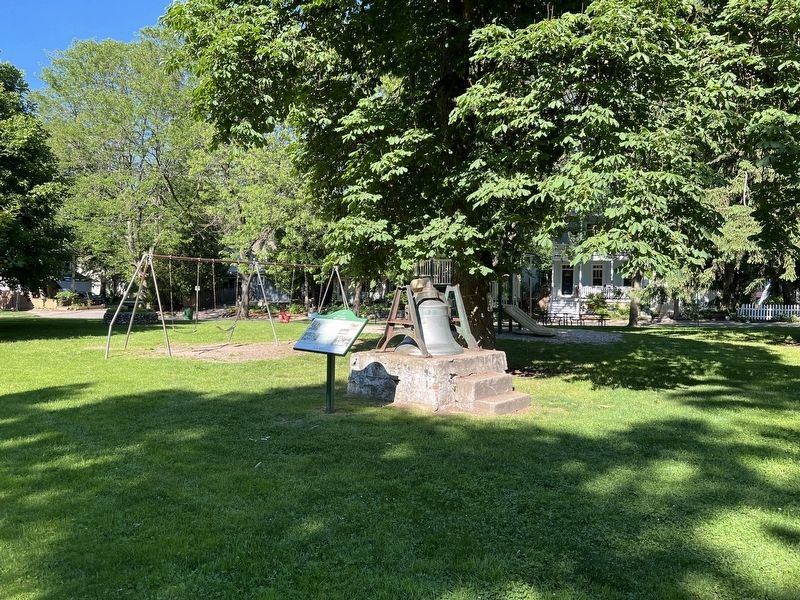
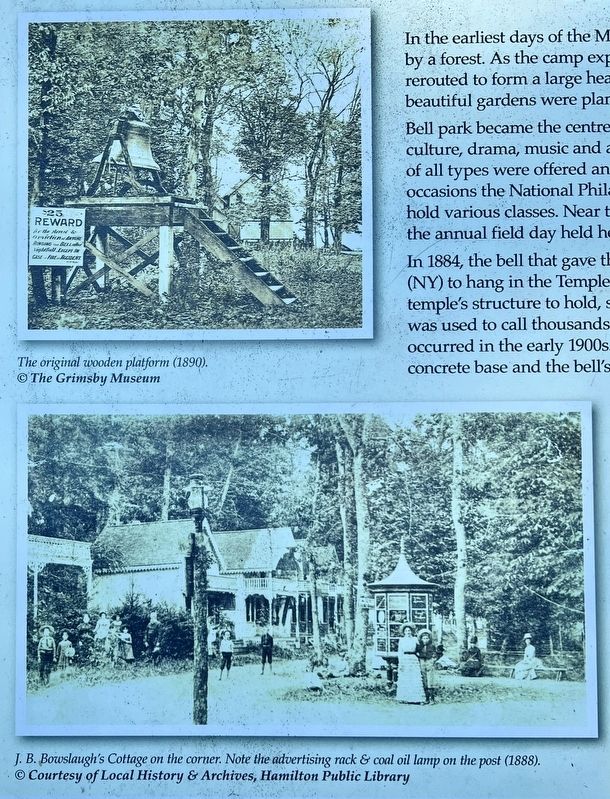
In 1884, the bell that gave this park its name was commissioned from the Troy Bell Foundry (NY) to hang in the Temple. On its arrival it was found to be too heavy (1577 lbs.) for the temple's structure
this page online
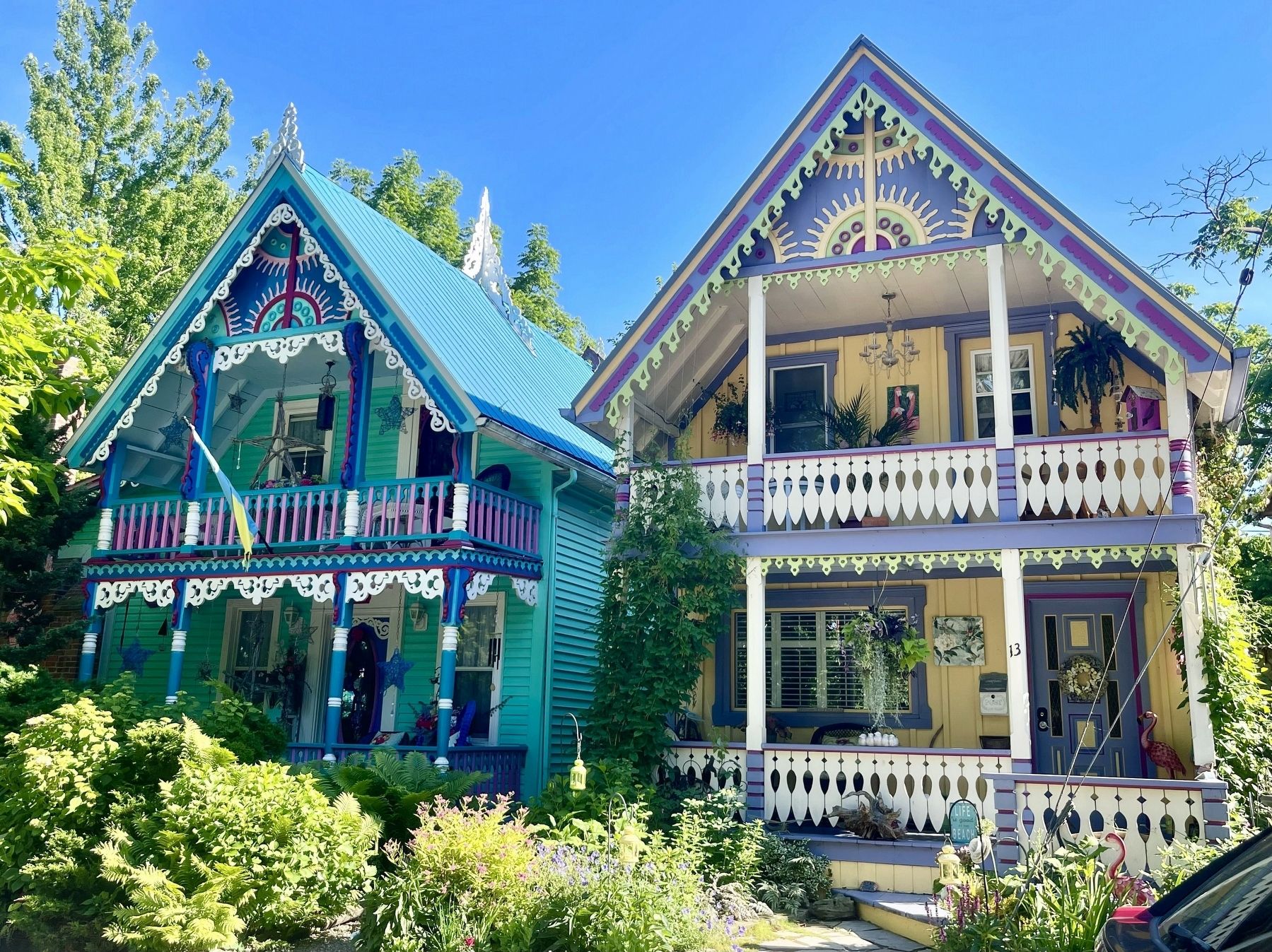
As the years went on, Bell Park remained the centre of communal life. By 1876, gingerbread cottages started to appear on the former tent lots surrounding Bell Park and a wooden kiosk for notices about park activities was constructed. Unfortunately, by the 1890s the spring had all but dried up, so it was diverted to drain directly into the lake. The heart-shaped moat was eventually filled in when Harry H. Wylie took over Grimsby Park in 1910.
The memorial stone fountain in the park was originally located on the corner of what is now Fair Avenue and Third Street. It was built in memory of Margaret Gage Burkholder (1869-1927), founding member and the first president of the Women's Improvement Society, an organization formed in 1916 with the objective of beautifying Grimsby Park.
Today, Bell Park is
Photographed by Tim Boyd, June 15, 2024
2. Bell Park Marker
Topics and series. This historical marker is listed in these topic lists: Education • Parks & Recreational Areas • Religion & Religious Structures • Women. In addition, it is included in the Historic Bells series list. A significant historical year for this entry is 1859.
Location. 43° 11.643′ N, 79° 31.603′ W. Marker is in Grimsby, Ontario, in Niagara Region. It is at the intersection of Fair Avenue and 3rd Street, on the left when traveling east on Fair Avenue. Touch for map. Marker is at or near this postal address: 22 Fair Avenue, Grimsby ON L3M 2A5, Canada. Touch for directions.

Regionally, this marker is on the Golden Horseshoe and in Niagara Canada. It is also in Central Canada. Globally, it is in North America, on the Great Lakes, in the Western Hemisphere, in the Western World, and in the Anglosphere. Historically, it finds itself in what was once a British colony, the Viceroyalty of New France, the Haudenosaunee (Iroquois) Confederacy,
Photographed by Tim Boyd, June 15, 2024
3. Bell Park marker photo detail
Other nearby markers. At least 8 other markers are within 3 kilometers of this marker, measured as the crow flies: The Grimsby Beach Waterfront (about 120 meters away, measured in a direct line); Grand Old White Oak Tree Stand (about 180 meters away); Tender Fruits: Agriculture In A Microclimate (approx. 2.1 kilometers away); Queen's Lawn Memorial Gates (approx. 2.1 kilometers away); Queen's Lawn Gates - 1921 (approx. 2.1 kilometers away); Neutral Indian Burial-Ground (approx. 2.2 kilometers away); Forty Mile Creek (approx. 2.4 kilometers away); Grimsby 1812 Bicentennial Flagpole (approx. 2.4 kilometers away). Touch for a list and map of all markers in Grimsby.
Also see . . . Exploring Niagara - Grimsby Park.
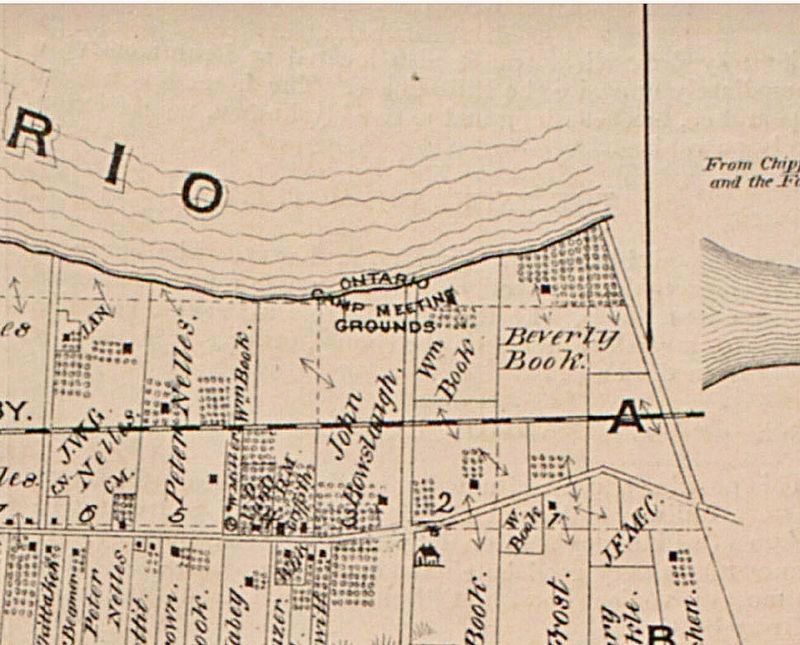
In 1874 the Grimsby Camp-meeting became Grimsby Park. At this meeting the original founders took steps to create a company to be called the Ontario Methodist Camp Ground Company. Noah Phelps would be the President, Mr. Bowslaugh the Treasurer and Mr. Fairfield the Secretary. By the following year all the tents had been taken down and replaced with sixty or seventy new modern cottages.(Submitted on June 18, 2024, by Tim Boyd of Hamilton, Ontario.)

Photographed by Tim Boyd, June 15, 2024
4. Bell Park marker photo detail
1876
5. “Ontario Camp Meeting Grounds” shown on a map of 1876
From the Historical Atlas of Lincoln and Welland Counties
Photographed by Tim Boyd, June 15, 2024
6. Two of the gingerbread cottages at Grimsby Beach Park
Credits. This page was last revised on September 29, 2025. It was originally submitted on June 18, 2024, by Tim Boyd of Hamilton, Ontario. This page has been viewed 561 times since then and 79 times this year. Last updated on September 14, 2025, by Kevin Westell of St. Catharines, Ontario. Photos: 1, 2, 3, 4, 5, 6. submitted on June 18, 2024, by Tim Boyd of Hamilton, Ontario. • Devry Becker Jones was the editor who published this page.
