Natchez in Adams County, Mississippi — The American South (East South Central)
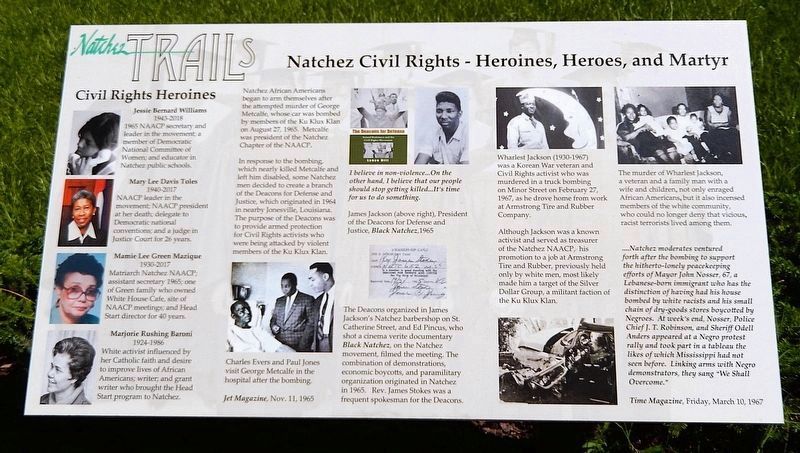
Natchez Civil Rights — Heroines, Heroes, and Martyr
Natchez Trails
Photographed by Cosmos Mariner, June 24, 2025
1. Natchez Civil Rights — Heroines, Heroes, and Martyr Marker
Civil Rights Heroines
Jessie Bernard Williams
1943-2018
1965 NAACP secretary and leader in the movement; a member of Democratic National Committee of Women; and educator in Natchez public schools.
Mary Lee Davis Toles
1940-2017
NAACP leader in the movement; NAACP president at her death; delegate to Democratic national conventions; and a judge in Justice Court for 26 years.
Mamie Lee Green Mazique
1930-2017
Matriarch Natchez NAACP; assistant secretary 1965; one of Green family who owned White House Cafe, site of NAACP meetings; and Head Start director for 40 years.
Marjorie Rushing Baroni
1924-1986
White activist influenced by her Catholic faith and desire to improve lives of African Americans; writer; and grant writer who brought the Head Start program to Natchez.
In response to the bombing, which nearly killed Metcalfe and left him disabled, some Natchez men decided to create a branch of the Deacons
this page online
I believe in non-violence... On the other hand, I believe that our people should stop getting killed... It's time for us to do something.
—James Jackson (above right), President of the Deacons for Defense and Justice, Black Natchez, 1965
The Deacons organized in James Jackson's Natchez barbershop on St. Catherine Street, and Ed Pincus, who shot a cinema verite documentary Black Natchez, on the Natchez movement, filmed the meeting. The combination of demonstrations, economic boycotts, and paramilitary organization originated in Natchez in 1965. Rev. James Stokes was a frequent spokesman for the Deacons.
Wharlest Jackson (1930-1967) was a Korean War veteran and Civil Rights activist who was murdered in a truck bombing on Minor Street on February 27, 1967, as he drove home from work at Armstrong Tire and Rubber Company.
Although Jackson was a known activist and served as treasurer of the Natchez NAACP, his promotion
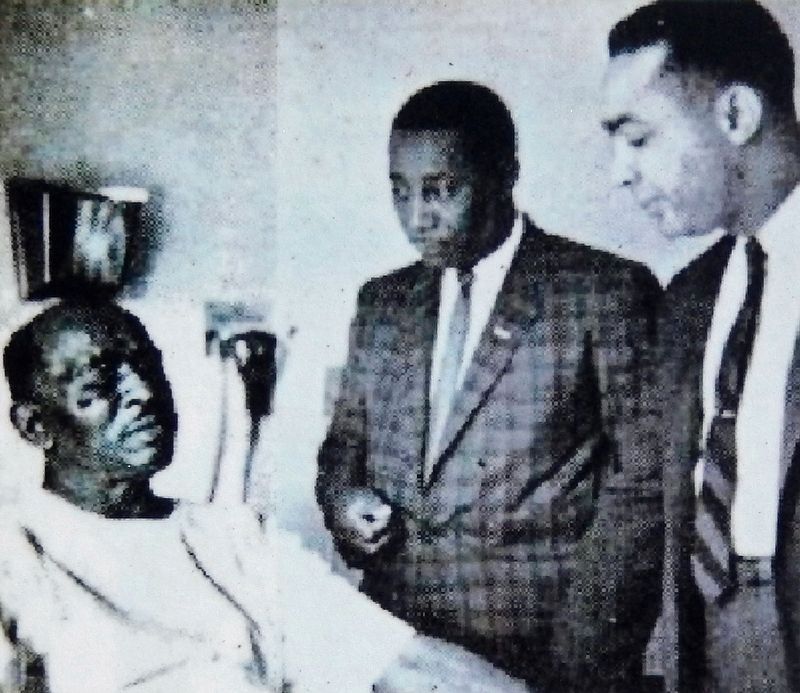
2. Marker detail: Charles Evers and Paul Jones visit George Metcalfe in the hospital after the bombing.
Jet Magazine, Nov. 11, 1965
The murder of Wharlest Jackson, a veteran and a family man with a wife and children, not only enraged African Americans, but it also incensed members of the white community, who could no longer deny that vicious, racist terrorists lived among them.
....Natchez moderates ventured forth after the bombing to support the hitherto-lonely peacekeeping efforts of Mayor John Nosser, 67, a Lebanese-born immigrant who has the distinction of having had his house bombed by white racists and his small chain of dry-goods stores boycotted by Negroes. At week's end, Nosser, Police Chief J. T. Robinson, and Sheriff Odell Anders appeared at a Negro protest rally and took part in a tableau the likes of which Mississippi had not seen before. Linking arms with Negro demonstrators they sang “We Shall Overcome.”
—Time Magazine, Friday, March 10, 1967
Erected by City of Natchez.
Topics and series. This historical marker is listed in these topic lists: African Americans •
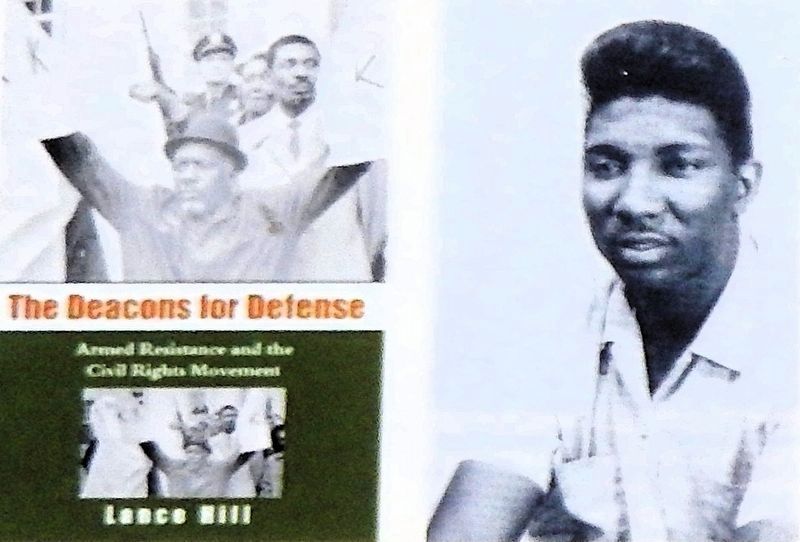
3. Marker detail: James Jackson, President of the Deacons for Defense and Justice
Black Natchez, 1965
Location. 31° 33.793′ N, 91° 24.21′ W. Marker is in Natchez, Mississippi, in Adams County. It is at the intersection of Jefferson Street and North Canal Street, on the right when traveling west on Jefferson Street. The marker is located at the west end of the Natchez City Auditorium driveway. Touch for map. Marker is at or near this postal address: 207 Jefferson Street, Natchez MS 39120, United States of America. Touch for directions.

Regionally, this marker is in Southwest Mississippi and in Natchez Trace Corridor. It is also in the American South, specifically in the Deep South, and in the Great River Road Region. Globally, it is in North America, a Gulf of Mexico state, the Western Hemisphere, the Western World, and the Anglosphere. Historically, it finds itself in what was once New Spain, the Viceroyalty of New France, the territory of the Mississippian Culture, one of the Confederate States of America, and the Antebellum South.
Other nearby markers. At
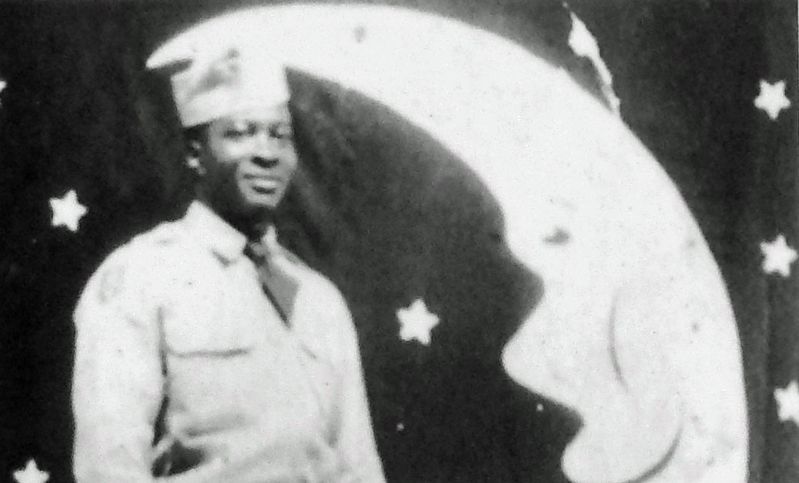
4. Marker detail: Wharlest Jackson (1930-1967) was a Korean War veteran and Civil Rights activist
Related markers. Click here for a list of markers that are related to this marker. Natchez Civil Rights Movement
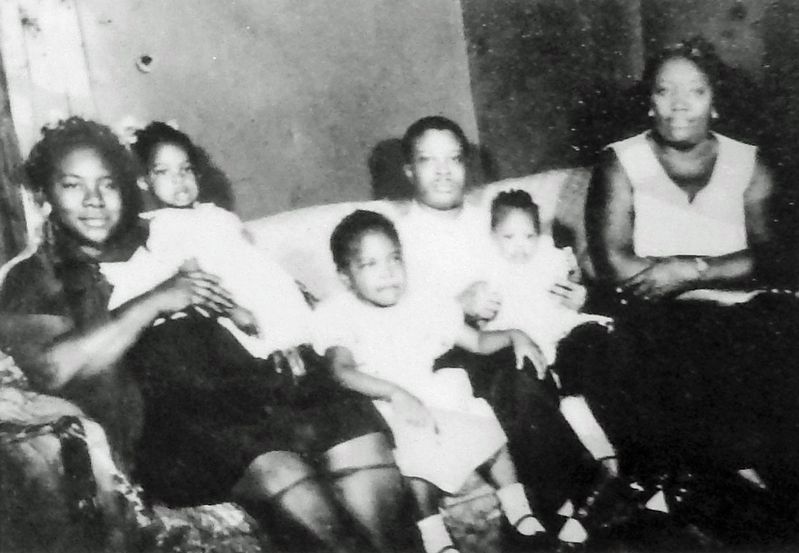
5. Marker detail: Wharlest Jackson Family
Photographed by Cosmos Mariner, June 24, 2025
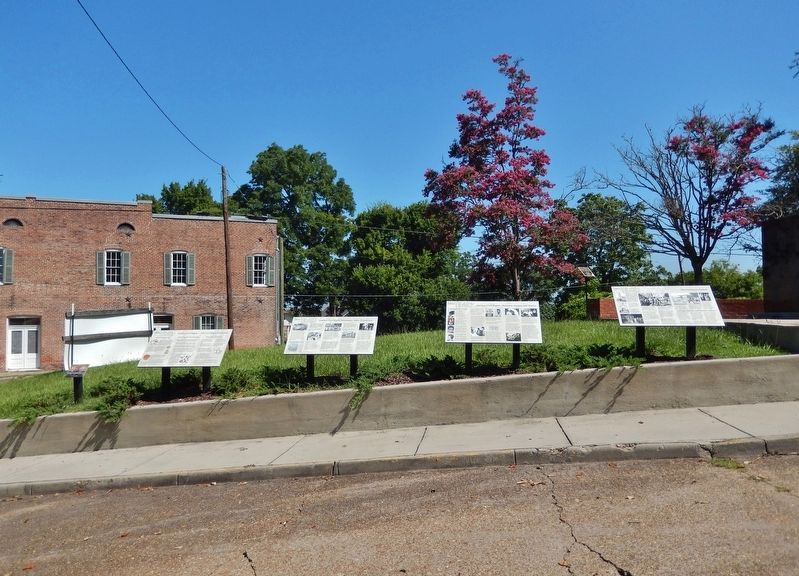
6. Natchez Civil Rights — Heroines, Heroes, and Martyr Marker
Looking north from the west end of the Natchez City Auditorium driveway. This is the 2nd from the right of four related markers at this location.
Credits. This page was last revised on October 16, 2025. It was originally submitted on October 15, 2025, by Cosmos Mariner of Cape Canaveral, Florida. This page has been viewed 108 times since then and 70 times this year. Photos: 1, 2, 3, 4, 5, 6. submitted on October 16, 2025, by Cosmos Mariner of Cape Canaveral, Florida.
