
Plymouth in Plymouth County, Massachusetts — The American Northeast (New England)
Metacomet (King Philip)
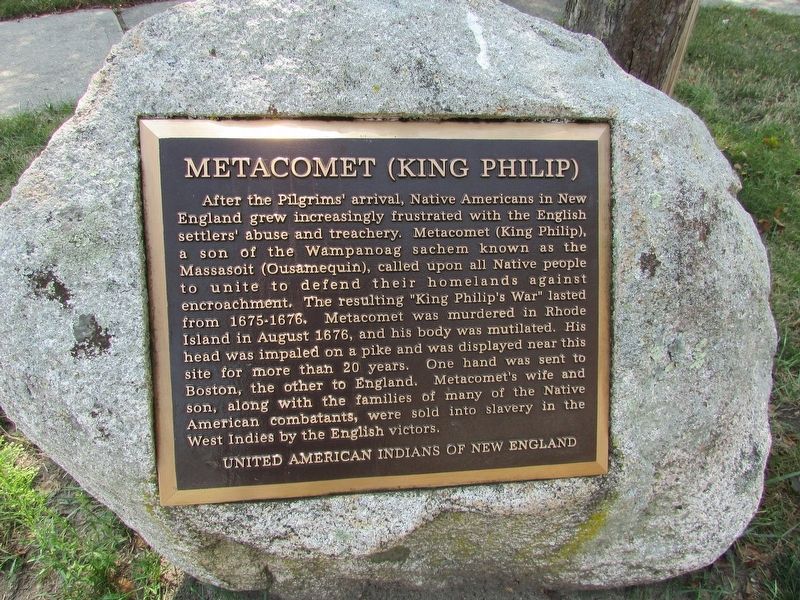
Photographed by Bill Coughlin, August 22, 2017
1. Metacomet (King Philip) Marker
After the Pilgrims’ arrival, Native Americans in New England grew increasingly frustrated with the English settlers’ abuse and treachery. Metacomet (King Philip), a son of the Wampanoag sachem known as the Massasoit (Ousamequin), called upon all native people to unite to defend their homelands against encroachment. The resulting “King Philip’s War” lasted from 1675-1676. Metacomet was murdered in Rhode Island in August 1676, and his body was mutilated. His head was impaled on a pike and was displayed near this site for more than 20 years. One hand was sent to Boston, the other to England. Metacomet’s wife and son, along with the families of many of the Native American combatants, were sold into slavery in the West Indies by the English victors.
Erected by United American Indians of New England.
Topics and series. This historical marker is listed in these topic lists: Colonial Era • Government & Politics • Indigenous Peoples and Communities • Wars, US Indian. In addition, it is included in the King Philip's War 1675-1676 series list. A significant historical year for this entry is 1676.
Location. 41° 57.341′ N, 70° 39.867′ W.
this page online

Regionally, this marker is on the South Shore. It is also in the American Northeast, in New England, and on the Eastern Seaboard. Globally, it is in the North Atlantic Region, North America, the Western Hemisphere, the Western World, and the Anglosphere. Historically, it finds itself in what was once one of the original Thirteen Colonies.
Other nearby markers. At least 8 other markers are within walking distance of this marker: First Meeting House (a few steps from this marker); The Town House of Plymouth (a few steps from this marker); Unitarian Controversy of 1801 (a few steps from this marker); House of William Bradford (within shouting distance of this marker); The Church of Scrooby Leyden and the Mayflower (within shouting distance of this marker); Burial Hill (within shouting distance of this marker); Alexander Scammell
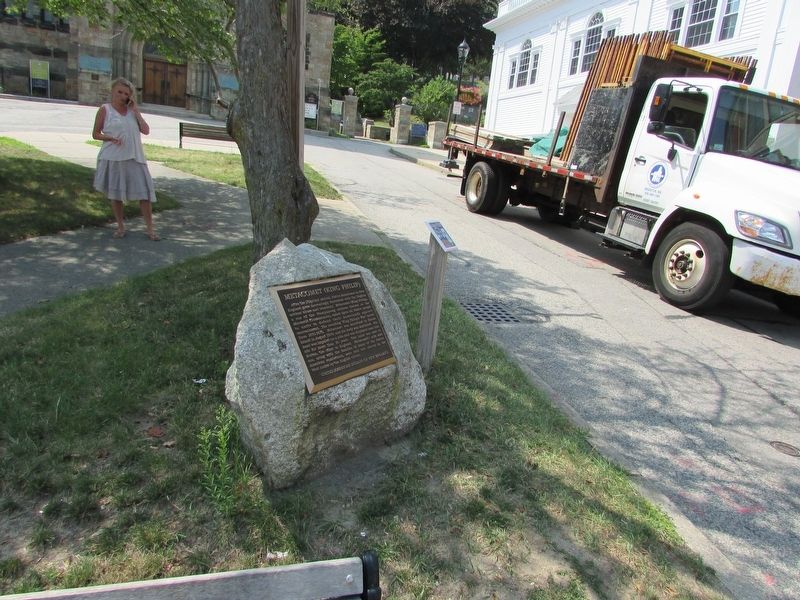
Photographed by Bill Coughlin, August 22, 2017
2. Metacomet (King Philip) Marker
Related markers. Click here for a list of markers that are related to this marker.
Also see . . .
1. Timeline and Battles of King Philip's War - World History Encyclopedia.
King Philip’s War (also known as Metacom’s War, 1675-1678) was a conflict in New England between a coalition of Native American tribes organized under the command of Metacom (also known as King Philip, l. 1638-1676), chief of the Wampanoag Confederacy and the English immigrants who had colonized Native American lands.(Submitted on April 17, 2026, by G.W.Bartlett of Hingham, Massachusetts.)
2. Metacomet Ridge - Wikipedia.
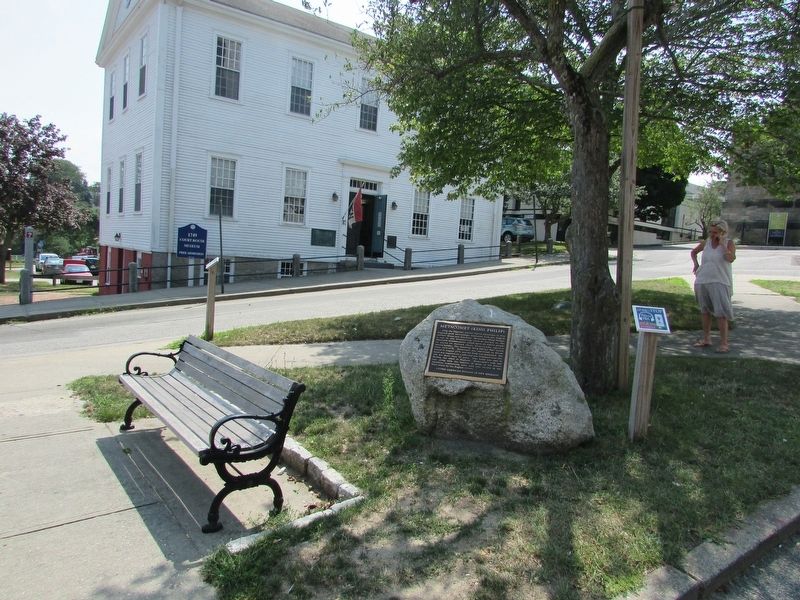
A number of features associated with the Metacomet Ridge are named after the sachem, including the Metacomet Trail, the Metacomet-Monadnock Trail, King Philip's Cave, King Philip Mountain, and Sachem Head. According to legend, Metacomet orchestrated the burning of Simsbury, Connecticut, and watched the conflagration from Talcott Mountain near the cave now named(Submitted on April 19, 2026, by G.W.Bartlett of Hingham, Massachusetts.)after him.Photographed by Bill Coughlin, August 22, 20173. Metacomet (King Philip) Marker
3. Metacomet - Wikipedia.
Metacomet (c. 1638 in Massachusetts – August 12, 1676), also known as Pometacom, Metacom, and by his adopted English name King Philip, was sachem (elected chief) to the Wampanoag people from 1662–1676, and the second son of the sachem Massasoit.(Submitted on May 13, 2026, by G.W.Bartlett of Hingham, Massachusetts.)
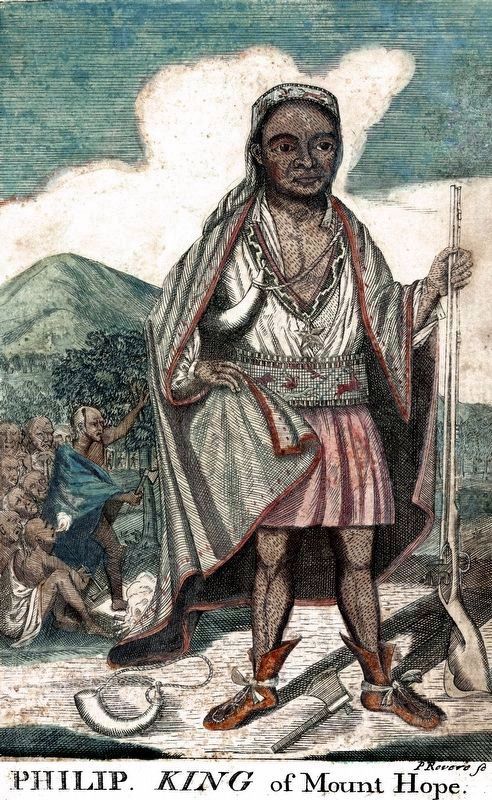
Photographed by Yale University Art Gallery
4. Philip, King of Mount Hope
Illustration by Paul Revere from The Entertaining History of King Philip's War, by Benjamin Church, et al. 1772.
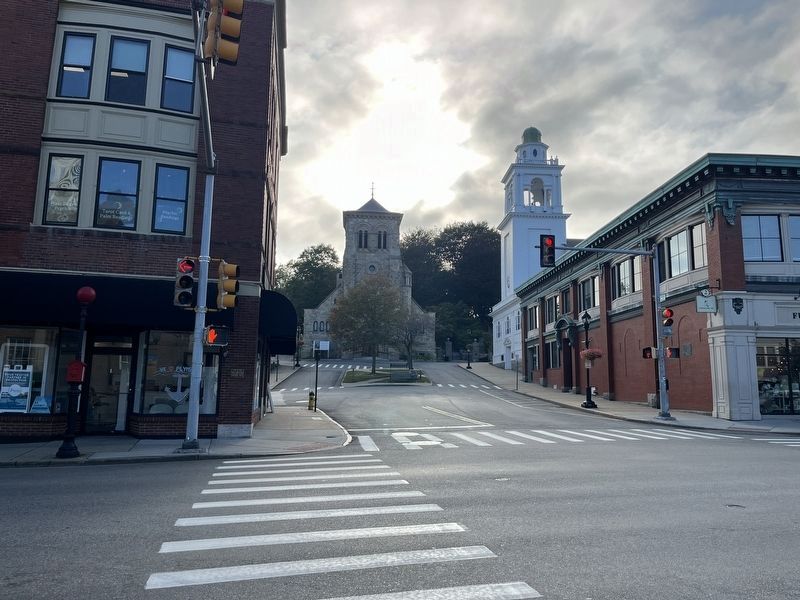
Photographed by Adam Margolis, September 15, 2025
5. Metacomet (King Philip) Marker
Credits. This page was last revised on May 20, 2026. It was originally submitted on August 25, 2017, by Bill Coughlin of Woodland Park, New Jersey. This page has been viewed 3,451 times since then and 268 times this year. Last updated on May 12, 2026, by G.W.Bartlett of Hingham, Massachusetts. Photos: 1, 2, 3. submitted on August 25, 2017, by Bill Coughlin of Woodland Park, New Jersey. 4. submitted on November 10, 2020, by Allen C. Browne of Silver Spring, Maryland. 5. submitted on March 22, 2026, by Adam Margolis of Mission Viejo, California. • Devry Becker Jones was the editor who published this page.
