Cape Charles in Northampton County, Virginia — The American South (Mid-Atlantic)
African Presence
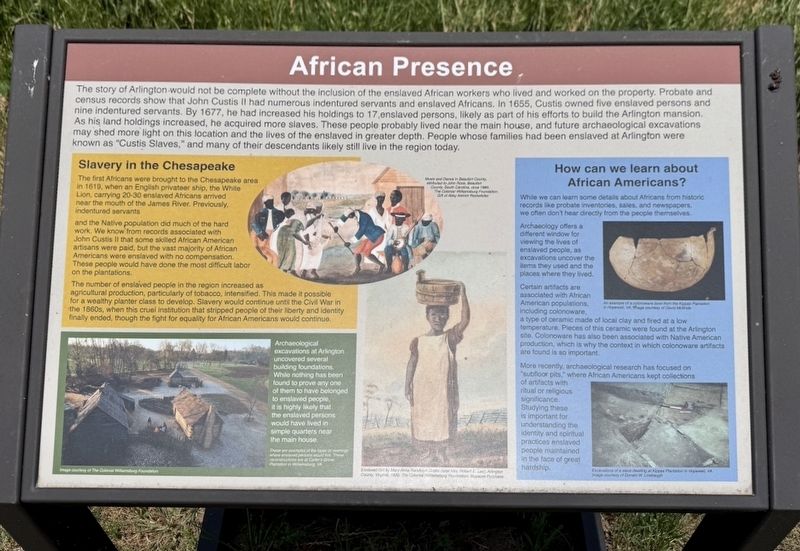
The story of Arlington would not be complete without the inclusion of the enslaved African workers who lived and worked on the property. Probate and census records show that John Custis II had numerous indentured servants and enslaved Africans. In 1655, Custis owned five enslaved persons and nine indentured servants. By 1677, he had increased his holdings to 17 enslaved persons, likely as part of his efforts to build the Arlington mansion. As his land holdings increased, he acquired more slaves. These people probably lived near the main house, and future archaeological excavations may shed more light on this location and the lives of the enslaved in greater depth. People whose families had been enslaved at Arlington were known as "Custis Slaves," and many of their descendants likely still live in the region today.
Slavery in the Chesapeake
The first Africans were brought to the Chesapeake area in 1619, when an English privateer ship, the White Lion, carrying 20-30 enslaved Africans arrived near the mouth of the James River. Previously, indentured servants and the Native population did much of the hard work. We know
this page online
The number of enslaved people in the region increased as agricultural production, particularly of tobacco, intensified. This made it possible for a wealthy planter class to develop. Slavery would continue until the Civil War in the 1860s, when this cruel institution that stripped people of their liberty and identity finally ended, though the fight for equality for African Americans would continue.
Archaeological excavations at Arlington uncovered several building foundations. While nothing has been found to prove any one of them to have belonged to enslaved people, it is highly likely that the enslaved persons would have lived in simple quarters near the main house.
How can we learn about African Americans?
While we can learn some details about Africans from historic records like probate inventories, sales, and newspapers, we often don't hear directly from the people themselves.
Archaeology
Certain artifacts are associated with African American populations, including colonoware, a type of ceramic made of local clay and fired at a low temperature. Places of this ceramic were found at the Arlington site. Colonoware has also been associated with Native American production, which is why the context in which colonoware artifacts are found is so important.
More recently, archaeological research has focused on "subfloor pits," where African Americans kept collections of artifacts with ritual or religious significance. Studying these is important for understanding the identity and spiritual practices enslaved people maintained in the face of great hardship.
[Captions:]
"The Old Plantation" (c. 1785-1795). Artist unknown; found in Columbia, South Carolina. Image courtesy of The Colonial Williamsburg Foundation.
These are examples of the types of dwellings where enslaved persons would live. These reconstructions are at Carter's Grove Plantation in Williamsburg, VA. Image courtesy of The Colonial Williamsburg Foundation.
Enslaved Girl by Mary Anna Randolph Custis (later Mrs. Robert E. Lee), Arlington County, Virginia, 1830. The Colonial Williamsburg Foundation, Museum Purchase.
An example of a Colonoware bowl from the Kippax Plantation (44PE49), VA. Image courtesy of Donald W. Linebaugh.
Excavations of a slave dwelling at Kippax Plantation in Hopewell, VA. Image courtesy of Donald W. Linebaugh.
Erected by The
Photographed by Devry Becker Jones (CC0), June 5, 2026
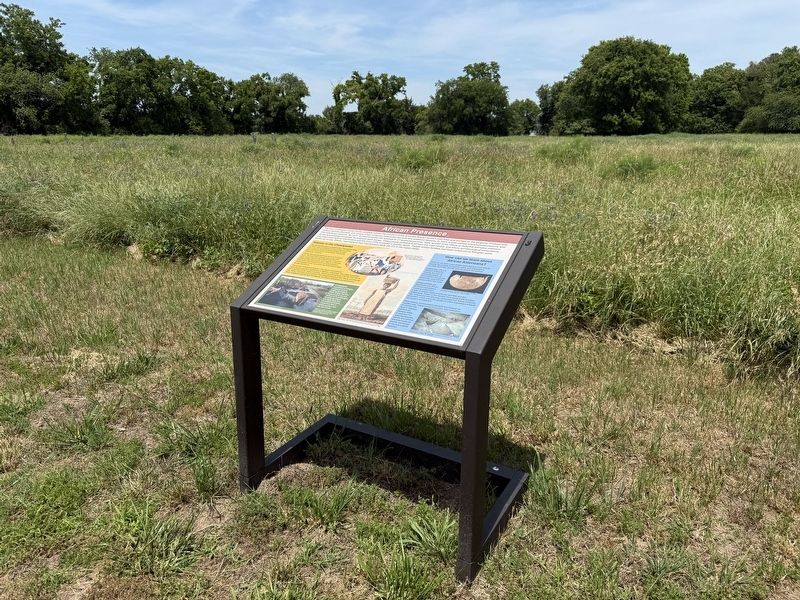
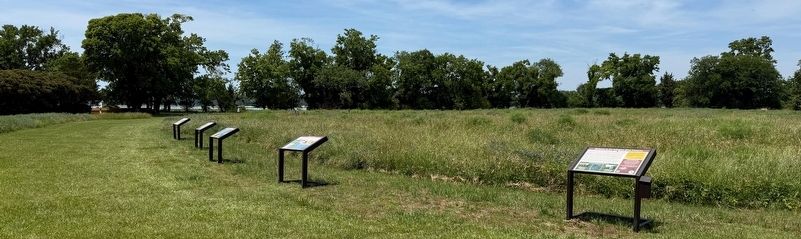
3. Several markers on display at Arlington Sites Preserve
Topics and series. This historical marker is listed in these topic lists: African Americans • Agriculture • Anthropology & Archaeology • Colonial Era. In addition, it is included in the Virginia Department of Historic Resources (DHR) series list. A significant historical year for this entry is 1655.
Location. 37° 13.715′ N, 76° 0.18′ W. Marker is in Cape Charles, Virginia, in Northampton County. It is on Arlington Chase Road (County Road 644) north of Arlington Chase Lane, on the right when traveling north. Touch for map. Marker is at or near this postal address: 2157 Arlington Chase Road, Cape Charles VA 23310, United States of America. Touch for directions.

Regionally, this marker is on the Eastern Shore. It is also in the American South, specifically in the Upper South, on the Delmarva Peninsula, in the Tidewater, and on the Eastern Seaboard. Globally, it is in the North Atlantic Region, North America, the Western Hemisphere, the Western World, and the Anglosphere. Historically, it finds itself in what was once the territory of the Mississippian Culture, one of the original Thirteen Colonies, one of the Confederate States of America, and the Antebellum South.
Other nearby markers. At least 8 other markers are within 3 miles of this marker, measured as the crow flies: Archaeology (here, next to this marker); European Settlement (here, next to this marker); American Indians (a few steps from this marker); Welcome to the Arlington Sites Preserve (a few steps from this marker); The Custis Tombs (within shouting distance of this marker); Elijah Baker (approx. 2.1 miles away); a different marker also named Elijah Baker (approx. 2.1 miles away); Cape Charles Colored School (approx. 2.4 miles away). Touch for a list and map of all markers in Cape Charles.
Other markers no longer nearby. Mansion Site (was within shouting distance of this marker but has been replaced with another marker now near it); Bacon's Rebellion (was within shouting distance of this marker but has been replaced with another marker now near it); Indians (was within shouting distance of this marker but has been replaced with another marker now near it); Slavery on the Eastern Shore (was within shouting distance of this marker but has been replaced with another marker now near it); Arlington (was approx. 1.2 miles away but has been confirmed missing).
Credits. This page was last revised on June 7, 2026. It was originally submitted on June 7, 2026, by Devry Becker Jones of Washington, District of Columbia. This page has been viewed 12 times since then. Photos: 1, 2, 3. submitted on June 7, 2026, by Devry Becker Jones of Washington, District of Columbia.
