Naperville in Will County, Illinois — The American Midwest (Great Lakes)
Native Landscape Restoration at Knoch Knolls Park

Photographed by Sean P. Flynn, August 18, 2026
1. Native Landscape Restoration at Knoch Knolls Park Marker
Farm Fields to Prairie
Starting with the farms of the Scott Settlement, most of the forests near the confluence became farm fields as time passed. Many of these fields, farmed for many generations, are being restored as natural areas at Knoch Knolis Park.
Burning
It may sound like a drastic solution, but burning is an effective way to restore a native landscape. Fire controls the spread of invasive species, which tend to have shallow root systems and perish in the fire. Native species have deep root systems: even when the visible part of a plant gets burned, the roots survive and the plant can send up new growth. Nutrients from the burned plants enrich the soil and native species have a chance to grow back without competition.
Natural fires, caused by lightning strikes in dry seasons, helped maintain Illinois' vast prairies in the past.
Native Americans and Burning
Long ago, Native Americans set fires to clear
this page online
Shoreline Restoration: Mother Nature Knows Best
It is tempting to "tidy up" shorelines, but native landscaping is a better way to stop shoreline erosion and keep waterways clean.
The deep roots of native plants anchor riverbank soil, filter out pollutants, and absorb rainwater. During heavy downpours, their leaves function as little umbrellas protecting riverbanks from erosion. The plants also create wetland habitats for animals.
Native plants are growing along the shoreline of McDonald Creek and the pond, planted as part of the Knoch Knolls Park improvements to stabilize their banks and restore wetland habitat.
Invasive Troublemakers
Invasive plants were originally brought from other continents or regions for features like hardiness, colorful berries, or resistance to pests. Free from natural controls in their new home, these exotic plants reproduce rapidly, crowding native plants and disrupting the local ecosystem. Invasive plants reduce the diversity of foods available

Photographed by Sean P. Flynn, August 18, 2026
2. Markers on the back deck of the Knoch Knolls Nature Center
The plants shown at the left are on the Invasive Species List in Illinois.
Erected by Naperville Park District.
Topics. This historical marker is listed in these topic lists: Environment • Indigenous Peoples and Communities • Settlements & Settlers • Waterways & Vessels. A significant historical year for this entry is 1830.
Location. 41° 42.837′ N, 88° 8.48′ W. Marker is in Naperville, Illinois, in Will County. It can be reached from Knoch Knolls Road 1.3 miles east of 95th Street, on the right when traveling east. The marker is affixed to the wall of the rear of the Knoch Knolls Park Nature Center, where there is a rear deck. Touch for map. Marker is at or near this postal address: 320 Knoch Knolls Road, Naperville IL 60565, United States of America. Touch for directions.

Regionally, this marker is in Greater Chicago. It is also in the American Midwest. Globally, it is in North America, on the Great Lakes, in the Western Hemisphere, in the Western World, and in the Anglosphere. Historically, it finds itself in what was once the territory of
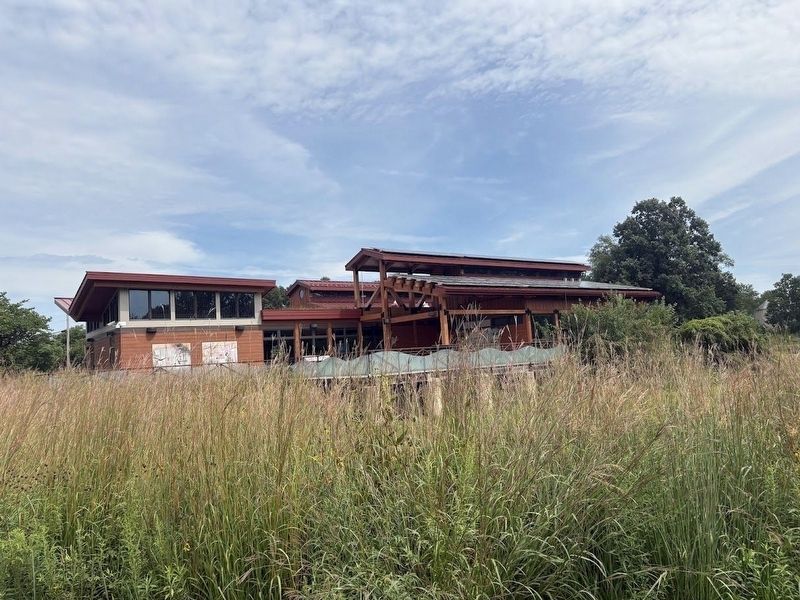
Photographed by Sean P. Flynn, August 18, 2026
3. Knoch Knolls Nature Center
Other nearby markers. At least 8 other markers are within walking distance of this marker: Taking Care of Our Watershed (here, next to this marker); Green Builders Long Ago (here, next to this marker); The Land Where the Rivers Meet (a few steps from this marker); Where the Rivers Meet (a few steps from this marker); Living Off the Land (a few steps from this marker); A Reminder of Times Past (a few steps from this marker); a different marker also named Where the Rivers Meet (a few steps from this marker); McDonald Creek (within shouting distance of this marker). Touch for a list and map of all markers in Naperville.
Also see . . . Knoch Knolls Nature Center. Official site from the Naperville Park District. (Submitted on August 21, 2026, by Sean P. Flynn of Oak Park, Illinois.)
Credits. This page was last revised on August 21, 2026. It was originally submitted on August 21, 2026, by Sean P. Flynn of Oak Park, Illinois. This page has been viewed 10 times since then. Photos: 1, 2. submitted on August 21, 2026, by Sean P. Flynn of Oak Park, Illinois. 3. submitted on August 20, 2026, by Sean P. Flynn of Oak Park, Illinois.
