Madison in Dane County, Wisconsin — The American Midwest (Great Lakes)
Black Hawk
Lake Monona: Change
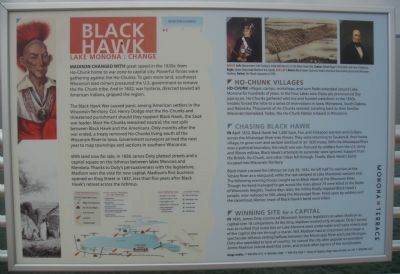
Photographed by William J. Toman, September 2, 2010
1. Black Hawk Marker
The Black Hawk War caused panic among American settlers in the Wisconsin Territory. Col. Henry Dodge met the Ho-Chunks and threatened punishment should they support Black Hawk, the Sauk war leader. Most Ho-Chunks remained neutral; the rest split between Black Hawk and the Americans. Only months after the war ended, a treaty removed Ho-Chunks living south of the Wisconsin River to Iowa. Government surveyors arrived the next year to map townships and sections in southern Wisconsin.
With land now for sale, in 1836 James Doty platted streets and a capitol square on the Isthmus between lakes Monona and Mendota. Thanks to Doty's persuasiveness with the legislature, Madison won the vote for new capital. Madison's first business opened on King Street in 1837, less than five years after
this page online
Ho-Chunk Villages
Ho-Chunk villages, camps, workshops, and corn fields extended around Lake Monona for hundreds of years. In the Four Lakes area (Tejop eja, pronounced Day jope ay ja), Ho-Chunks gathered wild rice and hunted waterfowl. In the 1830s, treaties forced the tribe to a series of reservations in Iowa, Minnesota, South Dakota, and Nebraska. Thousands of Ho-Chunks resisted, traveling back to their familiar Wisconsin homeland. Today, the Ho-Chunk Nation is based in Wisconsin.
Chasing Black Hawk
In April 1832, Black Hawk led 1,200 Sauk, Fox, and Kickapoo warriors and civilians across the Mississippi River into Illinois. They were returning to Saukenuk, their home village, to grow corn and reclaim land lost in an 1830 treaty. With the Mississippi River now a political boundary, the result was war. Pursued by soldiers from the U.S. Army and Illinois militias, Black Hawk's attempts to surrender were ignored. Support from the British, Ho-Chunk, and other tribes fell through. Finally, Black Hawk's band escaped into Wisconsin territory.
Black Hawk crossed the Isthmus on July 20, 1832.
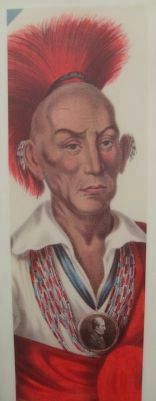
Photographed by William J. Toman, September 2, 2010
2. Picture in Upper Left Corner of the Marker
Black Hawk, Sauk war leader who led a four-month pursuit into Wisconsin Territory.
Winning Site for a Capital
In 1836, James Doty convinced Wisconsin Territory legislators to select Madison as capital over 18 competitors. At the time, Madison existed only on paper. Doty's survey was so rushed that some lots on Lake Monona were underwater and many streets east of the capitol site ran through a marsh. Still, Madison had an important advantage: a spectacular isthmus setting halfway between the Mississippi River and Lake Michigan. Doty also appealed to love of country: he named the city after popular ex-president James Madison (who'd died that June), and the streets after signers of the constitution.
Erected by the
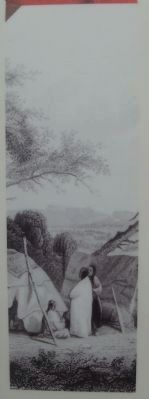
Photographed by William J. Toman, September 2, 2010
3. Picture in Lower Left Corner of Marker
Ho-Chunk wigwams in 1852.
Topics and series. This historical marker is listed in these topic lists: Indigenous Peoples and Communities • Settlements & Settlers • Wars, US Indian. In addition, it is included in the Black Hawk War series list. A significant historical month for this entry is April 1832.
Location. 43° 4.318′ N, 89° 22.76′ W. Marker is in Madison, Wisconsin, in Dane County. It can be reached from the intersection of Wilson Street and Martin Luther King, Jr. Boulevard, on the left when traveling west. The marker is in the East Circle of the William T. Evjue Rooftop Gardens at the Monona Terrace Community and Convention Center. Touch for map. Marker is at or near this postal address: One John Nolen Drive, Madison WI 53703, United States of America. Touch for directions.

Regionally, this marker is in Southeast Wisconsin. It is also in the American Midwest and in the Corn Belt. Globally, it is in North America, the Western Hemisphere, the Western World, and the Anglosphere. Historically, it finds itself in what was once the territory of the Mississippian Culture and also the
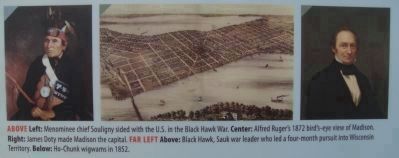
Photographed by William J. Toman, September 2, 2010
4. Pictures in Upper Right Corner of Marker
Left: Menominee chief Souligny sided with the U.S. in the Black Hawk War. Center: Alfred Ruger's 1872 bird's-eye view of Madison. Right: James Doty made Madison the capital.
Other nearby markers. At least 8 other markers are within walking distance of this marker: Otis Redding (a few steps from this marker); Mound City (within shouting distance of this marker); Third Lake (about 400 feet away, measured in a direct line); Madison Catholic Clubhouse (about 500 feet away); Bellevue Apartments (about 500 feet away); Madison Club (about 500 feet away); Olin Terrace (about 500 feet away); Pioneer Men and Women (about 500 feet away). Touch for a list and map of all markers in Madison.
Photographed by William J. Toman, September 2, 2010
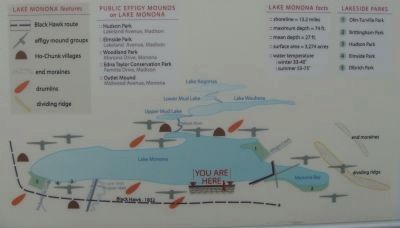
5. Closeup of Map on Marker
The map shows Black Hawk's route through the isthmus; the locations of effigy mound groups, Ho-Chunk villages, glacial features, and present-day parks; and Lake Monona facts.
Photographed by William J. Toman, September 2, 2010
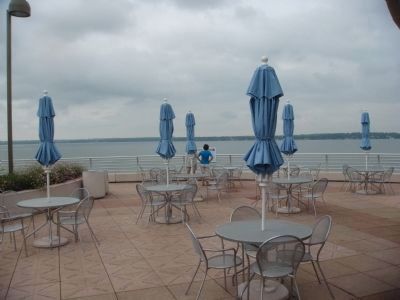
6. Black Hawk Marker
View of the marker (center) from the Lake Vista Cafe in the East Circle of the William T. Evjue Rooftop Gardens at the Monona Terrace Community and Convention Center, with Lake Monona in the background.
Photographed by Ian Lefkowitz, July 26, 2024
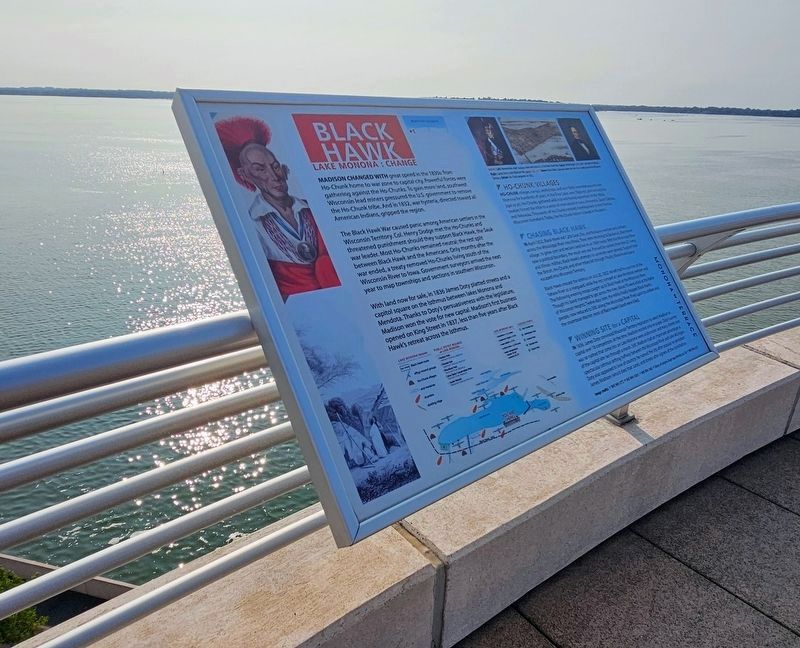
7. Black Hawk Marker
The marker overlooks Lake Monona on Monona Terrace.
Credits. This page was last revised on April 3, 2025. It was originally submitted on September 5, 2010, by William J. Toman of Green Lake, Wisconsin. This page has been viewed 2,134 times since then and 63 times this year. Photos: 1. submitted on September 5, 2010, by William J. Toman of Green Lake, Wisconsin. 2, 3, 4, 5, 6. submitted on September 6, 2010, by William J. Toman of Green Lake, Wisconsin. 7. submitted on March 25, 2025, by Ian Lefkowitz of New York, New York. • Bill Pfingsten was the editor who published this page.
