Oyster Bay in Nassau County, New York — The American Northeast (Mid-Atlantic)
Roosevelt Memorial Rocks
Photographed by Bill Coughlin, March 17, 2012
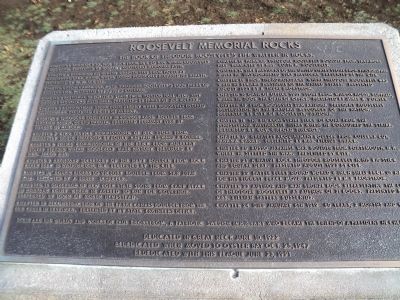
1. Roosevelt Memorial Rocks Marker
Chapter 1 – Born Oct 27, 1858. Brick from 28 E 20 NYC where Roosevelt was born. Presented by Women’s Roosevelt Memorial Assn.
Chapter 2 – Regaining his Health. Granite step from house at Moosehead Lake, Maine, where young Roosevelt regained his health. Presented by W. W. Sewull.
Chapter 3 – From Cambridge, Mass. Theodore Roosevelt’s four years of college life. Presented by Harvard College.
Chapter 4 – Baptismal in Politics. Slate from Morton Hall, NYC, 21st District Republican Assn. Hall. Presented by Family of Joe Murray.
Chapter 5 – Assemblyman. Stone from Albany where Roosevelt entered government. Presented by City of Albany.
Chapter 6 – Theodore Roosevelt in Cowboy Land. Boulder from Elkhorn Ranch, North Dakota. Presented February 1924 by Village of Medora.
Chapter 7 – Civil Service Commissioner of NYC. Stone from Roosevelt House. Presented by Police Captain Edward J. Bourke.
Chapter 8 – Police Commissioner of NYC. Brick from Mulberry Street Station where Roosevelt made history. Presented by Mrs. Jacob Riis.
Chapter 9 –
this page online
Chapter 10 – Rough Riders to Victory. Boulder from San Juan Hill. Presented by J. Louis Schaefer.
Chapter 11 – Governor of New York State. Stone from Camp Black in Montauk Point where he agreed to run for Governor. Presented by Town of North Hempstead.
Chapter 12 – Reconstruction of the Barge Canals. Boulder from the Erie Canal in Herkimer. Presented by NY State Engineers Office.
Chapter 13 – Home of Theodore Roosevelt. Boulder from Sagamore Hill. Presented by Mrs. Edith K. Roosevelt.
Chapter 14 – Vice President of the United States. Stone from Philadelphia where he was nominated Vice President. Presented from the City.
Chapter 15 – From the Adirondacks where Theodore Roosevelt was when he became President of the United States. Presented August 1921 by P. Thure Brorstrom.
Chapter 16 – Oath of Office, 1901. Stone from Wilcox House, Buffalo, where he took the Oath of Office. Presented by James W. Dowsey.
Chapter 17 – From Roosevelt Dam Arizona. President Roosevelt Preservation of the Natural
Photographed by Bill Coughlin, March 17, 2012
2. Roosevelt Memorial Rocks Marker
Chapter 18 – The Big Coal Strike. Piece of coal from the Pennsylvania anthracite mines where he conquered the strike. Presented by Gov. Gifford Pinchot.
Chapter 19 – Greatest Acquirement. Boulder from Culevra Cut, Panama Canal. Presented by Mrs. Lillius Grace.
Chapter 20 – Russo-Japanese War. Boulder from Portsmouth, N.H., where he settled the war. Presented by City.
Chapter 21 – A Native Rock. Theodore Roosevelt in his Big Stick and Square Deal. Presented August 1923 by City.
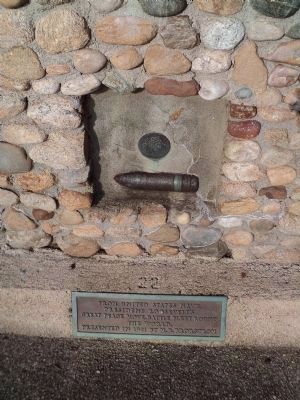
Chapter 22 – Battle Fleet Round World. 6-inch shell from US Navy, for his biggest peace move. Presented by M.B. Brorstrom.
Chapter 23 – Author and Man. Bronze book representing the Life of Theodore Roosevelt as author of 31 books. Presented by Mrs. Lillian Tatters Bussenius.
Chapter 24 – Died January 6th 1919. 60 years, 2 months and 9 days.
These are the words and works of Paul Brorstrom, a patriotic Swedish immigrant who became the friend of a President he cherished.
Dedicated in Great Neck June 10, 1922
Rededicated when moved to Oyster Bay Oct. 25, 1947
Rededicated
Photographed by Bill Coughlin, March 17, 2012
3. Roosevelt Memorial Rocks Marker
Erected 1991.
Topics and series. This historical marker is listed in these topic lists: Agriculture • Industry & Commerce • Law Enforcement • Waterways & Vessels. In addition, it is included in the Former U.S. Presidents: #26 Theodore Roosevelt series list. A significant historical month for this entry is January 1867.
Location. 40° 52.593′ N, 73° 31.906′ W. Marker is in Oyster Bay, New York, in Nassau County. It is on Railroad Avenue, on the left when traveling east. Marker is located in Theodore Roosevelt Memorial Park. Touch for map. Marker is in this post office area: Oyster Bay NY 11771, United States of America. Touch for directions.

Regionally, this marker is in the New York City Metropolitan Area and on Long Island. It is also in the American Northeast, in the Mid-Atlantic, and on the Eastern Seaboard. Globally, it is in the North Atlantic Region, North America, the Western Hemisphere, the Western World, and the Anglosphere. Historically, it finds itself in what was once New Netherland and also one of the original Thirteen Colonies.
Other nearby markers. At least 8 other
Photographed by Bill Coughlin, March 17, 2012
4. Roosevelt Memorial Rocks Marker
Another marker is no longer nearby. Oyster Bay Railroad Station (was approx. 0.2 miles away but has been confirmed missing).
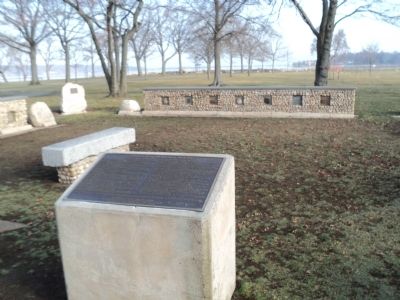
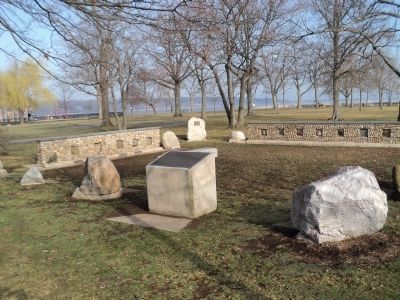
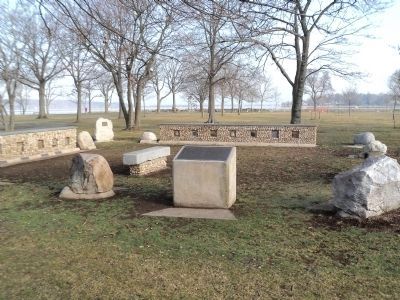
More about this marker. Monument consists of a series of rocks based on events in the life of Theodore Roosevelt.
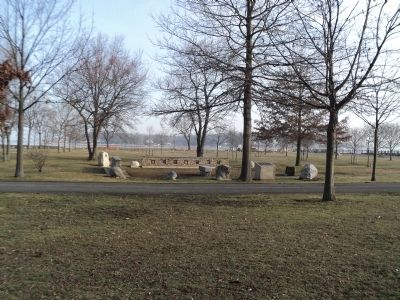
Photographed by Bill Coughlin, March 17, 2012
5. Marker in Theodore Roosevelt Memorial Park
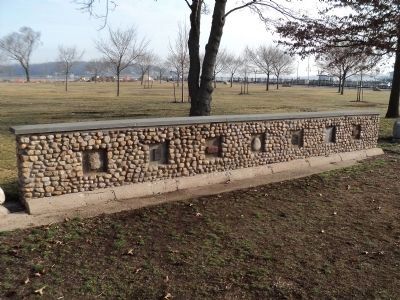
Photographed by Bill Coughlin, March 17, 2012
6. Roosevelt Memorial Rocks
Stones representing Chapters 16, 23, 1, 5, 18, 4 and 8.
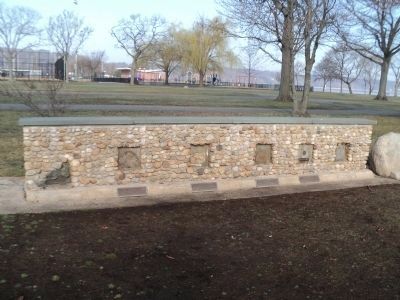
Photographed by Bill Coughlin, March 17, 2012
7. Roosevelt Memorial Rocks
Rocks representing Chapters 21, 11, 7, 22, and others.
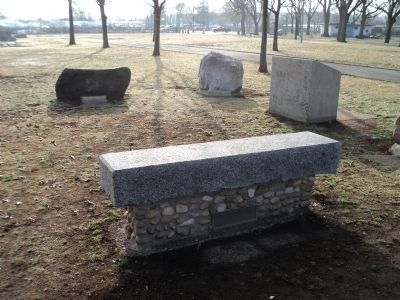
Photographed by Bill Coughlin, March 17, 2012
8. Regaining his Health Rock
Granite step from Chapter 2.
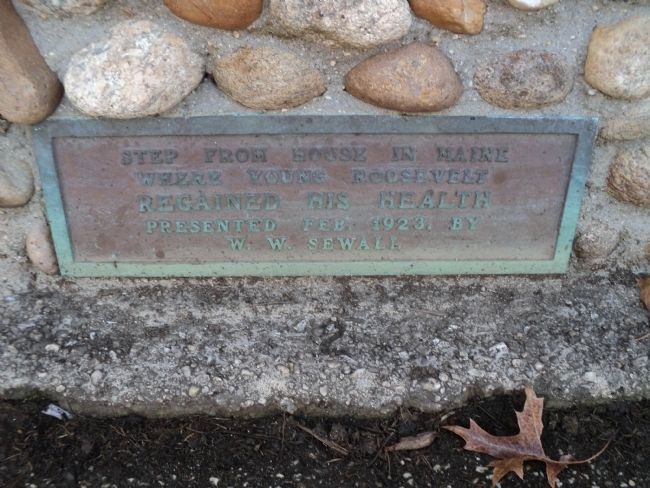
Photographed by Bill Coughlin, March 17, 2012
9. Roosevelt Memorial Rock - Chapter 2 (closeup)
where young Roosevelt
Regained his Health
Presented Feb. 1923. By
W. W. Sewall
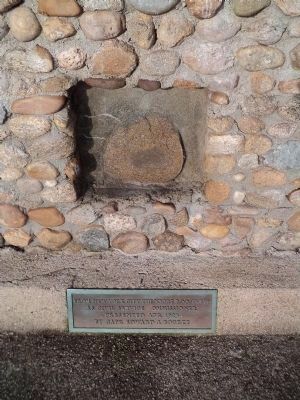
Photographed by Bill Coughlin, March 17, 2012
10. Roosevelt Memorial Rock - Chapter 7 (closeup)
as Civil Service Commissioner
Presented Aug. 1923
by Capt. Edward J. Bourke
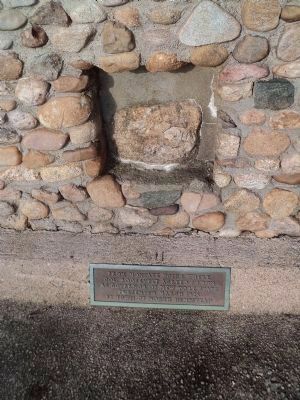
Photographed by Bill Coughlin, March 17, 2012
11. Roosevelt Memorial Rock - Chapter 11 (closeup)
Col. Roosevelt agreed to run
as Governor of New York State
Presented March 1923
by Town of North Hempstead
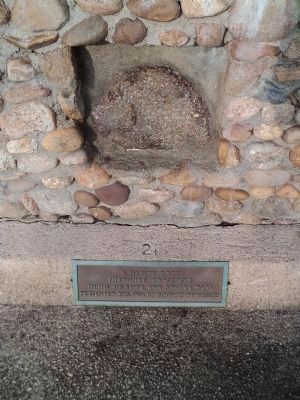
Photographed by Bill Coughlin, March 27, 2012
12. Roosevelt Memorial Rock - Chapter 21 (closeup)
Theodore Roosevelt
in his Big Stick and Square Deal
Presented Aug. 1923 by County of Nassau.
Photographed by Bill Coughlin, March 17, 2012
13. Roosevelt Memorial Rock - Chapter 22 (closeup)
President Roosevelt's
Great Peace Move, Battle Fleet ound
the World.
Presented in 1921 by M. B. Brorstrom
Photographed by Allen C. Browne, August 9, 2015
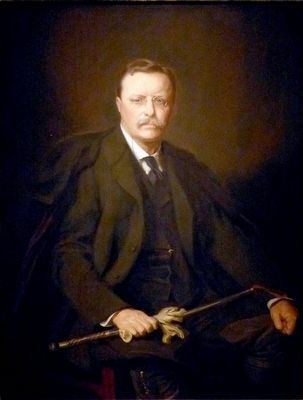
14. Theodore Roosevelt
This 1967 portrait of Theodore Roosevelt by Adrian Lamb after Philip de Lászlo's 1908 original hangs in the National Portrait Gallery in Washington DC.
“No one ever craved the presidency more than Theodore Roosevelt or used its powers more joyously. In early 1901, however, his rise toward that office was suddenly checked. Having gained national prominence as a civil service reformer, Spanish-American War hero, and reform-minded governor of New York, he was now relegated to being William McKinley's vice president. But McKinley's assassination several months later changed everything, and Roosevelt was soon rushing headlong into one of American history's most productive presidencies. By the time he left office in 1909, his accomplishments ranged from implementing landmark efforts to conserve the nation's disappearing natural heritage, to instituting some of the first significant curbs on the excesses of big business, to building the Panama Canal.
When Hungarian-born English artist Philip de Lászlo painted the original version of this portrait, he encouraged Roosevelt to have visitors chat with him during the sittings, apparently thinking that it made for a more animated likeness.” — National Portrait Gallery
“No one ever craved the presidency more than Theodore Roosevelt or used its powers more joyously. In early 1901, however, his rise toward that office was suddenly checked. Having gained national prominence as a civil service reformer, Spanish-American War hero, and reform-minded governor of New York, he was now relegated to being William McKinley's vice president. But McKinley's assassination several months later changed everything, and Roosevelt was soon rushing headlong into one of American history's most productive presidencies. By the time he left office in 1909, his accomplishments ranged from implementing landmark efforts to conserve the nation's disappearing natural heritage, to instituting some of the first significant curbs on the excesses of big business, to building the Panama Canal.
When Hungarian-born English artist Philip de Lászlo painted the original version of this portrait, he encouraged Roosevelt to have visitors chat with him during the sittings, apparently thinking that it made for a more animated likeness.” — National Portrait Gallery
Credits. This page was last revised on November 27, 2019. It was originally submitted on March 19, 2012, by Bill Coughlin of Woodland Park, New Jersey. This page has been viewed 1,261 times since then and 59 times this year. Photos: 1, 2, 3, 4, 5, 6, 7, 8, 9, 10, 11, 12, 13. submitted on March 19, 2012, by Bill Coughlin of Woodland Park, New Jersey. 14. submitted on October 24, 2015, by Allen C. Browne of Silver Spring, Maryland.
