Java Plantation Life
Contee's Wharf: A Vital Link
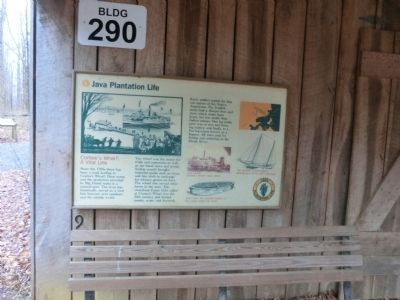
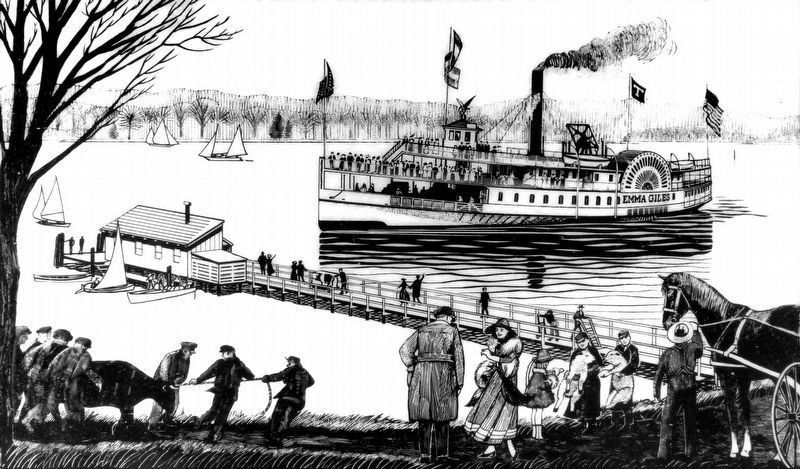
The wharf was the center for trade and commerce as well as the latest news and gossip. Sailing vessels brought imported goods such as china and fine cloth to exchange for tobacco grown on Java. The wharf also served other farms in the area. The steamboat Emma Giles called at Contee’s Wharf into the 20th century and ferried people, crops, and livestock.
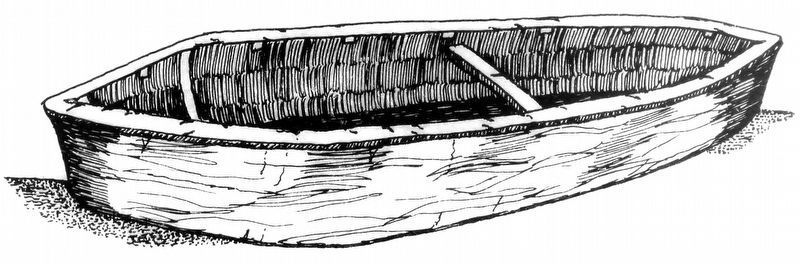
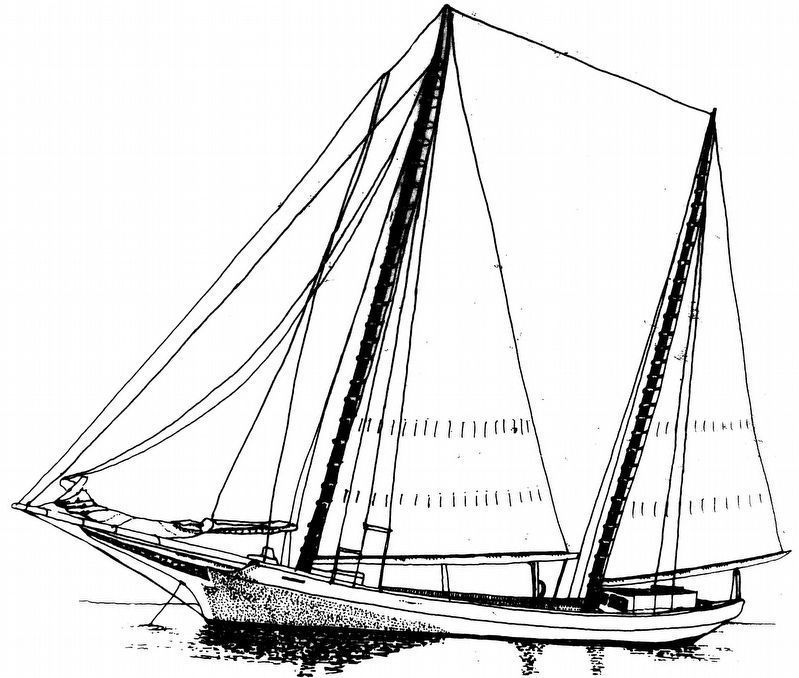
Early settlers copied the dugout canoes of the Native Americans. The English punts had a sharper bow and stern which made them faster, but less stable than Indian canoes. One log punts gave way to two and three log canoes, and finally to a five log canoe known as a bugeye. All were used for fishing and oystering on the Rhode River.
(Inscription under the photo in the upper left)
“Steamboat Landing on Shady Side” by John Douglas.
(Inscription under the photo in the center) Contee’s Wharf, circa 1900-Courtesy H. Graham Wood.
(Inscription
this page online
The Punt: The colonist version of the native single log canoe.
(Inscription under the photo on the right)
The Bugeye: A final stage in development of the native log canoe.
Topics. This historical marker is listed in these topic lists: Agriculture • Colonial Era • Waterways & Vessels.
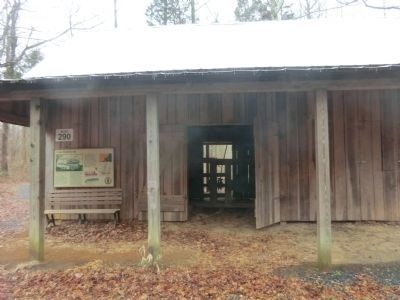
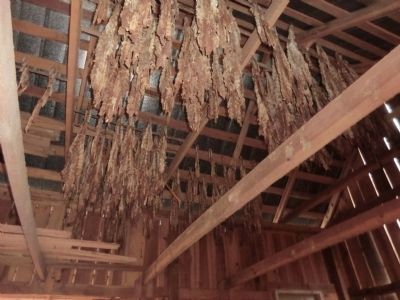
Location. 38° 53.365′ N, 76° 32.935′ W. Marker is in Edgewater, Maryland, in Anne Arundel County. It is on Dock Road. The marker is affixed to the Java Farm Tobacco Barn, Bldg 290
The marker is on the grounds of Smithsonian Environmental Research Center. Touch for map. Marker is in this post office area: Edgewater MD 21037, United States of America. Touch for directions.
Regionally, this marker is in Central Maryland. It is also in the American Mid-Atlantic, in the Chesapeake Bay Region, and on the Eastern Seaboard. Globally, it is in the North Atlantic Region, North America, the Western Hemisphere, the Western World, and the Anglosphere. Historically, it finds itself in what was once one of the original Thirteen Colonies and also the Antebellum
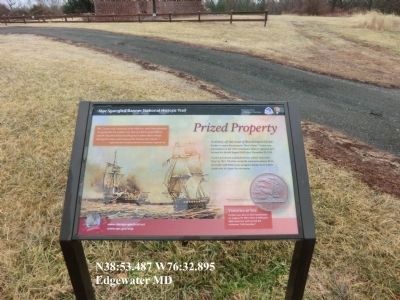
Other nearby markers. At least 8 other markers are within 2 miles of this marker, measured as the crow flies: A different marker also named Java Plantation Life (a few steps from this marker); a different marker also named Java Plantation Life (a few steps from this marker); a different marker also named Java Plantation Life (a few steps from this marker); a different marker also named Java Plantation Life (within shouting distance of this marker); Prized Property (about 800 feet away, measured in a direct line); Indians of the Chesapeake (approx. 0.3 miles away); Java History Trail (approx. 0.4 miles away); The Old South River Club (approx. 1.4 miles away). Touch for a list and map of all markers in Edgewater.
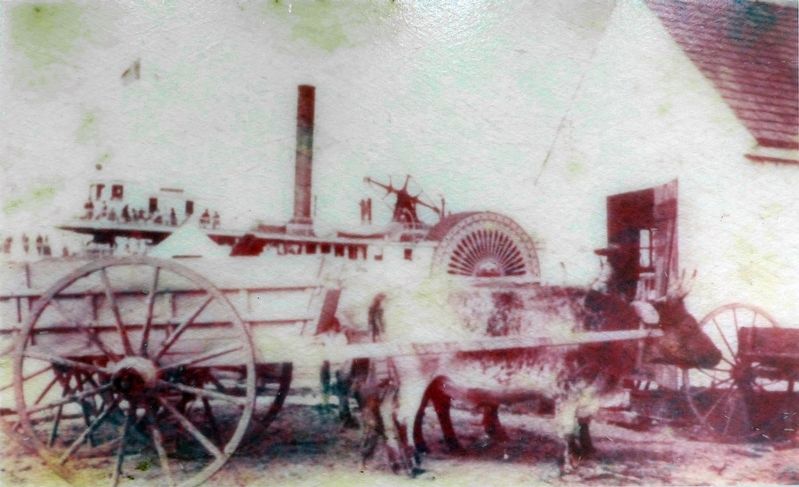
circa 1900
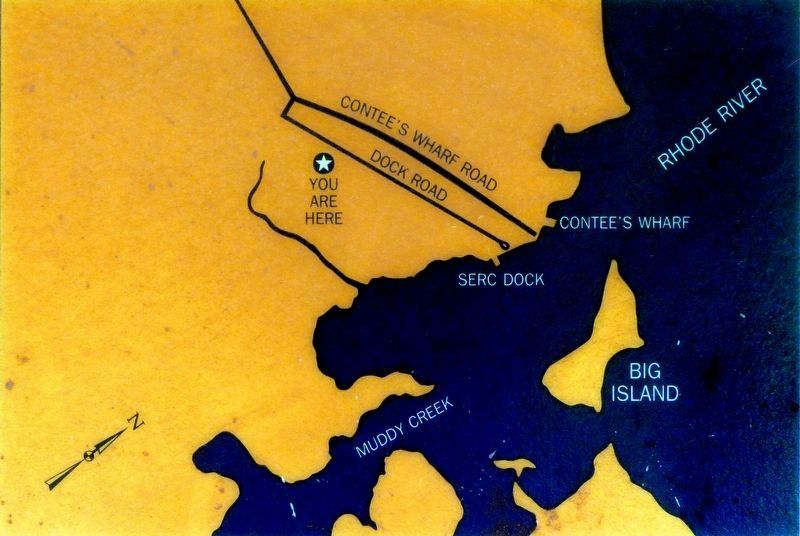
You are Here
Credits. This page was last revised on August 5, 2021. It was originally submitted on February 15, 2015, by Don Morfe of Baltimore, Maryland. This page has been viewed 1,254 times since then and 68 times this year. Photos: 1, 2, 3, 4, 5. submitted on February 15, 2015, by Don Morfe of Baltimore, Maryland. 6, 7, 8. submitted on September 5, 2018, by Allen C. Browne of Silver Spring, Maryland. 9, 10. submitted on September 6, 2018, by Allen C. Browne of Silver Spring, Maryland. • Bill Pfingsten was the editor who published this page.
