Southwest Quadrant in Alexandria, Virginia — The American South (Mid-Atlantic)
Contrabands and Freedmen Cemetery Memorial
Photographed by Allen C. Browne, August 1, 2015
1. Contrabands and Freedmen Cemetery Memorial Marker
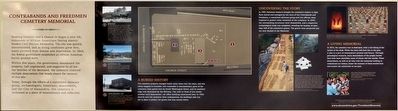
Seeking freedom and a chance to begin a new life thousands of African Americans fleeing slavery flooded Civil War-era Alexandria. The city was quickly overwhelmed, and as living conditions grew dire, many perished from disease and deprivation. In 1864, the federal government established an African American burial ground here.
Within five years, the government abandoned the property. Left unprotected, and neglected by all but the families of the deceased, the cemetery endured multiple desecrations that nearly erased the memory of this site.
Today, through the efforts of a committed advocacy group, archaeologists, historians, descendants, and the City of Alexandria, this cemetery is reclaimed as a place of remembrance and reflection.
Buried History
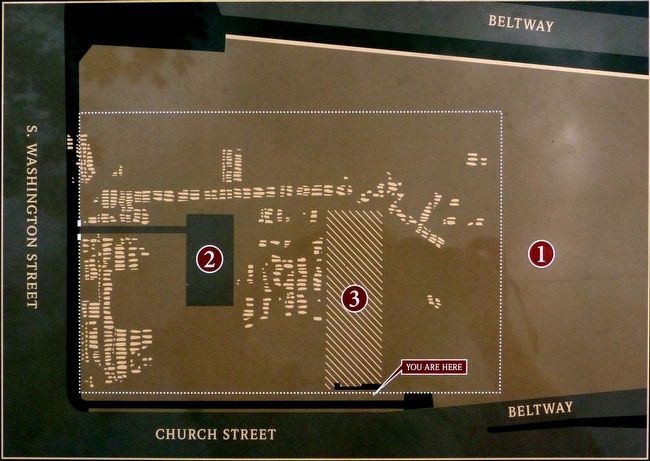
The Cemetery property changed hands many times over the years, and was rarely mapped or recorded. Left vulnerable to encroachment, parts of the cemetery were paved over by South Washington Street, and its southern edge was destroyed by the Beltway. The wall in front of you marks another such desecration — an office building constructed here in 1960 directly over the
this page online
Uncovering the Story
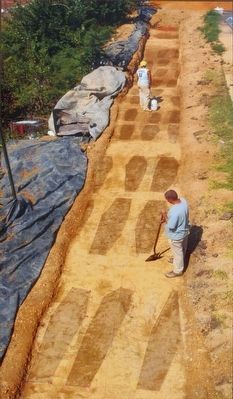
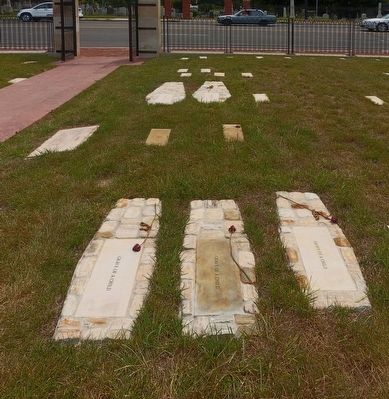
In 1967, historical research brought the cemetery's history to light. Both moved and outraged by the story of the Contrabands and Freedmen, a committed advocacy group and city officials were inspired to protect what remained of the cemetery. In 2007, the encroaching structures were dismantled, and a respectful archaeological study was completed, revealing the location of more 540 of the cemetery's graves. The graves were preserved and are now marked in the Memorial.
A Living Memorial
In 2013, the cemetery was re-dedicated, with a full listing of the names of the dead. While the story told here lies in the past, it also is a part of Alexandria's present and future. Through genealogical research, many descendants of the people buried here have been identified, some of whom still live nearby. These descendants, as well as all who visit the memorial seeking to understand our history, honor the memory of those buried here and sustain the connection to our past.
Topics and series. This historical marker
Photographed by Allen C. Browne, August 1, 2015
2. Contrabands and Freedmen Cemetery Memorial Marker
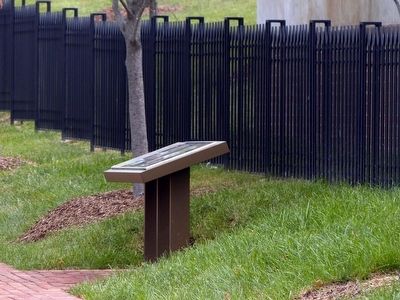
Location. 38° 47.689′ N, 77° 3.013′ W. Marker is in Alexandria, Virginia. It is in the Southwest Quadrant. It is at the intersection of Church Street and South Columbus Street when traveling north on Church Street. Touch for map. Marker is in this post office area: Alexandria VA 22314, United States of America. Touch for directions.

Regionally, this marker and memorial is in the Washington Metropolitan Area and in Northern Virginia. It is also in the American South, specifically in the Upper South, in the Mid-Atlantic, and on the Eastern Seaboard. Globally, it is in the North Atlantic Region, North America, the Western Hemisphere, the Western World, and the Anglosphere. Historically, it finds itself in what was once the territory of the Mississippian Culture, one of the original Thirteen Colonies, one of the Confederate States of America, and the Antebellum South.
Other nearby markers. At least
Photographed by Allen C. Browne, August 1, 2015
3. ❶ Brickyard
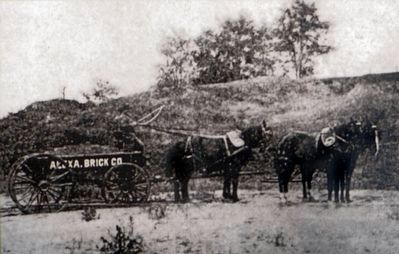
The Washington Post reported in 1892: “Of late the owners have allowed neighboring brick yards to dig clay from which the outer edges of the graveyard with which to make brick. This digging, seconded by heavy rains, has resulted in unearthing many coffins and skeletons and leaving the outer graves in very bad conditions.” Brick manufacturers like the one whose wagon is shown here most likely excavated for clay on the western edge of the cemetery.Close-up of photo on marker
Alexandria Library
Alexandria Library
Photographed by Allen C. Browne, August 1, 2015
4. ❷ Gas Station, 1955
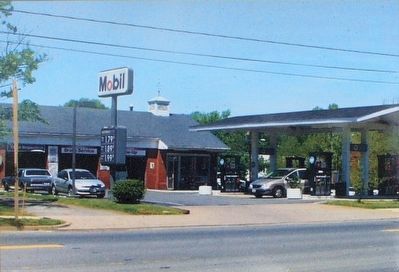
The tanks and foundation of a gas station destroyed many graves. Leaking oil andgaloline further contaminated the site. Close-up of photo on marker
Alexandria Archaeology
Alexandria Archaeology
Photographed by Allen C. Browne, August 1, 2015
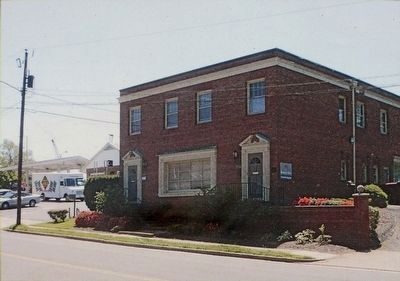
5. ❸ Office Building, 1960
The construction of an office building and its adjacent parking lot had a great impact on the cemetery. Grading removed large amounts of soil from parts of the site, leaving many graves very close to the surface. Close-up of photo on marker
Photographed by Allen C. Browne, August 1, 2015
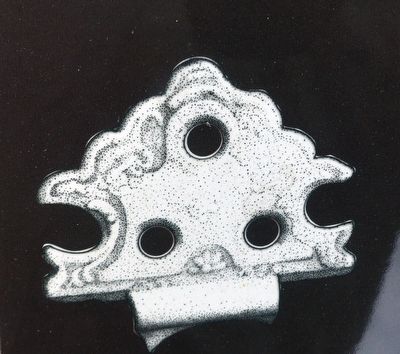
6. Coffin Hinge
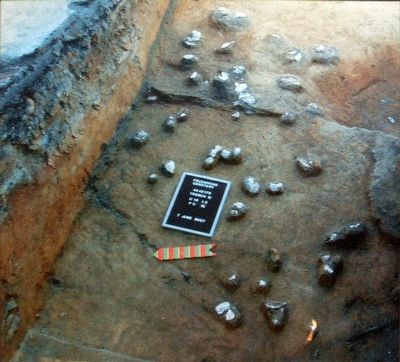
Archaeological investigation led to the discovery of some artifacts associated with burials. Coffin hardware, such as this hinge, was discovered only in places where 20th-century grading had cut into the graves. In undisturbed areas, archaeologists found a few objects, like oyster shells, that could have been placed on top of a grave and may speak to African American burial practices. All artifacts associated with the graves were left in place and now protected. Close-up of photo on marker
Photographed by Allen C. Browne, August 1, 2015
7. Oyster Shells
Photographed by Allen C. Browne, August 1, 2015
8. Archaeology
Photographed by Allen C. Browne, August 1, 2015
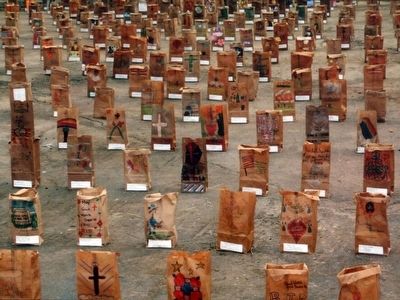
9. Luminaries
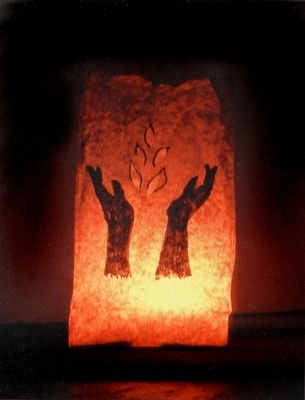
As part of the re-dedication of the site in 2007, Alexandria schoolchildren created luminaries for each of the individuals believed to buried in the cemetery. Close-up of photo on marker
Photographed by Allen C. Browne, August 1, 2015
10. Luminary
Photographed by Allen C. Browne, August 1, 2015
11. Map of Cemetery Site
Photographed by Allen C. Browne, August 1, 2015
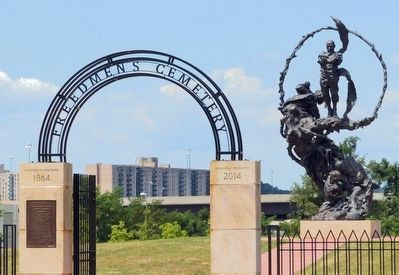
12. Contrabands and Freedmen Cemetery
Photographed by Allen C. Browne, August 1, 2015
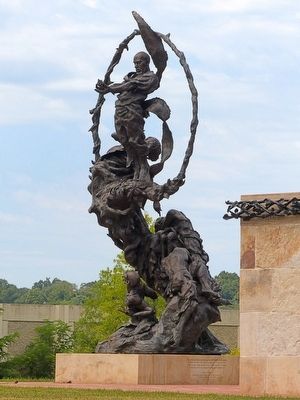
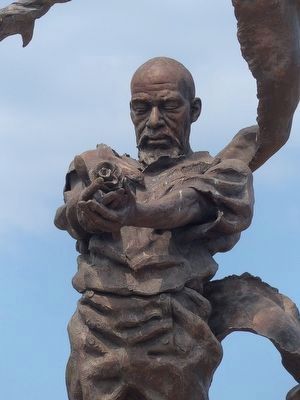
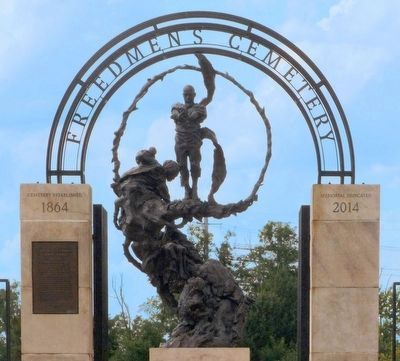
13. Path of Thorns and Roses
Sculpture by Mario Chiodo
Sculpture by Mario Chiodo
Photographed by Allen C. Browne, August 1, 2015
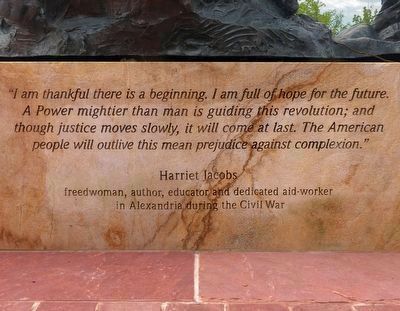
14. I am thankful...
“I am thankful there is a beginning. I am full of hope for the future. A Power mightier than man is guiding this revolution; and though justice moves slowly,it will come at last. The American people will outlive this mean prejudice against complexion.” — Harriet Jacobs, freedwoman, author, educator and dedicated aid-worker in Alexandria during the Civil War.
Photographed by Allen C. Browne, August 1, 2015
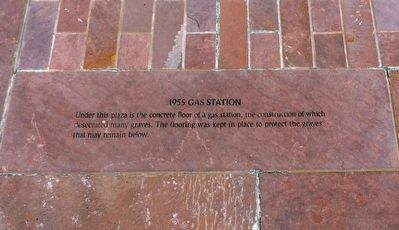
15. 1955 Gas Station
Under this plaza is the concrete floor of a gas station, the construction of which desecrated many graves. The flooring was kept in place to protect the graves that may remain below.
Photographed by Allen C. Browne, August 1, 2015
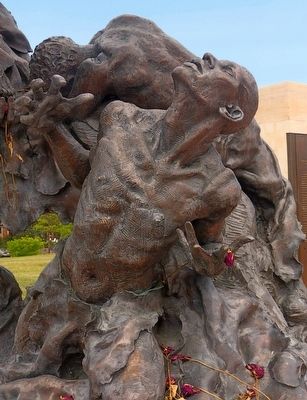
16. Detail of Path of Thorns and Roses
Photographed by Allen C. Browne, August 1, 2015
17. Detail of Path of Thorns and Roses
Photographed by Allen C. Browne, August 1, 2015
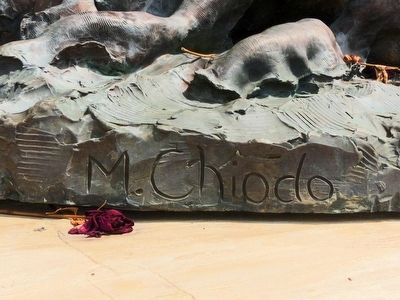
18. M. Chiodo
Mario Chiodo's signature on his Path of Thorns and Rose Sculpture.
Photographed by Allen C. Browne, August 1, 2015
19. Contrabands and Freedmen Cemetery Memorial
Path of Thorns and Roses
Path of Thorns and Roses
Photographed by Allen C. Browne, August 1, 2015
20. Grave Markers
Photographed by Allen C. Browne, August 1, 2015
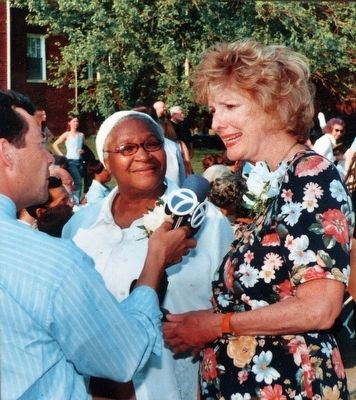
21. Lillie Finklea and Louise Massoud
Lillie Finklea (left) and Louise Massoud (right) created Friends of Freedmen's Cemetery in 1997 to preserve, commemorate, and research this burying ground. Close-up of photo on marker
Credits. This page was last revised on January 27, 2023. It was originally submitted on August 3, 2015, by Allen C. Browne of Silver Spring, Maryland. This page has been viewed 879 times since then and 44 times this year. Photos: 1, 2, 3, 4, 5, 6, 7, 8, 9, 10, 11, 12, 13, 14, 15, 16, 17, 18, 19, 20, 21. submitted on August 3, 2015, by Allen C. Browne of Silver Spring, Maryland. • Bill Pfingsten was the editor who published this page.
