Near Cape Charles in Northampton County, Virginia — The American South (Mid-Atlantic)
Indians
First People Of The Eastern Shore
Photographed by Michael C. Wilcox
1. Indians Marker
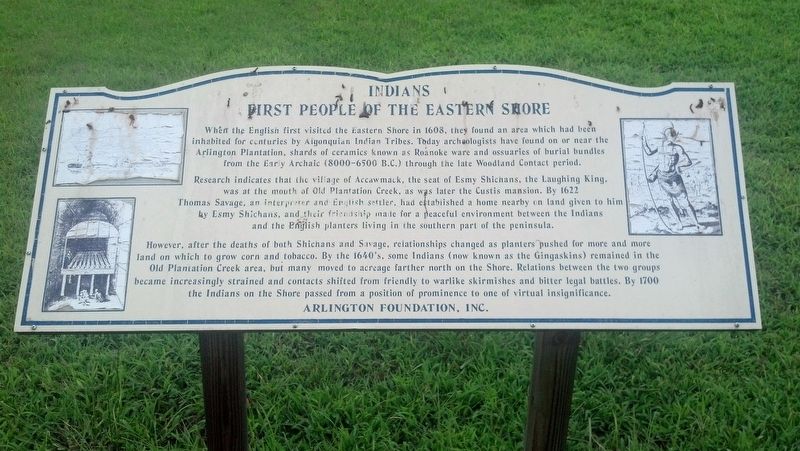
When the English first visited the Eastern Shore in 1608, they found an area which had been inhabited for centuries by Algonquian Indian Tribes. Today archaeologists have found on or near the Arlington Plantation, shards of ceramics known as Roanoke ware and ossuaries burial bundles from the Early Archaic (8000-6500 B.C.) through the late Woodland Contact period.
Research indicates that the village of Accawmack, seat of Esmy Shichans, the Laughing King, was at the mouth of Old Plantation Creek, as was later the Custis mansion. By 1622 Thomas Savage, an interpreter and English settler, had established a home nearby on land given to him by Esmy Shichans, and their friendship made for a peaceful environment between the Indians and the English planters living in the southern part of the peninsula.
However, after the deaths of both Shichans and Savage, relationships changed as planters pushed for more and more land on which to grow corn and tobacco. By the l64O's, some Indians (now known as the Gingaskins) remained in the Old Plantation Creek area, but many moved to acreage farther north on the Shore. Relations between
this page online
Erected by Arlington Foundation, Inc.
Topics. This historical marker is listed in these topic lists: Anthropology & Archaeology • Colonial Era • Indigenous Peoples and Communities • Settlements & Settlers. A significant historical year for this entry is 1608.
Location. This marker has been replaced by another marker nearby. It was located near 37° 13.727′ N, 76° 0.198′ W. Marker was near Cape Charles, Virginia, in Northampton County. It could be reached from Arlington Chase Road north of Custis Tomb Drive. Touch for map. Marker was in this post office area: Cape Charles VA 23310, United States of America. Touch for directions.

Regionally, this marker was on the Eastern Shore. It was also in the American South, specifically in the Upper South, on the Delmarva Peninsula, in the Tidewater, and on the Eastern Seaboard. Globally, it was in the North Atlantic Region, North America, the
Photographed by Michael C. Wilcox
2. Indians Marker
Other nearby markers. At least 8 other markers are within 2 miles of this location, measured as the crow flies: Archaeology (within shouting distance of this marker); African Presence (within shouting distance of this marker); The Custis Tombs (within shouting distance of this marker); European Settlement (within shouting distance of this marker); American Indians (within shouting distance of this marker); Welcome to the Arlington Sites Preserve (within shouting distance of this marker); Elijah Baker (approx. 2.1 miles away); a different marker also named Elijah Baker (approx. 2.1 miles away). Touch for a list and map of all markers in Cape Charles.
Other markers no longer nearby. Mansion Site (was here, next to this marker but has been replaced with another marker now near it); Bacon's Rebellion (was here, next to this marker but has been replaced with another marker now near it); Slavery on the Eastern Shore (was here, next to this marker but has been replaced with another marker now near it); Arlington (was approx. 1.2 miles away but has been confirmed missing).
Additional commentary.
1.
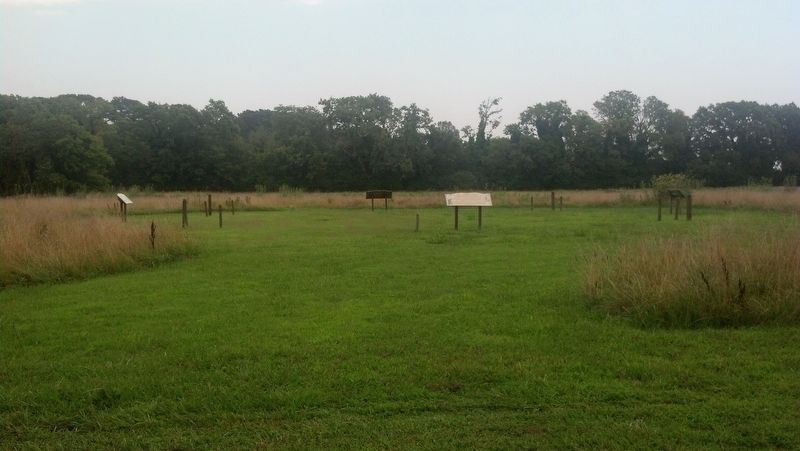
This and the other three markers are in obvious disrepair. I visited this site in 2013, but am only just now posting. I hope they are in better shape now.
— Submitted October 16, 2016, by Michael C. Wilcox of Winston-Salem, North Carolina.
Credits. This page was last revised on June 7, 2026. It was originally submitted on October 16, 2016, by Michael C. Wilcox of Winston-Salem, North Carolina. This page has been viewed 905 times since then and 42 times this year. Photos: 1, 2. submitted on October 16, 2016, by Michael C. Wilcox of Winston-Salem, North Carolina. • Bill Pfingsten was the editor who published this page.
