Kingston, Ontario — Central Canada (North America)
Molly Brant
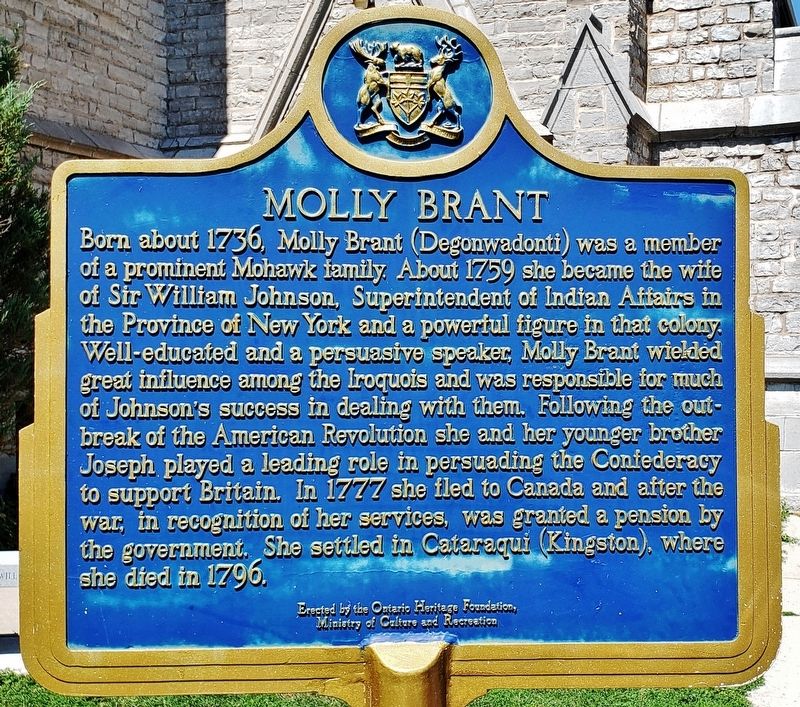
Photographed by Cosmos Mariner, August 15, 2019
1. Molly Brant Marker
Erected by Ontario Heritage Foundation, Ministry of Culture and Recreation.
Topics and series. This historical marker is listed in these topic lists: Colonial Era • Indigenous Peoples and Communities • War, US Revolutionary • Women. In addition, it is included in the Canada, Ontario Heritage Trust series list.
Location. 44° 13.984′ N, 76° 29.08′ W.
this page online

Regionally, this marker is in Eastern Ontario and specifically in Southeastern Ontario. It is also in Central Canada. Globally, it is in North America, on the Great Lakes, in the Western Hemisphere, in the Western World, and in the Anglosphere. Historically, it finds itself in what was once a British colony, the Viceroyalty of New France, the Haudenosaunee (Iroquois) Confederacy, and Rupert’s Land.
Other nearby markers. At least 8 other markers are within walking distance of this marker: St. Paul's Churchyard (within shouting distance of this marker); Queen Street Synagogue (within shouting distance of this marker); Lower Burial Ground 1783-1863 (within shouting distance of this marker); Discover the History of the Anna Lane Site (within shouting distance of this marker);
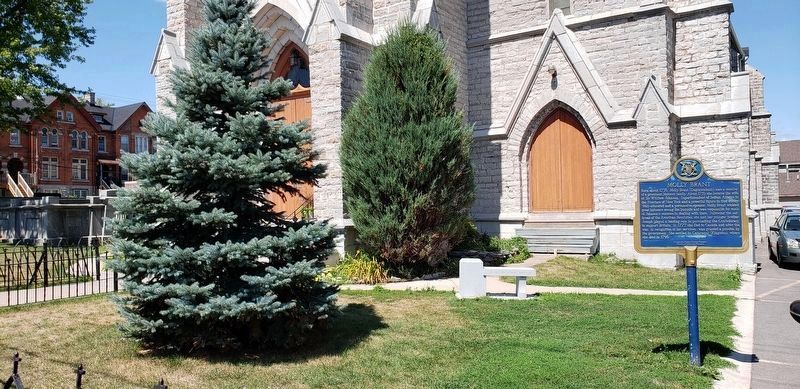
Photographed by Cosmos Mariner, August 15, 2019
2. Molly Brant Marker • wide view
(Saint Paul's Anglican Church in background)
(Saint Paul's Anglican Church in background)
More about this marker. Kingston is independent from the surrounding Frontenac County.
Also see . . .
1. Mary Brant (Konwatsi'tsiaiénni). Mary Brant, Konwatsi'tsiaiénni (Mohawk), Haudenosaunee (Iroquois) leader, Loyalist, diplomat, and political activist (generally known as Molly Brant), was one of the most important women in North American Indigenous history. Consulted by Indigenous people on matters of importance, she was a powerful ally to the British forces and served as their highly effective intermediary with the Iroquois in the American Revolutionary War (1775–1783). (Submitted on October 24, 2019, by Cosmos Mariner of Cape Canaveral, Florida.)
2. Molly Brant (Wikipedia). Since 1994, Brant has been honored as a Person of National Historic Significance
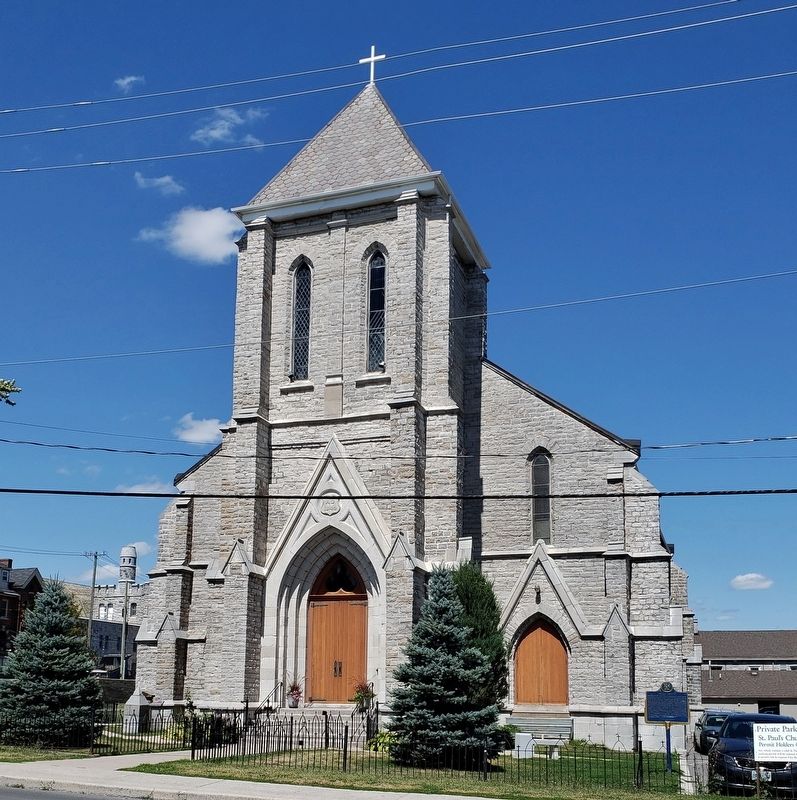
Photographed by Cosmos Mariner, August 15, 2019
3. Saint Paul's Anglican Church
(marker visible at bottom right)
(marker visible at bottom right)
Credits. This page was last revised on March 27, 2024. It was originally submitted on October 24, 2019, by Cosmos Mariner of Cape Canaveral, Florida. This page has been viewed 899 times since then and 88 times this year. Photos: 1, 2, 3. submitted on October 24, 2019, by Cosmos Mariner of Cape Canaveral, Florida.
