Palm Coast in Flagler County, Florida — The American South (South Atlantic)
Hernandez Landing
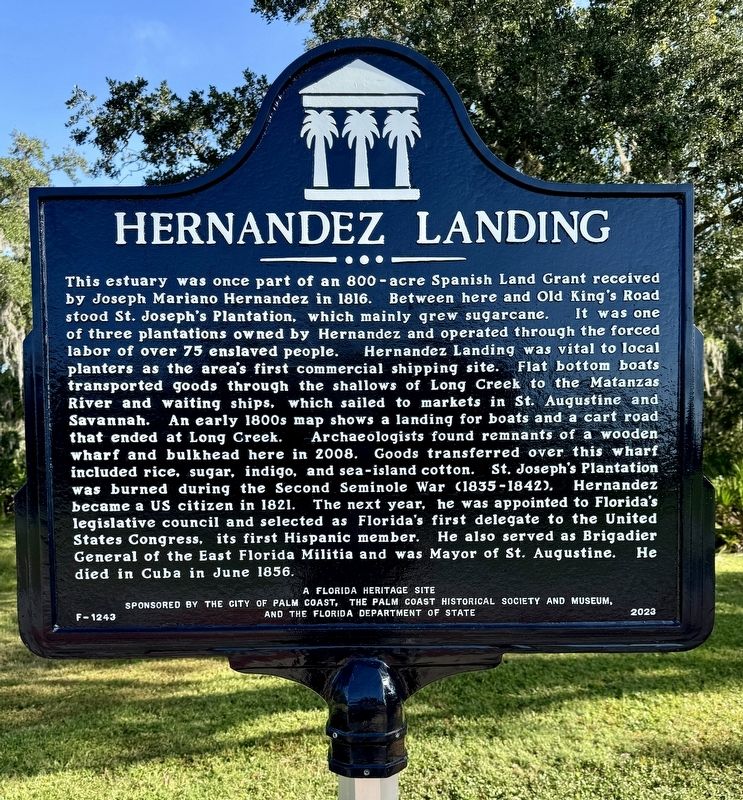
Photographed by Brandon D Cross
1. Hernandez Landing Marker
this page online
Erected 2024 by A Florida Heritage Site; The City of Palm Coast, The Palm Coast Historical Society and Museum, and the Florida Department of State. (Marker Number F-1243.)
Topics. This historical marker is listed in these topic lists: Agriculture • Colonial Era • Hispanic Americans • Settlements & Settlers • Wars, US Indian. A significant historical year for this entry is 1816.
Location. 29° 35.017′ N, 81° 12.707′ W. Marker is in Palm Coast, Florida, in Flagler County. It can be reached from Palm Harbor Parkway 0.1 miles west of Coral Way, on the right when traveling west. The marker is located just inside the entrance to the Long Creek Nature Preserve. Touch for map. Marker is at or near this postal address: 1050 Palm Harbor Parkway, Palm Coast FL 32137, United States of America. Touch for directions.

Regionally, this marker is in Florida’s First Coast. It is also in the American South and on the Eastern Seaboard. Globally, it is in the North Atlantic Region, North America, a Gulf of Mexico state, the Western

Photographed by Brandon D Cross
2. Hernandez Landing Marker
Other nearby markers. At least 8 other markers are within 2 miles of this marker, measured as the crow flies: Levitt & I.T.T. 'De Bary' Model (approx. 1.2 miles away); Turtle #10 - "Nancy Marie" (approx. 1.2 miles away); Palm Coast, Florida (approx. 1.3 miles away); Levitt & I.T.T. "Del Mar" Model and Palm Coast Golf Club (approx. 1.3 miles away); The First Responders (approx. 1.4 miles away); September 11, 2001 (approx. 1½ miles away); World Trade Center (approx. 1½ miles away); Flight 93 (approx. 1½ miles away). Touch for a list and map of all markers in Palm Coast.
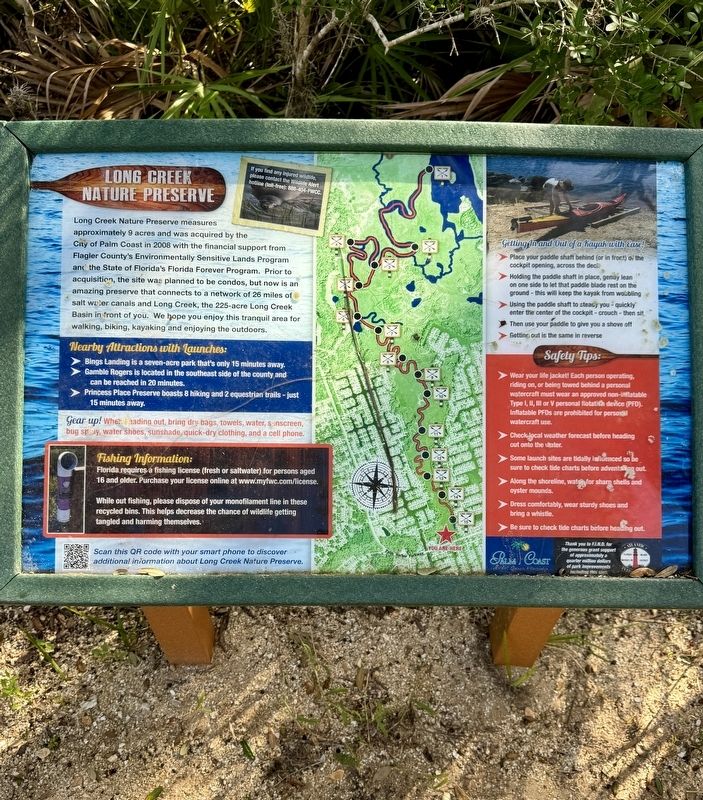
Photographed by Brandon D Cross
3. Long Creek Nature Reserve Informational Marker
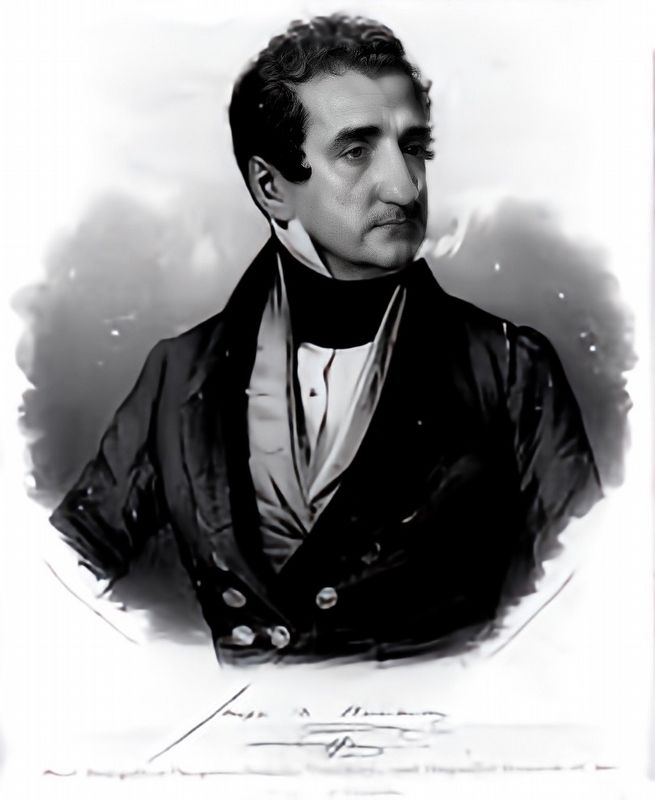
Wikipedia/Public Domain
4. General Joseph Hernandez
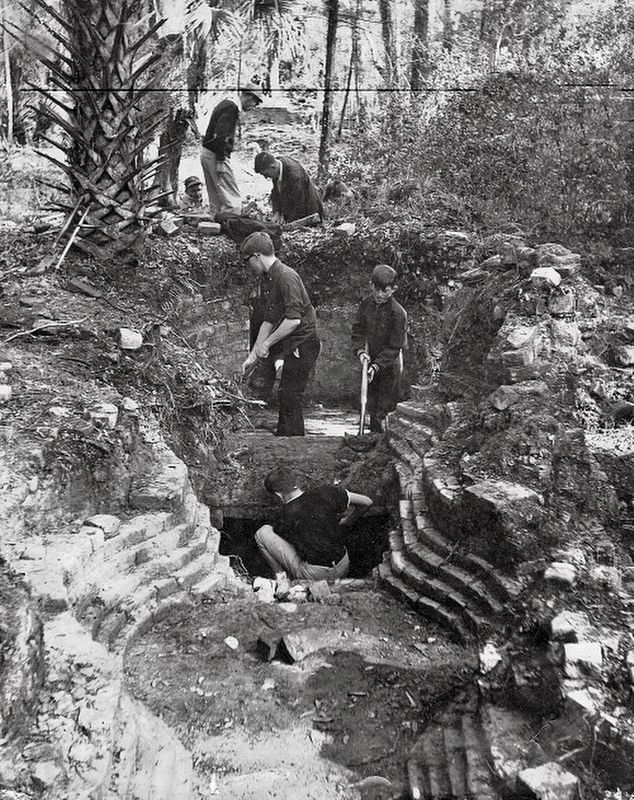
Photographed by Wikipedia/Publc Domain
5. Hernandez Landing Marker
Credits. This page was last revised on October 24, 2024. It was originally submitted on October 24, 2024, by Brandon D Cross of Flagler Beach, Florida. This page has been viewed 586 times since then and 52 times this year. Photos: 1, 2, 3, 4, 5. submitted on October 24, 2024, by Brandon D Cross of Flagler Beach, Florida. • Bernard Fisher was the editor who published this page.
