Hampton, Virginia — The American South (Mid-Atlantic)
Mary Peake
"I shall not die, but live."

Photographed by Evan Dwyer, August 9, 2025
1. Mary Peake Marker
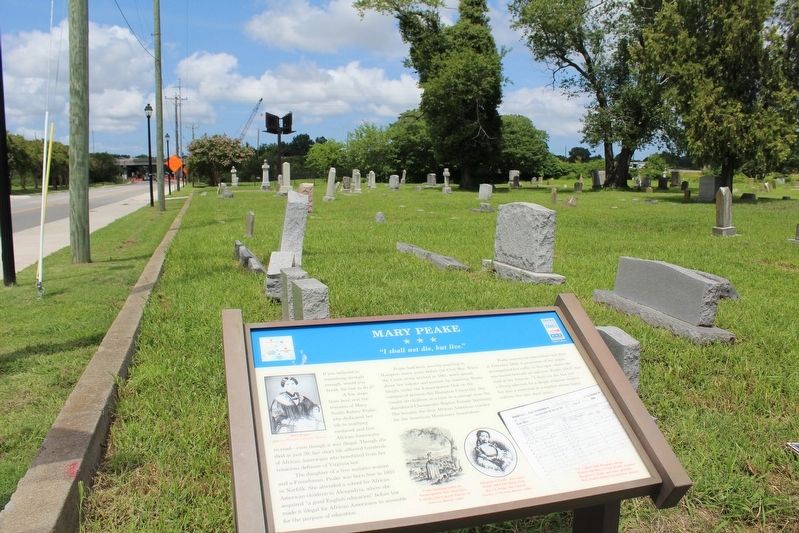
A few steps from here rest the remains of Mary Smith Kelsey Peake, who dedicated her life to teaching enslaved and free African Americans to read—even though it was illegal. Though she died at just 39, her short life affected hundreds of African Americans who benefitted from her tenacious defiance of Virginia law.
The daughter of a free mulatto woman and a Frenchman, Peake was born free in 1823 in Norfolk. She attended a school for African American children in Alexandria, where she acquired "a good English education" before law made it illegal for African Americans to assemble for the purpose of education.
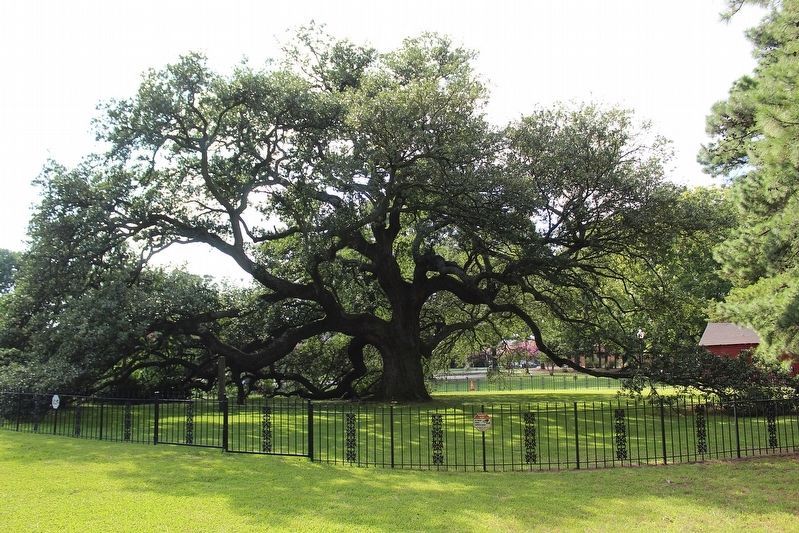
Peake had been secretly teaching in Hampton many years before the Civil War. When the Union army arrived in 1861, word spread about her talents and passion for teaching. Peake taught under the Emancipation Oak on the campus of present-day Hampton University. She taught 50 children at a time in a cottage near the abandoned Chesapeake Baptist Female Seminary. She became the first African American teacher for the American Missionary
this page online
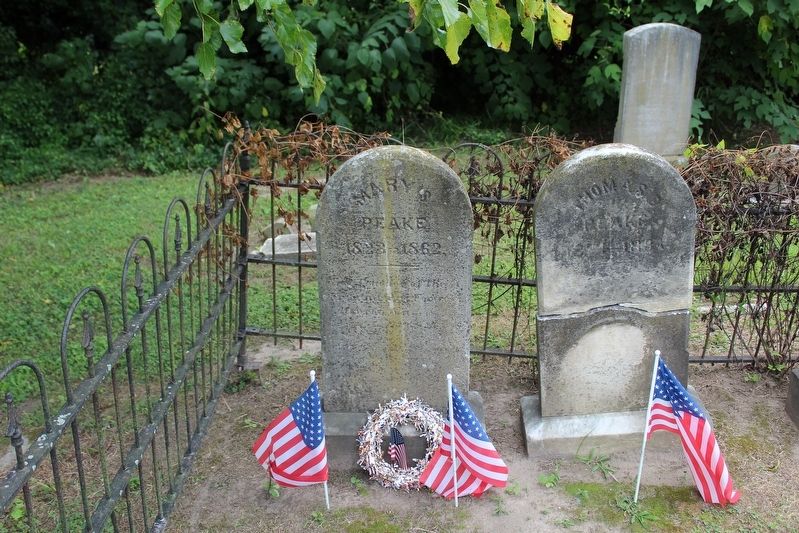
Peake contracted tuberculosis and died in February 1862. A procession of her pupils accompanied her coffin to this spot, where she was buried beneath an oak tree. Psalm 118:17 was read at her funeral—"I shall not die, but live"—a fitting selection for a deeply religious woman, but also a memorial to a teacher whose legacy outlives her own short years.
(captions)
Peake teaching under the Emancipation Oak, from Mary S. Peake, The Colored Teacher at Fortress Monroe (1862)
Margaret S. Peake, also called Hattie and Little Daisy, from Mary S. Peake, The Colored Teacher at Fortress Monroe (1862)
U.S. Census, 1860, Hampton, listing Thomas and Mary S. Peek (Peake), daughter Margaret S. Peake, and nurse (probably Mary Peake's mother) Sarah Kelsie (Kelsey).
Erected by Virginia Civil War Trails.
Topics and series. This historical marker is listed in these topic lists: African Americans • Cemeteries & Burial Sites • Civil Rights • Education • War, US Civil • Women. In addition, it is included in the Virginia Civil War Trails series list. A significant historical year for this entry is 1861.
Location. 37° 1.902′ N,
Photographed by Evan Dwyer, August 9, 2025
2. Mary Peake Marker

Regionally, this marker is on Virginia’s Peninsula and in Coastal Virginia. It is also in the American South, specifically in the Upper South, in the Tidewater, and on the Eastern Seaboard. Globally, it is in the North Atlantic Region, North America, the Western Hemisphere, the Western World, and the Anglosphere. Historically, it finds itself in what was once the territory of the Mississippian Culture, one of the original Thirteen Colonies, one of the Confederate States of America, and the Antebellum South.
Other nearby markers. At least 8 other markers are within walking distance of this marker: Mary Smith Kelsey Peake (about 400 feet away, measured in a direct line); Federation of Colored Women's Clubs (approx. 0.2 miles away); Virginia State Federation of Colored Women’s Clubs (approx.
Photographed by Evan Dwyer, August 9, 2025
3. Mary Peake Gravesite
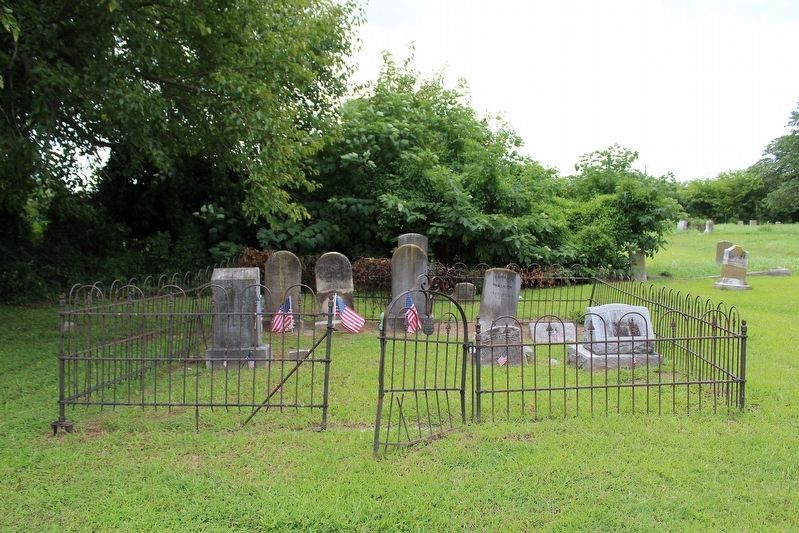
Mary Peake's tombstone is in the corner of this plot, which can be found about 360' east of the marker on the other side of a strand of young trees and overgrowth that bisects the cemetery field.
Photographed by Evan Dwyer, August 9, 2025
4. Mary Peake's Final Resting Place
Her tombstone within the gated plot is at coordinates 37.032212, -76.344768.
Photographed by Evan Dwyer, August 9, 2025
5. Emancipation Oak
The massive Live Oak that Mary Peake taught under survives on the east edge of Hampton University's campus.
Photographed by Evan Dwyer, June 13, 2026
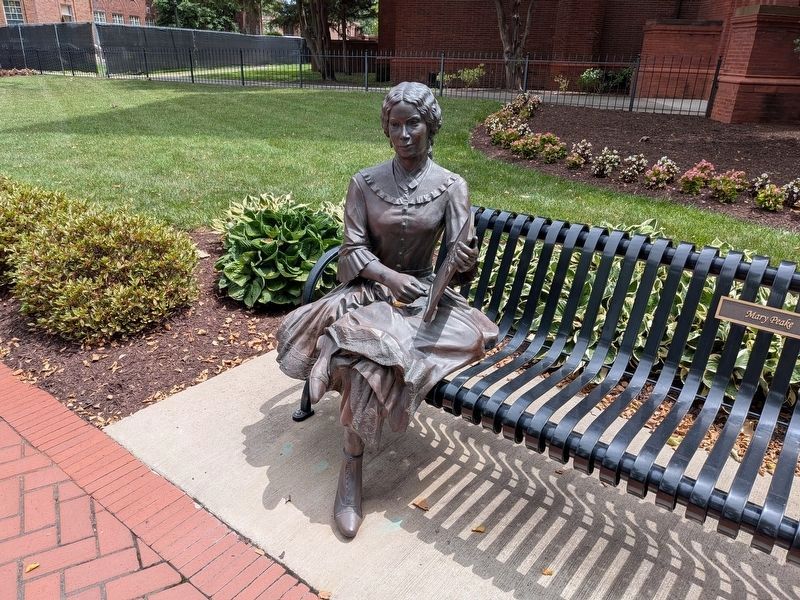
6. Mary Peake Sculpture
A statue of Mary Peake graces one of the benches in Hampton University's Legacy Park.
Credits. This page was last revised on July 10, 2026. It was originally submitted on September 2, 2025, by Evan Dwyer of Richmond, Virginia. This page has been viewed 129 times since then and 55 times this year. Photos: 1, 2, 3, 4. submitted on September 2, 2025, by Evan Dwyer of Richmond, Virginia. 5, 6. submitted on June 15, 2026, by Evan Dwyer of Richmond, Virginia. • Bernard Fisher was the editor who published this page.
