Presidio of San Francisco in San Francisco City and County, California — The American West (Pacific Coastal)
Daily Life in the Early 19th Century ⎯⎯⎯ La vida cotidiana en el siglo XIX
—
Presidio of San Francisco
—
Photographed by Alice Mansell, June 29, 2026
1. Daily Life in the Early 19th Century Marker
Inscription.
Daily Life in the Early 19th Century, also, La vida cotidiana en el siglo XIX. . , If you had visited El Polin in the early days you would have encountered an active community. The settlers spent most of the day outside since the houses were small and were used mainly for sleeping and storage. All family members, including children, worked hard. Daily chores included tending cattle, cultivating gardens, outdoor cooking, washing clothes, caring for chickens, and maintaining the adobe house. Native Californian artifacts and a clay tile kiln found buried nearby also suggest to archaeologists that Native people worked here alongside the colonists., . This landmark was erected by National Park Service, U.S.Department of Department of the Interior. It is in Presidio of San Francisco in San Francisco City and County California
Si usted hubiera visitado El Polín a comienzos de los 1800s, habría encontrado una comunidad activa. Los colonos pasaban la mayor parte del día al aire libre, ya que las casas eran pequeñas y se utilizaban principalmente para dormir y como almacenes. Todos los miembros de la familia, incluidos los niños, trabajaban arduamente. Las tareas diarias incluían cuidar del ganado, cultivar huertas, cocinar al aire libre, lavar la ropa, cuidar de las gallinas y mantener las casas de adobe. Cerca de allí, se descubrieron enterrados artefactos de los nativos de California y un horno de tejas de barro, lo que también sugiere que estos habitantes trabajaban aquí junto a los colonos.
If you had visited El Polin in the early days you would have encountered an active community. The settlers spent most of the day outside since the houses were small and were used mainly for sleeping and storage. All family members, including children, worked hard. Daily chores included tending cattle, cultivating gardens, outdoor cooking, washing clothes, caring for chickens, and maintaining the adobe house. Native Californian artifacts and a clay tile kiln found buried nearby also suggest to archaeologists that Native people worked here alongside the colonists.
Si usted hubiera visitado El Polín a comienzos de los 1800s, habría encontrado una comunidad activa. Los colonos pasaban la mayor parte del día al aire libre, ya que las casas eran pequeñas y se utilizaban principalmente para dormir y como almacenes. Todos los miembros de la familia, incluidos los niños, trabajaban arduamente. Las tareas diarias incluían cuidar del ganado, cultivar huertas, cocinar al aire libre, lavar la ropa, cuidar de las gallinas y mantener las casas de adobe. Cerca de allí, se descubrieron enterrados artefactos de los nativos
Click or scan to see this page online
de California y un horno de tejas de barro, lo que también sugiere que estos habitantes trabajaban aquí junto a los colonos.
Erected by National Park Service, U.S.Department of Department of the Interior.
Location. 37° 47.616′ N, 122° 27.34′ W. Marker is in San Francisco, California, in San Francisco City and County. It is in Presidio of San Francisco. It can be reached from MacArthur Avenue. Marker is one of a series of three markers mostly about Spanish/Mexican settlers along the trail to El Polin Spring accessible from a parking lot at the end of MacArthur Street at the San Francisco Presidio. Touch for map. Marker is in this post office area: San Francisco CA 94129, United States of America. Touch for directions.
Regionally, this marker is on the Coast Ranges. It is also on the American Pacific Coast. Globally, it is in North America, on the Ring of Fire, on the Pacific Rim, in the Western
Photographed by Alice Mansell, June 29, 2026
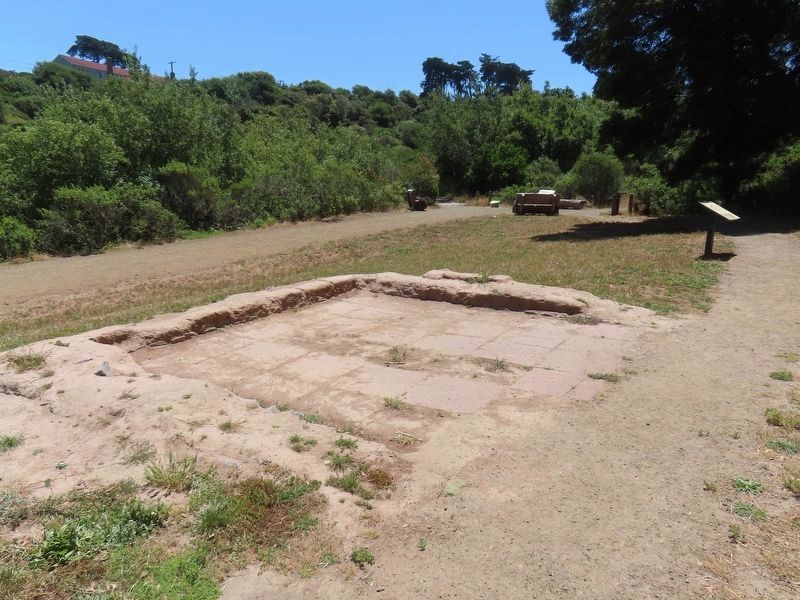
2. View towards the south from marker towards partially reconstructed adobe home floor and foundation
Hemisphere, in the Western World, and in the Anglosphere. Historically, it finds itself in what was once New Spain and also Mexico’s Alta California.
Credits. This page was last revised on July 19, 2026. It was originally submitted on July 17, 2026, by Alice Mansell of Los Altos, California. This page has been viewed 30 times since then. Photos:1, 2. submitted on July 17, 2026, by Alice Mansell of Los Altos, California. • Andrew Ruppenstein was the editor who published this page.