Keedysville in Washington County, Maryland — The American Northeast (Mid-Atlantic)
Texas
Photographed by Craig Swain, September 17, 2007
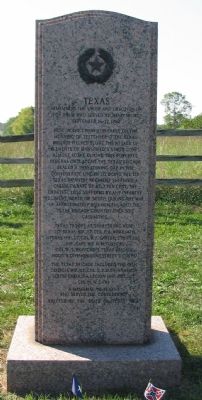
1. Texas Marker
Remembers the valor and devotion of her sons who served at Sharpsburg September 16-17, 1862
Here in the Cornfield, early on the morning of September 17 the Texas Brigade helped blunt the attack of elements of Mansfield's Union Corps almost alone during this powerful Federal onslaught the Texas Brigade sealed a threatening gap in the Confederate line in so doing the 1st Texas Infantry Regiments suffered a casualty rate of 82.3 per cent, the greatest loss suffered by any infantry regiment, North or South, during the war of approximately 850 men engaged the Texas Brigade counted over 530 casualties.
Texas troops at Sharpsburg were 1st Texas Inf, Lt. Col. P.A. Work; 4th Texas Inf, Lt. Col. B.F. Carter; 5th Texas Inf., Capt. Ike N.M. Turner. (Col. W.T. Wofford's Texas Brigade, Hood's Division, Longstreet's Corps)
The Texas Brigade included the 18th Georgia Inf, Lt. Col. S. Z. Ruff, Hampton South Carolina Legion (Inf. Cos.) Lt. Col. M.W. Cary
A memorial to Texans Who served the Confederacy
Erected 1964 by State of Texas.
Topics. This memorial is listed in this topic list: War, US Civil. A significant historical date for this entry is September 16, 1862.
Location. 39° 28.85′ N, 77° 44.818′ W. Memorial is in Keedysville, Maryland, in Washington County. It is at the intersection of The Cornfield Avenue and Dunker Church Road, on the right when traveling east on The Cornfield Avenue. Located near stop four of the driving tour of Antietam Battlefield and stop six of the Cornfield walking trail. Touch for map. Memorial is at or near this postal address: 6088 The Cornfield Ave, Sharpsburg MD 21782, United States of America. Touch for directions.

Regionally, this memorial is in Western Maryland. It is also in the American Mid-Atlantic, in Appalachia, and specifically in Northern Appalachia. Globally, it is in North
this page online
Other nearby markers. At least 8 other markers are within walking distance of this marker: Hood's Division, Longstreet's Command (here, next to this marker); First Army Corps (a few steps from this marker); 84th New York (14th Brooklyn) Volunteer Infantry (a few steps from this marker); a different marker also named Hood's Division, Longstreet's Command (a few steps from this marker); Longstreet's Command (within shouting distance of this marker); Jackson's Command (within shouting distance of this marker); "Every Stalk of Corn" (within shouting distance of this marker); A Cornfield Unlike Any Other (within shouting distance of this marker).
Related markers. Click here for a list of markers that are related to this marker. One of a set of Texas Civil War Memorials
Also see . . .
1. Hood's Texas Brigade. Handbook of Texas Online website entry (Submitted on February 8, 2008, by Craig Swain of Leesburg, Virginia.)
2. Hood's Brigade. "Antietam
Photographed by Eric Milask, August 10, 2011
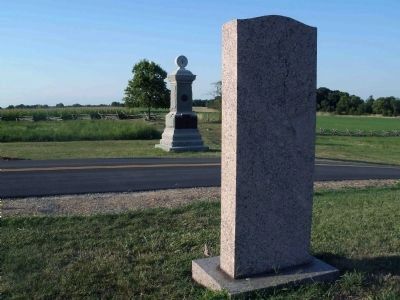
2. Reverse Side w/ 84th New York Infantry Monument
3. Texas Monument. National Park Service site detailing the monument. (Submitted on February 8, 2008, by Craig Swain of Leesburg, Virginia.)
4. William T. Wofford. William Tatum Wofford (June 28, 1824 – May 22, 1884) was an officer during the Mexican-American War and a general in the Confederate States Army during the American Civil War. (Submitted on October 20, 2015, by Brian Scott of Anderson, South Carolina.)
Additional commentary.
1. Texas Civil War Monuments
This marker is one of 19 monuments placed by the State of Texas on battlefields across the nation, preserving the memories of the contributions made by the state’s military units during the Civil War.
In 1961 the Texas Civil War Centennial Commission and the Texas State Historical Survey Committee initiated this commemorative series of granite monuments by dedicating the first and largest
Photographed by Eric Milask, August 10, 2011
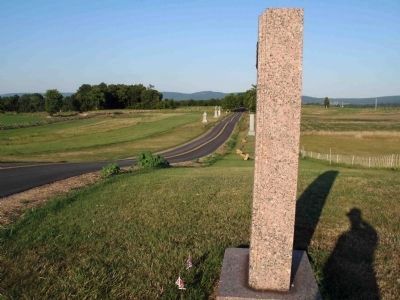
3. Texas Monument Along The Bloody Cornfield
Starting in 1998, the Texas Historical Commission continued the work begun in 1961 by the Centennial Commission and the Historical Survey Committee by placing granite monuments at other Civil War battlefields. As of 2017, monuments have been placed at the battlefields of Galveston, Texas (1998); Raymond, Mississippi (2002); Rowlett’s Station, Kentucky (2008); Richmond, Kentucky (2009); Corinth, Mississippi (2010); Gaines Mill, Virginia(2012); and Second Manassas, Virginia (2012).
The Texas Historical Commission plans to place a monument at the battlefield of Glorieta Pass, New Mexico.
(Source: Texas Historical Commission, 2015)
NOTE: The links above
Photographed by Brian Scott, September 19, 2015
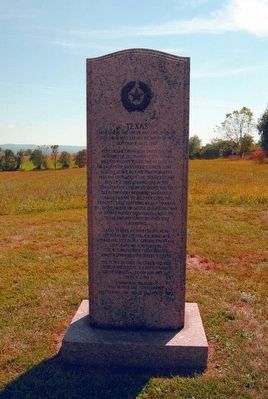
4. Texas State Monument
— Submitted July 17, 2016, by Duane Hall of Abilene, Texas.
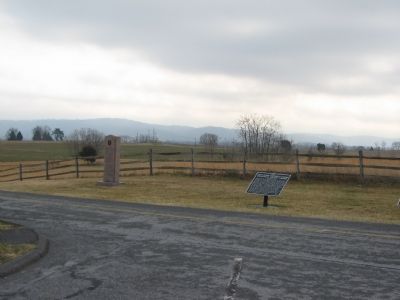
Photographed by Craig Swain, February 9, 2008
5. The Texas Brigade Marker Along Cornfield Avenue
Beside the monument is a War Department Marker for Hood's Division.

Photographed by Jim Fredlund, September 21, 2023
6. Texas Marker
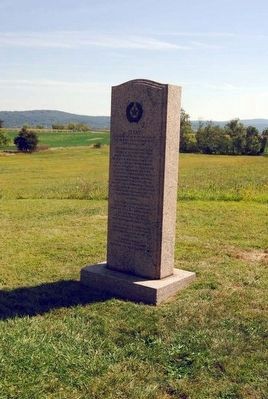
Photographed by Brian Scott, September 19, 2015
7. Texas State Monument
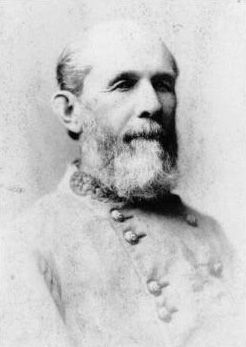
Photographed by Brian Scott
8. Brig. General William T. Wofford (1824-1884)
Commander of the Texas Brigade
Commander of the Texas Brigade
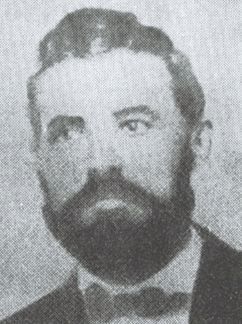
Photographed by Brian Scott
9. Lt. Colonel Philip A. Work (1832-1911)
Commander, 1st Texas Infantry
Commander, 1st Texas Infantry
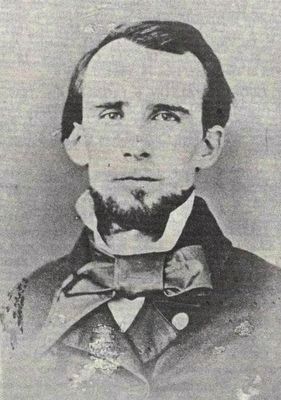
Photographed by Brian Scott
10. Lt. Colonel Benjamin F. Carter (1831-1863)
Commander, 4th Texas Infantry
Commander, 4th Texas Infantry
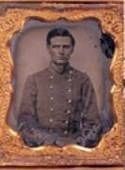
Photographed by Brian Scott
11. Captain Ike Turner
Commander, 5th Texas Infantry
Commander, 5th Texas Infantry
Photographed by Craig Swain, September 17, 2007
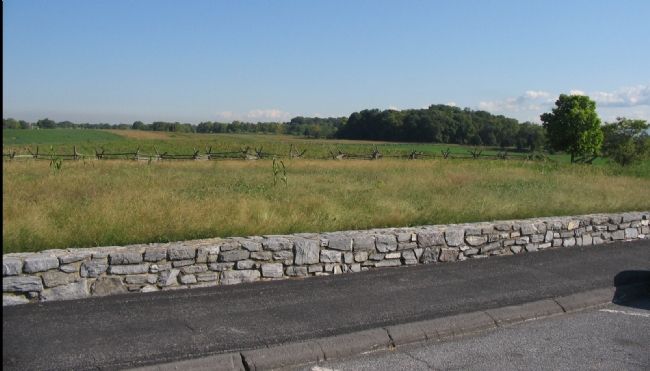
12. The Cornfield
The Texas Brigade drove their way north into the Cornfield across what is today the tour road pull off. At the beginning of the battle, the ground beyond the snake rail fence was high corn. After the battle the corn had been trampled, turn by bullets, and shredded by artillery. Here veterans described seeing bodies laying in such concentration they could walk from corner to corner without touching the ground.
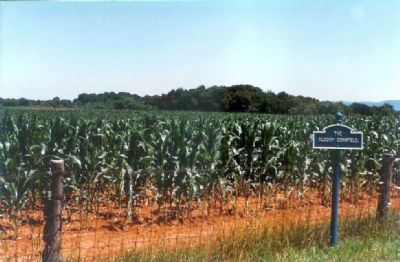
Photographed by Mike Stroud, circa 1998
13. The Bloody Cornfield as it Looked in the 1990s
Compare to the more recent photo. The park service has taken on the task of restoring the battlefield as closely as possible to the wartime appearance. In the case of the cornfield, gone is the wire fence seen in the foreground here.
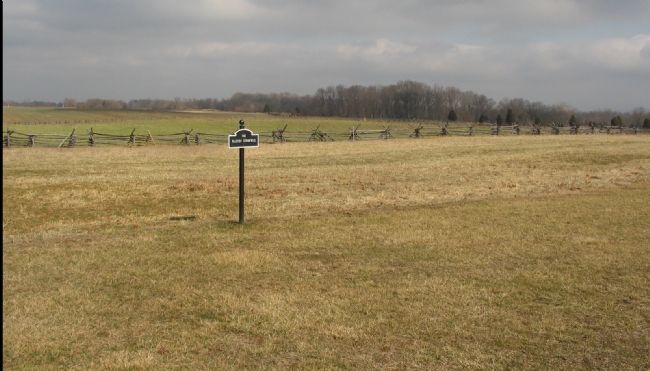
Photographed by Craig Swain, February 9, 2008
14. View of the Cornfield Today
The metal fence is gone, replaced by a snake rail fence. And the fence line was moved back further from the road. The historical cornfield extended east from the Hagerstown Pike but at an angle slightly to the north. Thus it should not be exactly parallel to the non-historical Cornfield Avenue. The grass now between the road and the cornfield more accurately depicts the border of the field and gives a better feel for the terrain for the visitor today.
Credits. This page was last revised on May 18, 2025. It was originally submitted on February 8, 2008, by Craig Swain of Leesburg, Virginia. This page has been viewed 2,115 times since then and 31 times this year. Photos: 1. submitted on February 8, 2008, by Craig Swain of Leesburg, Virginia. 2, 3. submitted on January 2, 2012, by Eric Milask of Cherry Hill, New Jersey. 4. submitted on October 20, 2015, by Brian Scott of Anderson, South Carolina. 5. submitted on February 9, 2008, by Craig Swain of Leesburg, Virginia. 6. submitted on May 18, 2025, by Jim Fredlund of Olney, Maryland. 7, 8, 9, 10, 11. submitted on October 20, 2015, by Brian Scott of Anderson, South Carolina. 12. submitted on February 8, 2008, by Craig Swain of Leesburg, Virginia. 13. submitted on February 9, 2008, by Mike Stroud of Bluffton, South Carolina. 14. submitted on February 9, 2008, by Craig Swain of Leesburg, Virginia.
