Downtown in Columbus in Franklin County, Ohio — The American Midwest (Great Lakes)
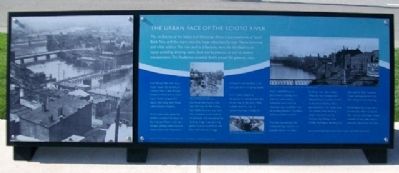
The Urban Face of the Scioto River
Photographed by William Fischer, Jr., April 19, 2010
1. The Urban Face of the Scioto River Marker
The confluence of the Scioto and Olentangy Rivers is just northwest of North Bank Park, and the rivers were the major attraction for both Native American and white settlers. The river and its tributaries were the life-blood to the region providing drinking water, food, and businesses, as well as limited transportation. The floodplains provided fertile ground for growing crops.
Even though the river was a major reason for locating in Central Ohio, it also brought problems. More than a dozen major floods ravaged the region, and along with floods came disease and pests.
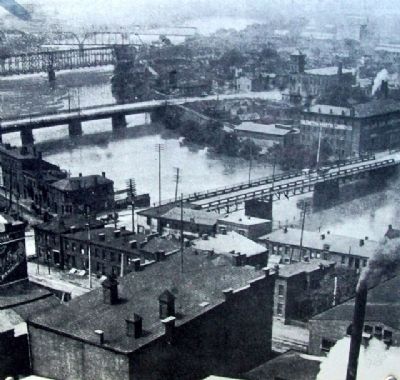
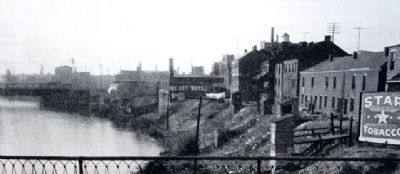
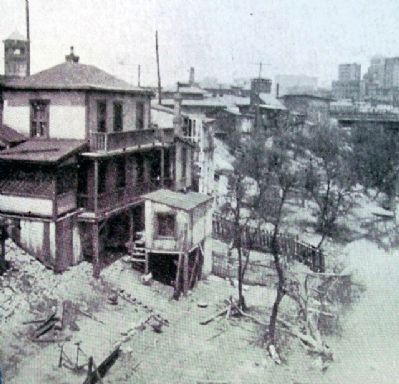
As the community grew, the residents turned their backs to the river and filled it with raw sewage, garbage, and industrial waste. Soon, only the poorest, and those who had to, lived near the river. By the mid to late 1800s, the river was lined with tenement slums, taverns, warehouses, and manufacturing facilities. Huge manufacturing plants such as Union Fork and Hoe and Columbus Buggy Company were located in the area just north of Spring Street.
Civic leaders began to recognize the potential benefits of the river in the early 1900s, and developed a plan
this page online
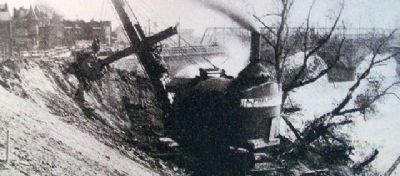
The plan was delayed, but eventually huge sections of abandoned and run-down buildings were demolished. The river was widened and deepened with a series of dams to minimize flooding. Only a portion of the civic center plan was constructed, including major structures such as Central High School (now COSI), the Federal Building, City Hall, and the Ohio Supreme Court Building (formerly the Ohio Departments Building).
North Bank Park is part of a modern day effort to reclaim the riverfront and make it more available to the public and to promote downtown activities.
Erected by City of Columbus.
Topics. This historical marker is listed in these topic lists: Disasters • Environment • Government & Politics • Industry & Commerce • Man-Made Features • Natural Features • Notable Events • Settlements & Settlers • Waterways & Vessels. A significant historical year for this entry is 1913.
Location. 39° 57.93′ N,
Photographed by William Fischer, Jr., April 19, 2010
2. The Urban Face of the Scioto River Marker
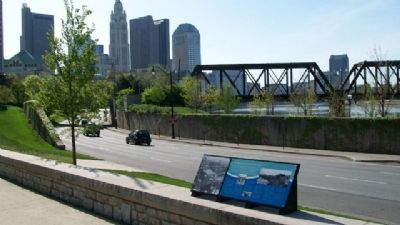
Looking SE along Long Street toward downtown Columbus, with the Scioto River at right distance.

Regionally, this marker is in Ohio’s Scioto Valley. It is also in the American Midwest and in the Corn Belt. Globally, it is in North America, the Western Hemisphere, the Western World, and the Anglosphere. Historically, it finds itself in what was once the Haudenosaunee (Iroquois) Confederacy, the territory of the Mississippian Culture, and the Northwest Territory.
Other nearby markers. At least 8 other markers are within walking distance of this marker: Working Class Neighborhoods (a few steps from this marker); William and Hannah Neil (within shouting distance of this marker); Transportation, Growth, and Development (about 300 feet away, measured in a direct line); The Ohio Penitentiary (about 400 feet away); Confederate General John Hunt (about 400 feet away); The Irish in Columbus
Photographed by William Fischer, Jr., April 19, 2010
3. The Urban Face of the Scioto River Marker
[Caption reads] View looking southwest near Rich Street circa 1900.
Also see . . .
1. Friends of the Scioto River. (Submitted on April 21, 2010, by William Fischer, Jr. of Reynoldsburg, Ohio.)
2. North Bank Park. (Submitted on April 22, 2010, by William Fischer, Jr. of Reynoldsburg, Ohio.)
Photographed by William Fischer, Jr., April 19, 2010
4. The Urban Face of the Scioto River Marker
[Caption reads] View looking up river from Rich Street.
Photographed by William Fischer, Jr., April 19, 2010
5. The Urban Face of the Scioto River Marker
[Caption reads] River dredging.
Photographed by William Fischer, Jr., April 19, 2010
6. The Urban Face of the Scioto River Marker
[Caption reads] West river tenaments circa 1908.
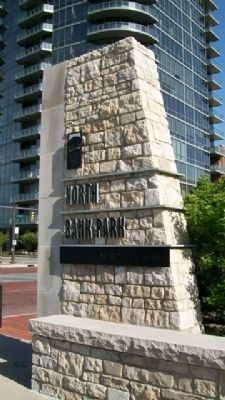
Photographed by William Fischer, Jr.
7. North Bank Park Sign
At Long Street and Neil Avenue.
Credits. This page was last revised on February 3, 2023. It was originally submitted on April 21, 2010, by William Fischer, Jr. of Reynoldsburg, Ohio. This page has been viewed 1,809 times since then and 88 times this year. Photos: 1, 2, 3, 4, 5, 6. submitted on April 22, 2010, by William Fischer, Jr. of Reynoldsburg, Ohio. 7. submitted on April 20, 2010, by William Fischer, Jr. of Reynoldsburg, Ohio.
