9 entries match your criteria.
Related Historical Markers
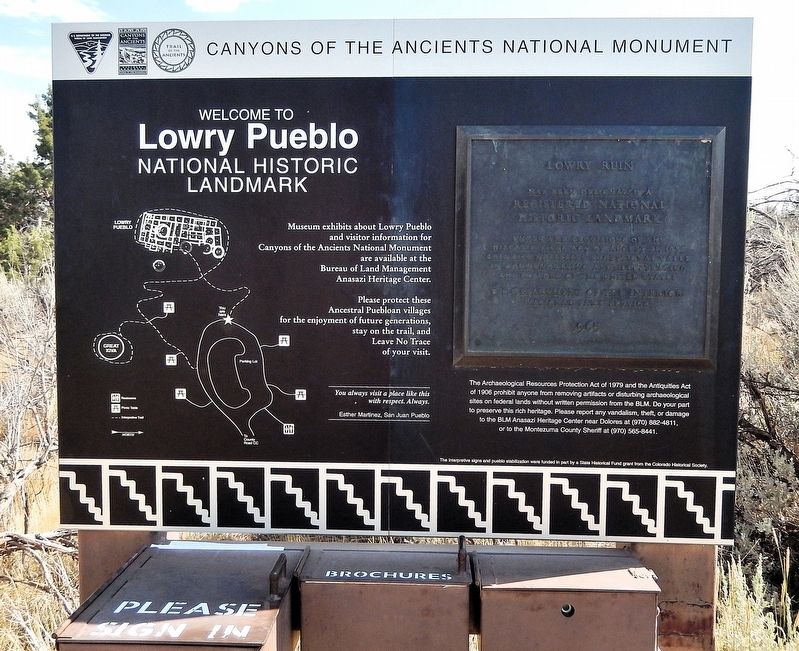
By Cosmos Mariner, July 17, 2025
Lowry Ruin Marker & Kiosk
SHOWN IN SOURCE-SPECIFIED ORDER
1 ► Colorado, Montezuma County, Pleasant View — Lowry Ruin — Lowry Pueblo National Historic Landmark — Canyons of the Ancients National Monument —  |
| 2 ► Colorado, Montezuma County, Pleasant View — The Great Kiva — Lowry Pueblo National Historic Landmark — Canyons of the Ancients National Monument — |
| 3 ► Colorado, Montezuma County, Pleasant View — Common Ground — Lowry Pueblo National Historic Landmark — Canyons of the Ancients National Monument — |
| 4 ► Colorado, Montezuma County, Pleasant View — Life Outside — Lowry Pueblo National Historic Landmark — Canyons of the Ancients National Monument — |
| 5 ► Colorado, Montezuma County, Pleasant View — Footprints — Lowry Pueblo National Historic Landmark — Canyons of the Ancients National Monument — |
| 6 ► Colorado, Montezuma County, Pleasant View — What Did it Look Like? — Lowry Pueblo National Historic Landmark — Canyons of the Ancients National Monument — |
| 7 ► Colorado, Montezuma County, Pleasant View — Construction, Expansion & Remodeling — Lowry Pueblo National Historic Landmark — Canyons of the Ancients National Monument — |
| 8 ► Colorado, Montezuma County, Pleasant View — The Best Rooms in Town — Lowry Pueblo National Historic Landmark — Canyons of the Ancients National Monument — |
| 9 ► Colorado, Montezuma County, Pleasant View — Painted Kivas — Lowry Pueblo National Historic Landmark — Canyons of the Ancients National Monument — |