THE HISTORICAL
MARKER DATABASE
“Bite-Size Bits of Local, National, and Global History”


35 entries match your criteria.  


Chicago's Surviving Pre-Fire Structures Historical Markers

The Great Chicago Fire of October 1871 destroyed 17,000 buildings in Chicago over an area covering more than 3 square miles. In the 150+ years since, some of the few man-made structures to survive the Fire were replaced; today, only a limited number remain standing. This series is only for historical markers within the city limits of Chicago related to man-made structures that predate 1871 and are still standing today.
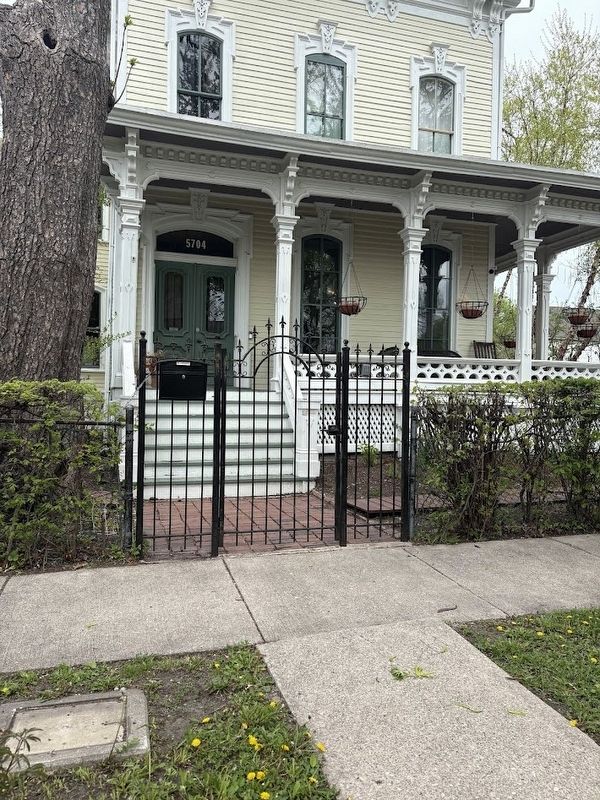
 
By Sean P. Flynn, April 30, 2025
Hitchcock House Marker
1 ► Illinois, Cook County, Chicago, Austin — Hitchcock House — Architect unknown; 1871 — Chicago Landmark — Reported missing
When this house was built, Austin was an independent suburb, accessed from Chicago by commuter railroad. One of the oldest houses in the community, it was built for Charles Hitchcock, an executive of a railroad parts manufacturing company. Its tall . . . — — Map (db m271638) HM
2 ► Illinois, Cook County, Chicago, East Side — Illinois-Indiana Boundary Marker —

This Illinois - Indiana state boundary marker is one of the oldest landmarks in the Chicagoland area. It was constructed in 1838 under the direction of the United States Surveyor General to commemorate the establishment of the common boundary . . . — — Map (db m237902) HM
3 ► Illinois, Cook County, Chicago, Groveland Park — Stephen A. Douglas: Douglas and Lincoln —
Illinois's 1858 contest for United States senator pitted nationally-renowned Democrat Stephen A. Douglas against the relatively unknown Republican, Abraham Lincoln. The candidates met in seven joint debates, clashing on the issue of allowing . . . — — Map (db m189620) HM
4 ► Illinois, Cook County, Chicago, Groveland Park — Stephen A. Douglas: The Douglas Tomb —
Stephen A. Douglas died June 7, 1861, and was buried near his Chicago cottage. Friends soon organized the Douglas Monument Association to construct a suitable tomb near the site. Work on the monument, designed by Leonard W. Volk, began in 1866, . . . — — Map (db m189627) HM
5 ► Illinois, Cook County, Chicago, Lincoln Park — Couch Tomb — Hidden Truths —
This stone vault is the oldest structure standing within the Chicago Fire zone. It was erected in 1858 for Ira Couch, a wealthy hotelier who died at age 50 while wintering in Cuba. Though some theories exist, there is no official answer as to why . . . — — Map (db m10664) HM
6 ► Illinois, Cook County, Chicago, Lincoln Park — Policeman Bellinger's Cottage —
This is Policeman Bellinger's Cottage Saved by his heroic efforts from The Chicago Fire October 1871 — — Map (db m261136) HM
7 ► Illinois, Cook County, Chicago, Lincoln Square — Firefighters Memorial —
In Memory of Members of the Volunteer Fire Department —————————— Firemens Benevolent Association Organized 1847 Chartered 1852 —————————— This monument was erected in 1864 to honor all the courageous Volunteer . . . — — Map (db m94343) HM
8 ► Illinois, Cook County, Chicago, Lincoln Square — George B. Armstrong — Rosehill Cemetery —
Founder of the United States Railway Mail Service. Put his first railway postal car in use on the Chicago and Northwestern Railway between Chicago, Ill and Clinton, Iowa, August 28th, 1864, under authority from Postmaster Gen. Montgomery Blair. . . . — — Map (db m81514) HM
Paid Advertisement
9 ► Illinois, Cook County, Chicago, Lincoln Square — Rosehill Cemetery Entrance — William W. Boyington, architect • 1864 — Chicago Landmark —
Designed by the architect of the Old Chicago Water Tower and predating it by five years, the Rosehill Cemetery Entrance is a rare Midwestern example of castellated Gothic architecture. Many prominent Chicagoans are buried here in plots marked by . . . — — Map (db m94331) HM
10 ► Illinois, Cook County, Chicago, Lincoln Square — Soldiers & Sailors Monument — Rosehill Cemetery —
Our Heroes — — Map (db m81507) WM
11 ► Illinois, Cook County, Chicago, Little Italy — Jane Addams' Hull House —
Jane Addams' Hull House has been designated a Registered National Historic Landmark under the provisions of the Historic Sites Act of August 21, 1935. This site possesses exceptional value in commemorating or illustrating the history . . . — — Map (db m99710) HM
12 ► Illinois, Cook County, Chicago, Little Italy — Jane Addams' Hull-House and Dining Hall — Settlement active from 1889 to 1963 —
Here, in 1899, Jane Addams and Ellen Gates Starr started what became the most influential social settlement in America. It eventually consisted of several buildings around this house which had been built in 1856 by Charles Hull. The Dining Hall . . . — — Map (db m61819) HM
13 ► Illinois, Cook County, Chicago, Near North Side — Abraham Lincoln —
Abraham Lincoln worshiped in St. James' Church November 25, 1860
"Whatever shall appear to be God's will, I will do."
— — Map (db m234721) HM
14 ► Illinois, Cook County, Chicago, Near South Side — Wheeler–Kohn House — Otis L. Wheelock, architect — 1870 —
A rare survivor of the stately mansions built on the Near South Side prior to the Great Chicago Fire of 1871, this also ranks as one of the city's best examples of Second Empire architecture. Built by banker Calvin Wheeler, it was remodeled in the . . . — — Map (db m69591) HM
15 ► Illinois, Cook County, Chicago, Norwood Park — John Wingert House — Circa 1865; addition in 1871 — Chicago Landmark —
John Wingert was one of a number of immigrants who, seeking refuge from religious persecution in Germany, created a settlement called Canfield on the prairie frontier. One of the few surviving early farmhouses, within the Chicago city limits, the . . . — — Map (db m255127) HM
16 ► Illinois, Cook County, Chicago, Norwood Park — Noble-Seymour-Crippen House — 1833; addition in 1868 — Chicago Landmark — Reported missing
This house documents the evolution of Norwood Park, from a farm community to a residential neighborhood. The small south wing had its origins as the home of Mark Noble, one of the first settlers in the area. An Italianate-style addition and other . . . — — Map (db m239935) HM
17 ► Illinois, Cook County, Chicago, Old Irving Park — John and Phebe Gray —
John and Phebe Gray were distinguished by their generosity and social conscience. In 1857 they donated land to build a township hall at Milwaukee and Irving Park Road. In 1888, they donated land to build St. John's Episcopal Church one block north . . . — — Map (db m309130) HM
Paid Advertisement
18 ► Illinois, Cook County, Chicago, Old Irving Park — John and Phebe Gray House — ca. 1856 — Chicago Landmark —
Constructed around 1856, this farmhouse was built by Phebe and John Gray on what was once a large farmstead in Jefferson Township, prior to annexation by the City of Chicago. The Grays were early settlers to the area who moved to Illinois from . . . — — Map (db m309067) HM
19 ► Illinois, Cook County, Chicago, Old Town Triangle — St. Michael Archangel —
[Text on the front of the base of the statue:] St. Michael Archangel assist us in our battles against the evils of the day Our dead are not unknown soldiers ✞ We know who they are and whither they seek to go [Text on the rear of . . . — — Map (db m261148) WM
20 ► Illinois, Cook County, Chicago, South Loop — A Brief History of Prairie Avenue —
During the last three decades of the 19th century, a six-block stretch of Prairie Avenue between Sixteenth Street and Cermak Road reigned as Chicago's premier residential street, and it remains one of Chicago's most historic neighborhoods. . . . — — Map (db m308689) HM
21 ► Illinois, Cook County, Chicago, South Loop — A Heritage Preserved —
"These residences are characterized by a much higher degree of taste and appreciation of the true principles of residential architecture than has been characteristic of the West or the Western continent." Everett Chamberlin, 1874 The . . . — — Map (db m308723) HM
22 ► Illinois, Cook County, Chicago, South Loop — Beginnings 1812-1871 —
The Prairie Avenue area has witnessed every significant period in the growth of Chicago from the establishment of Fort Dearborn through the residential rebirth of the central area in the 1990s. The years following the close of the Civil War were . . . — — Map (db m308721) HM
23 ► Illinois, Cook County, Chicago, South Loop — Chicago Women's Park and Gardens — Prairie Avenue Gardens —
Chicago Women's Park and Gardens celebrates the accomplishments of Chicago women throughout the city's history. Established by the City of Chicago in 1997, the park was designed by landscape architect Mimi McKay and architect Tannys Langdon. Their . . . — — Map (db m308686) HM
24 ► Illinois, Cook County, Chicago, South Loop — Clarke House / Glessner House —
Clarke House The Henry B. Clarke family built their house in the Greek Revival style in 1836 near what is now 1625 S. Michigan Avenue. In 1872 the house was sold and moved to 4526 S. Wabash. It was relocated to its present site in 1977 and . . . — — Map (db m308687) HM
25 ► Illinois, Cook County, Chicago, South Loop — Glory Days 1872-1904 —
Chicago's three wealthiest men-Marshall Field, Philip Armour and George Pullman all resided on Prairie Avenue by the mid-1870s, firmly establishing it as Chicago's premier residential district. Leading architects were hired to design fashionable . . . — — Map (db m308707) HM
26 ► Illinois, Cook County, Chicago, South Loop — Henry B. Clarke House — 1836 —
Known as the Widow Clarke's house, this is Chicago's oldest building and its only surviving example of the Greek Revival style fashionable in the early 1800s. — — Map (db m69587) HM
Paid Advertisement
27 ► Illinois, Cook County, Chicago, South Loop — Outside the District —
Three additional residences remain standing outside the formal boundaries of the Historic District. In addition, the Second Presbyterian Church, attended by many of the Prairie Avenue families, stands as a lone survivor of the religious history of . . . — — Map (db m308724) HM
28 ► Illinois, Cook County, Chicago, South Loop — Prairie Avenue Historic District — Chicago Landmark —
This district contains the oldest remaining structure in the city, the Henry B. Clarke house, and was the city's most fashionable residential street from the 1870s through the early 1890s. The area was also the site of the Fort Dearborn Massacre of . . . — — Map (db m308322) HM
29 ► Illinois, Cook County, Chicago, South Loop — Rebirth 1966-2004 —
The effort to save Glessner House broadened into the creation of a historic district in the 1970s, Restoration of the Clarke House and the opening of the National Vietnam Veterans Art Museum and Chicago Women's Park and Gardens increased local . . . — — Map (db m308702) HM
30 ► Illinois, Cook County, Chicago, Streeterville — Chicago Water Tower — 1869 – 1969 —
In this its centennial year the Chicago Water Tower has been designated the first American Water Landmark “because of its significance in the development of Chicago’s water resources and its symbolic identity with the spirit of . . . — — Map (db m47575) HM
31 ► Illinois, Cook County, Chicago, Streeterville — Old Water Tower —
This water tower, completed in 1869, marks establishment of Chicago’s second water works. Although most other buildings of pumping system were burned it stands as a principal memorial of 1871’s great fire. Erected by Chicago’s Charter . . . — — Map (db m47576) HM
32 ► Illinois, Cook County, Chicago, Streeterville — The Water Tower & Great Chicago Fire — Near North Area Map —
The Chicago Water Tower was erected in 1869 and housed a 138-foot-high standpipe, three feet in diameter, which equalized pressure and controlled the water flowing through the mains throughout the City. Fortunately, the tower was solidly constructed . . . — — Map (db m81430) HM
33 ► Illinois, Cook County, Chicago, University Village — St. Ignatius College Prep Building — Toussaint Menard, architect; 1866-74 — Chicago Landmark —
The culmination of Father Arnold J. Damen, S.J.'s work in Chicago, this building was opened in 1870 as St Ignatius College. Loyola University originated from this institution; but, since 1922, St. Ignatius has operated solely as a college . . . — — Map (db m249223) HM
34 ► Illinois, Cook County, Chicago, West Loop — St. Patrick's —
Oldest Church in Chicago Erected 1856 Rt. Rev. Anthony O'Regan D.D. Archbishop Rt. Rev. Dennis Dunne, D.D. Pastor Renovated 1912 Rev. William J. McNamee, Pastor 1933 Rev. Thomas J. Hayes, Pastor 1946 Rev. Richard F. Wolfe, . . . — — Map (db m258631) HM
35 ► Illinois, Cook County, Chicago, West Loop — St. Patrick's Church —
This property has been placed on the the National Register of Historic Places by the United States Department of Interior St. Patrick's Churchconstructed during the period 1852 to 1856 St. Patrick's is the oldest church building . . . — — Map (db m99770) HM
Paid Advertisement
 
 
CeraNet Cloud Computing sponsors the Historical Marker Database.
This website earns income from purchases you make after using our links to Amazon.com. We appreciate your support.
Paid Advertisement
Sep. 26, 2026