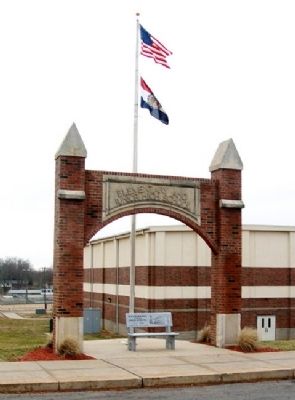
Near Interstate 80 at milepost 292, on the right when traveling west.
About two miles southwest of this marker, the Greenhorn Cutoff ascended and wound through the hills for about twelve miles to avoid river crossings in Carlin Canyon. — — Map (db m70353) HM
Near Interstate 80 at milepost 187, on the right when traveling west.
"The water is warm and tastes but little better than soap suds. We use acid in all the water we drink, by that means we manage to get along, although we are all anxious to get off this river" - Ephriam Brandiff, Aug. 16, 1852 — — Map (db m70354) HM
On Melarkey Street (U.S. 95) at W. Winnemucca Boulevard (Nevada Route 289), on the right when traveling north on Melarkey Street.
"Saw in this distance a flag flying denoting a trading post, rode over to it but found the most they had to sell was very poor whiskey. ... These traders get a great price for everything they sell." - Henry S. Anable, Aug. 25, 1852 — — Map (db m70355) HM
Built in 1874, the mill went into operation in January of 1975, and was destroyed later that year in the great fire of October 25th, but was quickly rebuilt at a cost of $350,000. The Con Virginia Pan Mill was built by Pacific Mill and Mining . . . — — Map (db m50100) HM
On Cove Fort Road, on the right when traveling east.
"16th Passed over some beautiful rich bottoms covered with green grass which is uncommon at this season of the year on this route. Passed over a high divide into a beautiful round valley [Cove Fort]. I shot the largest hare in this valley I have . . . — — Map (db m257255) HM
“...a considerable Portion of the land between the Spanish Fork and F.P. [Fort Peteetneet] is low and marshy and Bad to cross especially with heaby loade waggons...some of the waggons required 9 yokes of oxen to get them through the sloughs 0 this . . . — — Map (db m272747) HM
California condors are the largest flying birds in North America. Their wingspans of nearly 10 feet (3.5 m) make condors easy to spot gliding above Grand Canyon today. Yet, in the 1920s, these birds disappeared from Grand Canyon skies. Condors were . . . — — Map (db m250417) HM
A pack trail in 1851, Greathouse & Co. muled passengers by 1854. James E. Carr contracted by the California Stage Co., finished the last six miles of road from Trinity River to here, Sept. 14, 1860. The first daily mail and passenger stage, driven . . . — — Map (db m56234) HM
Near State Highway 49, on the right when traveling south.
The Foothill Station became the first University of California qualifying outlying station funded jointly by federal, state and local county sources in March 1888. The station was developed under the patronage of Senator A. Caminetti of Jackson. . . . — — Map (db m72065) HM
On Railroad Avenue near East 3rd Street, on the right when traveling north.
Since opening its doors on May 4, 1920, this theatre has been a cornerstone to the New York Landing Historic District in Old Town Pittsburg. Like many Bay Area theaters of the 1920's, the California Theatre was designed by A.W. Cornelius in a . . . — — Map (db m146532) HM
On Front Street east of Sherman Avenue, on the right when traveling west.
California's first drilled oil wells producing crude to be refined and sold commercially were located on the north fork of the Mattole River approximately three miles east of here. The old Union Mattole Oil Company made its first shipment of oil . . . — — Map (db m51955) HM
Near K Street at Interstate 5, on the right when traveling east.
Four of the most successful merchants in Sacramento specialized in hardware, dry goods, and groceries. Later known as the “Big Four,” Charles Crocker, Mark Hopkins, Collis P. Huntington, and Leland Stanford banded together to convince the United . . . — — Map (db m229817) HM
On Museum Avenue near Maple Avenue, on the left when traveling west.
Between 1841 and 1869, up to 250,000 emigrants followed the California Trail along the Humboldt River to California. in 1846, the Donner Party traveled along this trail and Donner Party teamster, John Snyder was killed in a dispute with wagon . . . — — Map (db m141453) HM
The Founders of the City of Los Angeles Lara · Mesa · Moreno · Rosas · Camero · Rosas · Navarro · Villavicencio · Rodriguez · Quintero · Vanegas
In 1542, Captain Juan Rodríguez Cabrillo “discovered” California while . . . — — Map (db m162879) HM
On 41st Street at Central Avenue, on the right when traveling west on 41st Street.
From Owl to Eagle
Starting in 1827, African American-owned
newspapers began popping up throughout the
United States, giving a voice to people who had
been largely voiceless. From the late 1800s until
1964, the California
Eagle . . . — — Map (db m229278) HM
On Spring Gulch Road at Highway 273, on the right when traveling east on Spring Gulch Road.
“The pioneers in their journeys marked the roads and trails so that others recognizing them might safely follow.”
This spot marks the location of the California – Oregon Road, main artery of travel of the pioneers blazed by them in the . . . — — Map (db m70338) HM
Near Interstate 5 2.2 miles south of Las Pulgas Road.
Jesuits
• Founded 19 missions in Baja California over
a 70 year period.
• Nuestra Señora de Loreto de Conchó (1697)
was the first permanent Jesuit mission,
founded by Father Juan Ma. de Salvatierra.
• The Jesuits were . . . — — Map (db m312085) HM
On Myers Street (Business California Route 70) at Kitrick Avenue, on the right when traveling south on Myers Street.
To Commemorate completion of 4th Railroad in California – Marysville to Oroville, by California Northern Railroad, later the Southern Pacific Co. 1st passenger train February 9 – 1864. Also marks site of Middletown 1854 – 1856. — — Map (db m190381) HM
On Bush Street east of Montgomery Street, on the left when traveling west.
California’s first state fair was held on this site on October 4, 1854. Sponsored by the California State Agricultural Society, the exhibition of “horses, cattle, mules and other stock, and agricultural, mechanical and domestic manufacture and . . . — — Map (db m637) HM
On Airport Boulevard, on the right when traveling south.
Here, on the 1,939-acre Rancho Potrero de Santa Clara, Christopher A. Shelton in early March 1853 introduced the honeybee to California. In Aspinwall, Panama, Shelton purchased 12 beehives from a New Yorker and transported them by rail, . . . — — Map (db m3627) HM
On North Winchester Boulevard at Bellomy Street, on the right when traveling north on North Winchester Boulevard.
This plaque marks the original site of the first chartered college in California. It was chartered as the California Wesleyan College on July 10, 1851. The following year the name was changed to University of the Pacific and in 1911 it became the . . . — — Map (db m61492) HM
On U.S. 180 at milepost 145 at Butterfield Trail, on the right when traveling north on U.S. 180.
Here crossed the first road to Southern California opened for wagons by Capt. Cooke, who passed here in command of the Mormon Battalion, Nov. 1846 – later it became the California Emigrant Road – from 1858-1861, the route of the . . . — — Map (db m38302) HM
On Oklahoma Route 33 at U.S. 283, on the left when traveling south on Oklahoma Route 33.
California Road, crossed here. First traveled by gold seekers in Rush for California spring 1849, under military escort commanded by Captain R.B. Marcy, west from Fort Smith, Arkansas. Antelope Hills, 8 miles northwest, once landmark for . . . — — Map (db m113944) HM
Spain claimed Alta California after its conquest of Mexico (1519-1521) When reports of British and Russian encroachment in Northern California began to circulate in the 1760s, Spain expanded its colonial settlements to defend the California . . . — — Map (db m206740) HM
Near Old Winery Road east of Lovall Valley Road, on the right when traveling east.
Marker One:
Kit Carson: 1809-1868
American mountain man, trapper, and scout, Carson led Captain John Charles Fremont on his first explorations of the American West in the 1840's. He lived among and married into the Arapaho and . . . — — Map (db m231364) HM
On Elba-Almo Highway (at milepost 7) near Forest Road 708, on the left when traveling south.
"August 26, Sabbath."
"... We got a late start traveled directly across the valley before us, (Almo Valley) amidst the best scenery we have seen since we have been among these hills. South, a high range of mountains (Raft River Mountains) . . . — — Map (db m123884) HM
An arduous 1,200-mile route between Santa Fe and Los Angeles, the "Old Spanish Trail" passed through Mountain Meadows during its heyday, between 1830 and 1848. The trail served traders who loaded their pack mules with woolen goods from Santa Fe each . . . — — Map (db m114259) HM
On Santa Anita Street just west of Mission Drive, on the right when traveling west.
The 72 foot mural depicts life in early California with scenes of Native Americans, Francisan Padres and Senoritas. It was painted over a period of three months. Images projected against the wall at night provided the basic outline necessary to . . . — — Map (db m67295) HM
One of the first ranchos created in California was Nuestra Señora del Refugio,
which permitted Jose Francisco Ortega, the retired commandante of Santa Barbara presidio, the use of mission lands along the Gaviota coast, beginning about 1797, . . . — — Map (db m310309) HM
Many emigrants to Oregon or California had to ford the South Platte River to continue their trek up the North Platte River to South Pass. The most important ford, known as the Old California Crossing, was a few miles west of present-day Ogallala. . . . — — Map (db m50790) HM
“In Camponit Peter Lassen and his party had been waiting for the winter to be over. Instead of crossing the mountain ranges on their way south, he and six other persons decided to go by ship from Fort Vancouver. A small steamship, . . . — — Map (db m31740) HM
The first Valencia Orchard in California was planted here in 1880 by R.H. Gilman on the property of Placentia Fruit Co. The trees are still in flourishing condition.
Dedicated by Grace Parlor No. 242
Native Daughters of the Golden West . . . — — Map (db m254135) HM
On Weber Street at Union Street, on the right when traveling east on Weber Street.
In 1846, during American conquest of California, John Brown, nicknamed “Juan Flaco,” rode from Los Angeles to San Francisco in four days to warn Commodore Stockton of the siege of Los Angeles. As a result, troops were sent and the city secured. This . . . — — Map (db m16011) HM
On Tres Cerritos Boulevard east of North Loop Road, on the left.
To the 2,495 men from California who during the Korean War, 25 June 1950 to 27 July 1953, gave their last measure of valor to their country. On this wall are men killed in action, mission in action, or who died prisoners of war. May this memorial . . . — — Map (db m213834) WM
Near Civic Center just west of Marguerite Parkway, on the right when traveling west.
In 1769 Gasper de Portolá led a group of Spanish soldiers on a thousand-mile march from Baja California to San Francisco. His purpose was to locate the ports of San Diego and Monterey and to establish a series of churches and military posts. The . . . — — Map (db m188706) HM
To commemorate the discovery of California by Juan Rodriquez Cabrillo who landed on the shores of San Diego Bay September 28, 1542. — — Map (db m126875) HM
On West Santa Fe Trail west of Madison Avenue, on the right when traveling west. Reported missing.
Oregon and California National Historical Trails
The Oregon and California Trails were pathways to the Pacific for fur traders, gold seekers, missionaries, and emigrants. For 20 years, beginning in 1841, an estimated 300,00 emigrants . . . — — Map (db m206802) HM
Capital-Sacramento
Although explored primarily by Spain, Sir Francis Drake, sailing for England, also touched the California coast in 1579. After the establishment of Spanish missions, California became a territory of Mexico in 1825 following . . . — — Map (db m194657) HM
Just east of this monument is the last
remaining original post from the C&N
Railroad trestle structure. The C&N
was incorporated on March 25, 1884.
J.S. Emery was listed as the railroad's
president, for which present day
Emeryville is named. . . . — — Map (db m144979) HM
Early prospectors found promising outcrops in Inyo County. In 1861 the
Russ Mining District was formed on the west slope of the Inyo Mountains between Lone Pine and Independence. The most significant mine
in the district is the Reward Mine, . . . — — Map (db m221507) HM
On 34th Street 0.4 miles west of Figueroa Street, on the left when traveling west.
Douglas Fairbanks founded the USC Cinema program when president of the Academy of Motion Picture Arts and Sciences, 1929.
The Academy of Motion Picture Arts & Sciences Courtyard. — — Map (db m229400) HM
On Pinto Lake Road near Green Valley Road, on the right when traveling west.
July 14, 1769, an expedition led by Don Gaspar de Portola left San Diego to rediscover Vizcaino's "Lost Port of Monterey". The expedition reached but failed to recognize Monterey Bay, traveled north, and discovered San Francisco Bay November 4, . . . — — Map (db m86462) HM
On Yale Road (County Road 2880 E) near Laynes Road, on the right when traveling south.
"The Oregon road take up the bluff and follows the course of the (Snake) river while we keep to the left and follow the creek (Raft River) nearly to its source. ... crossing the creek we followed up the bottom" -- Byron McKinstry, Aug 1, 1850 . . . — — Map (db m123844) HM
On Yale Road near Heglar Canyon Road, on the right when traveling west.
"Arrived at Raft River, crossed and nooned. ... traveled five miles up Raft River and camped after recrossing it. Grass in abundance and plenty of wood" -- Cyrus Loveland, Aug 3 1850
Guidebook Available
Trails West Inc. P.O. Box 12045, . . . — — Map (db m123846) HM
On Idahome Lane near Interstate 84, on the right when traveling west.
"We traveled up Raft River 16 miles. The road, water and grass, good. Entirely destitute of timber, except a little willow on the streams and the wild sage." -- Chester Ingersoll, Aug 13, 1847
Guidebook Available
Trails West Inc. P.O. . . . — — Map (db m123848) HM
On Elba-Almo Highway (at milepost 7) near Forest Road 708, on the left when traveling south.
"By an easy ascent reached a summit and as gradually descended to a valley (Upper Raft River Valley) of sage and sand sloping to the south east. The streams running towards the (Great) Salt Lake." Byron N. McKinstry, Aug 3, 1850
Guidebook . . . — — Map (db m123886) HM
On Tomera Road near Nevada Route 278, on the right when traveling west.
“The trail or road… ascends a considerable hill 1/3 mile ahead of us… the water here is cool, but too alkaline to be agreeable. Hot Springs in the river-bank, sulphur, &c.” —
J. Goldborough Bruff, Sep 7, 1849 . . . — — Map (db m81179) HM
'California' is believed to be the oldest camellia plant on record in Southern California. It arrived in 1888 as an unnamed seedling and was purchased for 25 cents off a Japanese tramp steamer in Redondo Beach harbor. For nearly 70 years the plant, . . . — — Map (db m124471) HM
On 15th Street south of L Street, on the right when traveling south.
Dedication The people of the State of California dedicate this Monument to the memory of those Californians who died, or remain
missing, in the Vietnam War 1959-1975 and in doing so, Honor all the men and women who served during that war. . . . — — Map (db m137482) WM
On Hamilton Street at Marshall Street on Hamilton Street. Reported unreadable.
California Square was a parcel of land located north of Marshall Street, between Hamilton and Winslow, diagonally located across the street from the Courthouse. The site was originally designated as a public park plaza in the Town of Mezesville . . . — — Map (db m202534) HM
Near U.S. 91 near Hot Springs Road, on the right when traveling north.
The tensions between the Shoshone and the settlers eventually led to a call from Utah territorial leaders of help from the Army, but the Civil War was on and military resources were stretched thin. In 1861 the third California Volunteer Infantry has . . . — — Map (db m105801) HM
Near Fort Caspar Road 0.1 miles west of Wyoming Route 258, on the right when traveling west.
From 1840 to 1869, over 350,000 emigrants traveled past this area on the Oregon/California /Mormon Trails. The promise of free land, sudden riches, or religious freedom caused these pioneers to endure great hardships. Thousands of persons died in . . . — — Map (db m164516) HM
Near Laburnum Avenue south of Pioneer, on the right when traveling south.
Julius Clinton Beach
Feb. 8, 1802 Goshen, Litchfield County, Connecticut
Mar. 12, 1882 Sacramento, California
Elizabeth Humphrey Beach
Dec. 18, 1793 Goshen, Litchfield County, Connecticut
Jan. 18, 1877 Sacramento, California . . . — — Map (db m233170) HM
On North 1st Avenue west of Lawrence Dale Drive, on the left when traveling south.
One of the finest surviving examples of California's depot-hotels built around the turn of the 19th century. It's also home to the Route 66 "Mother Road" Museum and the Western American Railroad Museum (W.A.R.M.).
Recognized by Hampton . . . — — Map (db m193156) HM
On 100 Pomeroy Ave, on the right when traveling south.
Pismo clams (Tivela stultorum) were harvested by the millions on Pismo Beach and supported a thriving commercial and recreational fishery. Early clammers would use horse-drawn plows to find Pismo clams in the sand. From 1916 to the closure of the . . . — — Map (db m225445) HM
On Figueroa Street at Adams Boulevard, on the right when traveling south on Figueroa Street.
Command Post For Southern California's Car Culture
The headquarters of the Automobile Club of Southern California has sometimes been mistaken for the ornate Roman Catholic St. Vincent de Paul church. The two, along with the imposing . . . — — Map (db m208552) HM
On Central Avenue south of Martin Luther King Jr. Boulevard, on the right when traveling south.
In 1914, Joseph and Charlotta Bass purchased the
newspaper, The Owl, and renamed it the California
Eagle. The California Eagle's readership was primarily
African-American. It was a crusader for civil rights
and civil liberties under all of . . . — — Map (db m294434) HM
On Main Street near Levee Street, on the left when traveling west.
Researched by Martha Esch, copyright 2016. '17 Citations verified by J'aime Rubio
For hundreds of years when the Sacramento Delta was a swamp, nearly the size of Rhode Island, Native Americans inhabited this area. Burial mounds of the . . . — — Map (db m151239) HM
Here, following the base of San Pablo Ridge, ran the tracks of the California & Nevada Railroad. Incorporated in 1881, its founders had grand plans to run from Emeryville to Nevada. The line never got farther than Orinda. Until ending service in . . . — — Map (db m94300) HM
Near Randsburg Mojave Road near 20 Mule Team Parkway, on the right when traveling east.
Dedicated to all American war veterans
who have made the supreme sacrifice.
American Legion Post No. 476,
California City, California - 1979.
"Lest we forget" — — Map (db m243245) WM
On Childs Way at Pardee Way, on the right when traveling west on Childs Way.
Dedicated on September 4, 1880, this original building of the University of Southern California has been continuously in use for educational purposes since its doors were first opened to students on October 6, 1880, by the university's first . . . — — Map (db m126924) HM
First Marriage in California took place at this Mission between Juan Maria Ruiz of El Fuerte, Sonora, Mexico, 25 years of age, and Margarita de Cortona, 22, a Salinan woman of Mission San Antonio, on the sixteenth of May in the year of Our Lord 1773 — — Map (db m51561) HM
On East Main Street (Business Interstate 15), on the right when traveling east.
With the discovery of gold in California in 1848, it’s statehood in 1850, and the resulting emigration to the west, the interest of the government in exploring a rail link to the Pacific became serious in the early 1850’s. Not only would a Pacific . . . — — Map (db m50558) HM
On East Main Street at South Joaquin Street, on the right when traveling east on East Main Street.
Built originally for the former Farmers & Merchants Bank, this structure is the work of prominent San Francisco Architect George W. Kelham. With almost no exterior changes it exemplifies Renaissance Revival Style and reflects early local interest in . . . — — Map (db m23978) HM
On Ocean Drive 1 mile north of Randolph Road, on the left when traveling north.
In October 1848, a contingent of U.S. troops reached the port in route to San Antonio. These troops garrisoned the new fort of El Paso. Shortly thereafter, gold was discovered in Northern California and the seekers entered the port to take the . . . — — Map (db m193378) HM
Near Central Wharf east of Old Atlantic Avenue, on the right when traveling east.
California Sea Lion
Zalophus californianus
Size: Females up to 6.5 feet long, males up to 8 feet long.
Weight: Females up to 400 pounds, males up to 1,000 pounds.
Diet: A variety of . . . — — Map (db m215753) HM
On Harrison Street at 3rd Street, on the right when traveling north on Harrison Street.
Designer: H.C. Baumann
Construction Date: 1929
Architectural Style: Early 20th century utilitarian with Art Deco elements
1926 was a profitable year for the Poultry Producers. Pooled resources created “orderly marketing” to . . . — — Map (db m228121) HM
In 1919, Colonel Robert Bradford Marshall
of the United States Geological Survey
proposed an unprecedented project
of dams, canals, and pumps to
move Delta-bound water from
California's wet north and snowy
Sierra Nevada mountains to its
arid . . . — — Map (db m190979) HM
On Drumm Street at California Street, on the left when traveling south on Drumm Street.
In Honor of the One Hundredth Anniversary
of the
California Street Cable Cars Line
and Leland Stanford
Among the significant contributions of the Governor Leland Stanford family, whose home was located at this site, was their important . . . — — Map (db m71803) HM
This road was used by settlers going to Ft. Scott, where groups going to California and New Mexico were escorted by the U.S. Calvary
This is the only section of the road to still exist — — Map (db m70540) HM
On California Route 140 north of 5th Street, on the left when traveling north.
The fire of 1866 destroyed most of this block. When rebuilding the Bogan and Company store to your left and the hotel to your right, the space in between them remained an alley leading to Mariposa Soda Works.
In 1935, Emile Trabucco built a . . . — — Map (db m301004) HM
On Townsend at Clarence Place, on the left when traveling east on Townsend.
A contributory building within the South End Historic District, designated by the City and County of San Francisco in 1990. The warehouse and industrial buildings from the District's period of significance (1867-1935) reflect the City's preeminence . . . — — Map (db m63844) HM
The partnership of C.A. Bachmann and Charles H.W. Brandt, formed in 1885, was the largest chicory supplier in America while operating at this site during the 1890's. Chicory roots are roasted, ground, and used as a mixture with or substitute for . . . — — Map (db m156499) HM
On South Last Chance Gulch near East Broadway Street, on the left when traveling north.
Most of Helena’s earliest commercial buildings fell victim to the fires that plagued the gulch. This simple 1860s commercial building, originally a single story of stone construction, was a notable exception, surviving a disastrous conflagration in . . . — — Map (db m186670) HM
On Exposition Boulevard at Pardee Way, on the right when traveling west on Exposition Boulevard.
The First Trojan—Before There Was A University Amid the ivy-covered brick buildings and towering palm trees of the University of Southern California, there survives a two-story white clapboard
building, a relic and a link not only to the . . . — — Map (db m128578) HM
On Center Street at Hesperian Lane, on the left when traveling west on Center Street.
The Creekside Reserve Native Plant Gardens
(first planted in 2022)
These gardens showcase how California Native Plants can be used to create beautiful, water-conserving landscapes while promoting California's extraordinary plant . . . — — Map (db m298143) HM
On West 3700 South near Junction Valley Road, on the left when traveling west.
"At the entrance of the pass was a pleasant little spring & fine branch." - Wakeman Bryarly, Jul 20, 1849
Guidebook available
Trails West Inc, P.O. Box 12045 Reno NV 89510 — — Map (db m138456) HM
"We had to descend a bad hill to get down to the creek, where we nooned near some well springs." -- Byron McKinstry, Aug 10, 1850
Guidebook available
Trails West Inc, P.O. Box 12045 Reno NV 89510 — — Map (db m138454) HM
On Pony Express Trail (Lincoln Highway) at Forebay Road, on the right when traveling east on Pony Express Trail (Lincoln Highway).
The California gold rush followed Captain John Sutter’s logging effort in the Coloma valley. On January 24, 1848, James W. Marshall found gold in the tail-race at Sutter’s Mill. This discovery incited the greatest migration of mankind in history to . . . — — Map (db m94635) HM
On National Trails Highway east of Old Amboy Road, on the right when traveling west.
Founded in 1858, Amboy provided a vital rest stop for weary sun drenched travelers seeking a better life in California.
Amboy owned and operated by Juan Pollo restaurants. — — Map (db m193157) HM
The oldest pepper tree in California
was planted by Fr. Antonio Peyri
in the middle of the Mission
garden. The seeds were
brought to San Juis Rey
in 1830 by a sailor from Peru
and the tree still stands today.
The California Pepper . . . — — Map (db m295218) HM
On East Main Street west of South San Joaquin Street, on the left when traveling west.
Built on the Old T & D Theatre site, the ornate Mission Revival Fox California with its unique tower and vaudeville marquee reigned as Stockton’s premier movie palace. The Baroque interior boasts of magnificent columns, exquisite chandeliers and . . . — — Map (db m221072) HM
The bridges, oil refineries, factories and ports along the East Bay shoreline reflect a commercial history that dates back to the Gold Rush. The Carquinez Strait provided easy passage for ships carrying cargo and people to and from the gold . . . — — Map (db m232404) HM
On Hot Springs Drive (Route M-56), on the right when traveling east.
The first people to use the hot springs were the Bokninuwad Yokuts also called "Hoeynche" who called it "Kahtililkau" hot water. In the late 1870's T.J. and N.B. Witt filed claim to Upper Deer Creek "Hoyen Idik" which included the several hots . . . — — Map (db m51871) HM
On 4th Street at Pico Boulevard, on the right when traveling south on 4th Street.
California Dreaming?
African Americans have lived in Santa Monica longer than any other beach city in the region. They first arrived in the late nineteenth century, joining other ethnic groups that left their homes for better lives. . . . — — Map (db m287784) HM
On North E Street near West 14th Street, on the right when traveling south.
McDonalds hamburgers and fries represent a true slice of Americana. This site is ground zero for all modern day fast food chains.
Museum owned and operated by Juan Pollo restaurants — — Map (db m204525) HM
On Lincoln Boulevard west of 30th Street, on the right when traveling west.
This boulder erected 1912 by
Omaha Chapter Daughters of the
American Revolution to mark
the California Trail 1849
later called the Military Road — — Map (db m265479) HM
On Industrial Parkway (old US 33) (County Route 1), on the right when traveling south.
Side A
The New California Church was organized in 1826 at a time when
the congregation was called the Associate Congregation of Darby
and represented Presbyterians whose ancestors came from
the "Seceder" tradition of Scotland. Seceder . . . — — Map (db m93379) HM WM
Lieut. James Barrett – Co. A.
Private George Johnson – Co. A.
Private William S. Leonard - Co. D
1st California Cavalry Volunteers
killed April 15, 1862 at Picacho Pass.
In only battle of the Civil War
fought in Arizona . . . — — Map (db m73897) HM WM
8928 entries matched your criteria. Entries 101 through 200 are listed above. ⊲ Previous 100 — Next 100 ⊳
Thin black lines indicate changes in relevance. Between each pair of lines entries are ordered geographically but all have the same relevance.
* Inflectional forms of words are their plurals, singulars, and possessives as well as gramatical tenses and similar variations.