240 entries match your criteria. Entries 101 through 200 are listed.⊲ Previous 100 — The final 40 ⊳
Norwegian-Americans Historical Markers
Organized emigration from Norway to America started in 1825, when the sloop Restauration sailed from Stavanger to New York with 52 emigrants on board. Norwegian immigrants settled all across the U.S.A., especially in Wisconsin, Minnesota, Illinois, Iowa, North and South Dakota, New York, Washington, and Texas, establishing cultural organizations. They fought in many wars. These signs and monuments mark their American history.
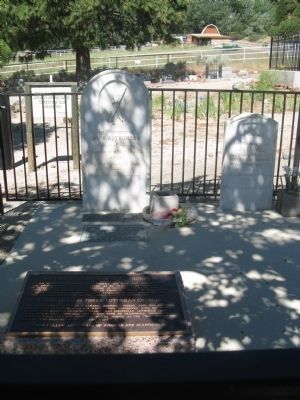
We Salute John “Snowshoe” Thompson
On his homemade snowshoes John carried the mail and supplies over the snowy Sierras for 20 winters. As he traveled, he saved the lives of seven people who were snowbound in mountain cabins. In . . . — — Map (db m20729) HM
Following this route in 1935 Thor Solberg became the first aviator to fly from the USA to Norway. He was the first to carry airmail from New York City to Bergen and Oslo. Based on this flight he was able to give President Roosevelt advice during . . . — — Map (db m250753) HM
With the close of World War II, the United States Navy scrapped or sold almost its entire PT Boat fleet. During the next twenty years, differing fast patrol and torpedo/missile armed boat designs were experimented with. However, no new class of . . . — — Map (db m75883) HM WM
This popular field, within Shore Road Park near 95th Street in southwest Brooklyn, is named in memory of Rudy Piccirillo (1932-1980), founder of the Knute Rockne Football Association and legendary coach to generations of local kids from the . . . — — Map (db m265157) HM
1. Fifty-two "Sloopers," the first group of Norwegian immigrants to North America, departed from Stavanger on July 4, 1825. Fifty-three arrived in New York City on October 9, a baby having been born en route. 2. Their 54 feet long slop, the . . . — — Map (db m92529) HM
Norway Colony Site of first Norwegian settlement in America, 1825. The "Sloopers" were the first immigrant group to travel on the completed Erie Canal. — — Map (db m90135) HM
On this site, Cleng Peerson agent for the first Norwegians in America who settled in Kendall in 1825, built log home, cellar wall remains — — Map (db m78636) HM
S/N The Sloopers First Norwegian Settlement in America in modern times Made by Cleng Peerson and 50 immigrants from the sloop "Restoration", 1825 — — Map (db m78635) HM
A Tribute to Pioneer Living
This small cabin was constructed in 1878
by Norwegian immigrant Carl Bjerke
Jensen and his nephew John Bjerke.
Carl moved to Dakota Territory from
Minnesota with his father, Jens, and
brothers, Hans and . . . — — Map (db m176586) HM
Waldheim Church
During the mid-1880s, the Sheyenne
River Valley was beginning to fill with
settlers, many of whom were
Scandinavian Lutherans eager to
follow faith and tradition in providing
religious instruction to their . . . — — Map (db m177201) HM
Drugstores offered their communities much more than prescriptions and other medical
products. The display features original furnishings from Norwegian immigrant Lars P. Bjerklie's drugstore from Gilby, North Dakota that he operated from 1889 to . . . — — Map (db m278933) HM
Martin Habberstad came to Houston County, Minnesota from Eidsvoll, Norway in 1869 and his wife Mary (Tosterud) Habberstad followed in 1871. Martin entered Cass County, North Dakota searching for farmland in early 1875. He chose a spot
near Kindred . . . — — Map (db m278776) HM
Martin Hendrickson Hagen emigrated from Norway with his parents and they first settled in Springfield, Minnesota. Martin
moved to a homestead southwest of Horace with his wife Helene Larsen in 1887. The Hagens built a home there in 1897 where they . . . — — Map (db m278822) HM
In 1870, permanent settlers first established homes near the Wild Rice River in what later became the Eagle Township. More homesteads were filed along the tracks of the Fargo & Southern Railroad, which later became the Chicago, Milwaukee, St. Paul . . . — — Map (db m278817) HM
The Trangsruds were an early pioneering family in Cass County. Hans and Berte
Trangsrud immigrated from Oslo, Norway to America with their children: Amund,
Bernard, Axel, and Bertia in 1870. The family first settled in Mitchell County, Iowa and . . . — — Map (db m278880) HM
Built in 1891 by Oakes Methodists, this building was a block south of Main on Highway 1. When a larger church was needed in 1908, the Methodists built the present structure at 6th and Juniper and sold the original church to the Norwegian & . . . — — Map (db m112569) HM
Born in Norway 1851
Homesteaded and buried one mile west
Froze to death February 6, 1887 in Logan County
He was the first white man married.
Father of first white child born
And the first white man buried. — — Map (db m168907) HM
Pyramid Hill
Pyramid Hill has long been a topic of local debate sometimes heated. The hill's obvious geometric shape begs the question of just how it was formed.
Geologists believe that Pyramid Hill is a natural feature—the result of . . . — — Map (db m177165) HM
Known as the Norwegian Count, Nils Louis Christian Kachelmacher was born in Oslo, Norway of wealthy parentage. He immigrated to the United States at age 21 and was responsible for industrial growth in the Hocking Valley and expansion of the town of . . . — — Map (db m271287) HM
Known as the Norwegian Count, Nils Louis Christian
Kachelmacher was born in Oslo, Norway of wealthy
parentage. He immigrated to the United States at age
21 and was responsible for industrial growth in the
Hocking Valley and expansion of the town . . . — — Map (db m119652) HM
History
Honoring George Westinghouse -- An Industrial Hero
Once called "The Greatest Living Engineer," George Westinghouse was a prolific inventor, a farsighted entrepreneur, and and enlightened employer.
Westinghouse was born to . . . — — Map (db m156203) HM
The 11,144 acres of land within the tract acquired by the noted Norwegian violinist in 1852 were southeast of here. Here were village sites, New Norway, Oleona, New Bergen, Walhalla, and Ole Bull's Castle. — — Map (db m125157) HM
The famous Norwegian violinist located a colony of fellow Norwegians near this site in September of 1852. From this vantage point, Ole Bull started to build his castle. This large wooden cabin was never completed. All that remains is the foundation . . . — — Map (db m125095) HM
Home of roving Indians until 1862. The exploring party of Nicollet, scientist, and Fremont,
‘Pathfinder of the West,’ visited Oakwood Lakes July 1838, leaving the first reliable record.
The region East of the Big Sioux was ceded by the Santee . . . — — Map (db m181268) HM
Marthin Christianson was a logger before moving west from Wisconsin to Dakota Territory in 1878. Thus, it was only fitting that this Norwegian immigrant would take advantage of the Timber Culture Act of 1873. Christianson was one of the first . . . — — Map (db m247711) HM
The Dakota Land Company of St. Paul, hoping to make this site the capital of a proposed
Dakota Territory, started a town here, naming it for Samuel Medary, Governor of Minnesota
Territory. Towns were also begun at Flandreau and Sioux Falls, the . . . — — Map (db m179957) HM
You are about to enter
Brookings County
home of roving Indians until 1862. The exploring party of Nicollet, scientist, and Fremont, "Pathfinder of the West," visited Oakwood Lakes, July 1838, leaving the first reliable record.
The . . . — — Map (db m181265) HM
The Lake Campbell Lutheran Church was originally the Medary Norwegian Evangelical Lutheran Congregation, Brookings County, Dakota Territory. The congregation was organized June 13, 1870 at the John Thompson home in Sverdrup Township Minnehaha . . . — — Map (db m179962) HM
Lake Hendricks Norwegian Colony of 1873
The first settlers at Lake Hendricks were 31 Norwegians, arriving July 14, 1873, with 11 covered wagons and 30 cattle. On May 14, 1873 they left Houston County, Minn., and Allamakee and Winneshiek . . . — — Map (db m179811) HM
Lake Hendricks State Park
This lake was named for Thomas A. Hendricks (1819-1885), Commissioner of the General Land Office, 1855-59, at which time the state boundary was surveyed and the lake named. Hendricks was a Member of Congress, 1851-55; . . . — — Map (db m184234) HM
(east side)
History
The united Norwegion Luthern church.
In memory of the pioneer members of the Aurland congregation, organized in 1885. Rev Rogne was the first Pastor. The services wer held in homes & school houses until when in . . . — — Map (db m206714) HM
Andrew E. Lee was born near Bergen, Norway, on March 18, 1847. When Lee was four, he and his family moved to Wisconsin. After receiving a general school education, Lee arrived in Vermillion, Dakota Territory, in 1867.
Lee and Charles E. . . . — — Map (db m221599) HM
Born at Arendal, Norway, January 22, 1904, and came to the United States when three years old, settling in Lincoln County near Canton. Taught history and speech at Webster High School, 1932 to 1935. Completed law course at University of South Dakota . . . — — Map (db m179945) HM
Home of roving Indians until 1862. The exploring party of Nicollet, scientist, and Fremont, ‘Pathfinder of the West,’ visited Oakwood Lakes July 1838, leaving the first reliable record.
The region East of the Big Sioux was ceded by the Santee . . . — — Map (db m179692) HM
"One generation shall praise the works to another and shall declare thy mighty acts." Psalm 145:4
Norwegian pioneer families came to South Dakota prairies near Madison making plans for ways to meet their spiritual needs.
In the sod house . . . — — Map (db m247710) HM
Augustana was founded as Augustana Seminary in Chicago in 1860 by the Scandinavian Evangelical Lutheran Augustana Synod. The school's purpose was "to educate young men for the holy ministry in the Lutheran church … (and) to prepare men for the . . . — — Map (db m183483) HM
Augustana was founded as Augustana Seminary in Chicago in 1860 by the Scandinavian Evangelical Lutheran Augustana Synod. The school's purpose was "to educate young men for the holy ministry in the Lutheran church . . . (and) to prepare men for the . . . — — Map (db m183585) HM
First appeared on maps as Commerce City 1866. Its first postmaster was Benjamin Hill, appointed 14 May 1868. First settler here, L.P. Hyde, 1861. Cuppett, Hewit, & Rea built a blockhouse spring 1868 where Court House now stands. County organized 30 . . . — — Map (db m277989) HM
Crowded, cold, and damp would probably describe Even Lommen's birthplace. His parents, Peder and Marit Lommen, came to Lincoln County with three children in the spring of 1870. Even's birth occurred that first winter while the family shared a . . . — — Map (db m211363) HM
This 2-part structure is what survived from the mini-community of Nansen. The name, probably given by the adjacent creamery operator, A A Henden, came from a revered then-famous Norwegian Fridtjof Nansen. Another store or two may have operated . . . — — Map (db m253796) HM
John Thompson, Pioneer
(1841-1913)
John Thompson arrived in America in 1854. He was a 13-year-old orphan who had lost his parents and sister to cholera during the long journey from Meraker, Norway. He was raised by an aunt in . . . — — Map (db m181288) HM
Incoming Norwegian pioneers homesteaded in this area in the early 1870s, and many of these newcomers built homes on the high ground overlooking Willow Creek. Some lived in dugout homes carved into hillsides, while others used the tough, thick . . . — — Map (db m205269) HM
For hundreds of years, the land on which Brandon is situated was the home and hunting grounds of Native Americans. A prehistoric village site and numerous burial mounds are located nearby. Many early Brandon area settlers were of Norwegian descent; . . . — — Map (db m181916) HM
The house was built around 1869 by Ole and Soren Bergeson, two
brothers who had immigrated to America from Norway with their
parents in 1851. Ole was one of the first settlers to homestead in Split
Rock Township where he and his wife, Bergitta, . . . — — Map (db m183964) HM
From 1906 to 1928 this was the site of Bethania Lutheran Church which is now a part of First Lutheran of Colton
Bethania Charter Members:
Mikkel Aker ·
Peder L. Aker ·
Peter P. Aker ·
Jens M. Berdahl ·
Mrs. Kristi Berge ·
Ole . . . — — Map (db m238357) HM
During the winter of 1880-1881, Iver Oyen made a number of ten-mile round trips between his homestead claim and a stand of timber along the Big Sioux River. After he felled, dressed, and debarked large cottonwood and maple trees, his team of horses . . . — — Map (db m187021) HM
The Nidaros Norwegian Lutheran Congregation, the first church in Minnehaha County, was organized by fifty pioneers on August 12, 1868, at the sod home of John and Kirsti Thompson on the west bank of the Big Sioux River about three miles southeast of . . . — — Map (db m187017) HM
Norway Lutheran Church was established by Norwegian-American pioneers on March 23, 1874 in Minnehaha County, Dakota Territory. They met in sod houses, schools and a lean-to until the building was completed. Land, where the church could be seen and . . . — — Map (db m208420) HM
This bell that called the people to worship is placed here to the memory of the men and women who endured the dangers and hardships of pioneer life, and still found time and money to build churches for themselves and for those who should follow . . . — — Map (db m208422) HM
One of the deepest desires of Norwegian immigrants who settled in this area of the Slip-Up Creek was to have a church where they and their children might hear the saving gospel. On December 17, 1873, O. O. Sando, a circuit-riding preacher who served . . . — — Map (db m208419) HM
Long before bridges spanned the Big Sioux River, travelers and settlers forded the river at this location. Pioneer Ole B. Iverson, a Norwegian immigrant, homesteaded here in 1868 and "Iverson Crossing" became a common point of reference and a local . . . — — Map (db m199014) HM
Fashioned of maple logs harvested from the banks of the Big Sioux River near Renner, this rustic home was built by Lars Kvernmo with the help of neighbors John Nelson (one of the first Norwegian immigrants in Minnehaha county) and Ole Gilseth. It . . . — — Map (db m244823) HM
In this cabin the Norwegian-born Ole E. Rölvaag (1876-1931) wrote the first draft of Giants in the Earth, the story of homesteaders in Dakota Territory in the 1870s and 1880s.
In 1923 Rölvaag moved into the cabin, which he had built . . . — — Map (db m282717) HM
After arriving in Dakota Territory, John Elm, of Swedish stock, met and in 1887 married Dina Mathison, a Norwegian immigrant. The couple lived in East Sioux Falls, a company town. A quarry company owned the entire town site, including the Elm home, . . . — — Map (db m199158) HM
On September 21st 1920, two Norwegian Lutheran congregations — Grace (14th and Duluth-later purchased by the Jewish congregation of Mt. Zion) and St. Olaf (on the present site of 12th and Dakota) merged — becoming First Lutheran Church. The newly . . . — — Map (db m208646) HM
Nils A. Boe was born on September 10, 1913 in Baltic. The son of a Norwegian Lutheran minister, he came to Sioux Falls as a child and graduated from Washington High School. Boe earned his bachelor's and law degrees from the University of Wisconsin, . . . — — Map (db m184706) HM
In 1877, a young man named Nels Pederson Waxdahl, originally from Vaksdal, Norway, came to Moody County and built a small sod house in Grovena Township Section 20 in which he lived in for several years. On July 14, 1885, he married Rosina Miller. . . . — — Map (db m181279) HM
Mr. Nielsen was born in 1843. He came
to the Black Hills to prospect for
gold in 1876. This log cabin was built
by him in Palmer Gulch. In 1925 he
died and was buried in Hill City. The
cabin was purchased at an auction,
dismantled and moved in . . . — — Map (db m300576) HM
On a pleasant winter day, January 6, 1903, Knut Throndson, an 1892 homesteader from Hellingdal, Norway, decided to visit his closest neighbors, Tobias and Bertha Herigstad, who lived less than a quarter mile east of this spot. Knut's wife, Caroline, . . . — — Map (db m185163) HM
When the famous Norwegian-American novelist Rölvaag (1876-1931) came to America, he worked on the 200-acre farm of Severt Eidem (NE quarter, Section 12, and 40 acres, Section 1, Brule Township), two miles north of this corner. Rölvaag's first book . . . — — Map (db m190165) HM
Site of
First Norwegian
Lutheran Church
in
Dakota Territory
1868-1938
Charter Members of St. Paul Lutheran Church
Of Aug. 12, 1863
K. P. Ronne
Thomas Olesen Aune
Helge Mathiasen
Ole Oleson
Anders Anderson
Melkjor . . . — — Map (db m190112) HM
Stately church edifices frequently have humble beginnings and so with St. Paul Lutheran Church, one of South Dakota's finest. The humble log church pictured hereon was erected in 1867 by the members of the Norwegian Evangelical Lutheran Congregation . . . — — Map (db m189892) HM
Following earlier Missionary work, this church began in Dakota Territory among Scandinavian Lutherans as early as 1861, and was organized October 8, 1864 with Reverend Emil Christenson as minister. The church built in 1869 was built of lumber . . . — — Map (db m177659) HM
In 1906, Norwegian-born Andres Ivarson Myhr and wife Minnie Bolton Myhr acquired land from Tabitha DeMoss and built "Maple Row," named for trees planted along the driveway. Part of Myhr Farm, this was the first house in Bellevue to have indoor . . . — — Map (db m147420) HM
Soren Kolstad (1823 - 1918), a skilled artisan and clockmaker, migrated to Texas from his native Norway in 1852. He settled in Palestine, where he opened a jewelry store in 1853. The store has occupied four locations. Mahogany display cases, . . . — — Map (db m182449) HM
Settlement dates from about 1850. First town, 2 miles west, was called San Domingo for its location near junction of San Domingo and dry Medio Creeks. After railroad was built, 1886, citizens moved to Walton (new flag station) to be on line. Name . . . — — Map (db m121886) HM
In 1846, the Rev. J.W. De Vilbiss bought a Methodist Church site (across street) in this block. He set up a bell, to denote worship site, but did not build when lot title proved defective. In 1879, German Methodists erected this Gothic Revival . . . — — Map (db m61253) HM
After the Joseph Olson family immigrated to the United States from Norway in 1858, they lived first in the homes of Norwegian immigrants in the Norse community. In 1866, Olson (1811-1894) built a log cabin for his family on part of his original . . . — — Map (db m233723) HM
Constructed between 1866 and 1868, this house belonged to a number of significant Galveston residents. Captain John Davidson, an immigrant from Norway and early Galveston settler, built it. In 1870, two years after Davidson died in an attempt to . . . — — Map (db m140036) HM
Until the 1870s, the north had of this block was under the waters of Galveston harbor. In 1874, John Wolston, a commission merchant, bought this property from The Galveston City Company and formed a partnership with Clinton Wells and Charles . . . — — Map (db m193756) HM
Influential early promoter of Norwegian emigration to Texas; born Elise Tvede in 1815.
In 1846, after John Reiersen migrated to Texas to found the first Norwegian settlement in the state, she became editor of his periodical "Norway and . . . — — Map (db m175573) HM
In 1908 Anders L. Mordt, a native of Norway, secured form R. M. Thomson and R. T. Anderson the sales rights to 100 sections of Hansford County land he named Oslo. The first settlers were recruited from existing Norwegian colonies in the midwestern . . . — — Map (db m169537) HM
After migrating from Norway in 1845, Ole Reierson bought the land that included this cemetery site (1.1 mi. ESE). He chose the spot for his burial and carved several of the plain brown gravestones before he died in 1852. The . . . — — Map (db m31633) HM
First Norwegian colony in Texas. Founded in 1845 by Johan Reinert Reierson (1810-1864) and Ole Reierson, of Holt, Norway.
In "Christianssandsposten", J.R. Reierson urged Norwegians to find "a rich life" by migrating to Texas. His associate . . . — — Map (db m31634) HM
This cemetery was established in 1913 on land give by the American Rio Grande Land and Irrigation Company to Immanuel Lutheran Church. The cemetery has served Lutherans throughout the Rio Grande Valley. The oldest grave is that of Wilhelm . . . — — Map (db m165860) HM
Birthplace of Babe Didrikson Zaharias (June 26, 1911 - September 27, 1956)One of seven children, Mildred Ella "Babe" Didrikson was the daughter of Norwegian immigrants Hannah Marie (d. 1945) and Ole Didrikson (d. . . . — — Map (db m152242) HM
This congregation was organized in 1884 to serve Waco's Norwegian population. Originally known as the Scandinavian Evangelical Lutheran Ebenezer Congregation, the church conducted worship services in Norwegian until 1916. In 1917, the name First . . . — — Map (db m203387) HM
Ole Knudson was born in 1832 to Knud and Anna Knudson in Nordstokke on Norway's Karmøy Island. In 1850, the family, changing their name to Canuteson, moved to Illinois, where Ole wed Ellen Maline Gunderson, also of Nordstokke. At the urging of . . . — — Map (db m178229) HM
Norwegian immigrant John L. Buaas moved to Austin in 1839 and in 1872 was appointed city alderman by Reconstruction Governor E.J. Davis. In 1875 he built a mercantile store here. The two-story Italianate commercial structure was designed with two . . . — — Map (db m25781) HM
Jonathan Heaton, who became known as “The Father of Alton,” owned the land known as Oak Flats. He hired Lysander Porter to survey the land into nine ten-acre blocks, dividing each into four lots or thirty-six two-acre lots. Jonathan . . . — — Map (db m130620) HM
The Niels P. Hjort house is architecturally significant as an example of a
modified temple-form, gable-façade cross-wing type, which was one of the basic residential building types implemented by early Utah settlers. The vernacular classical . . . — — Map (db m255716) HM
Instituted on 19 September 1945, the Deltakermedaljen (Defense Participation Medal 1940-1945) was awarded to members of the Norwegian military and merchant marine as well as to eligible allies and civilians who participated in combat or . . . — — Map (db m240437) WM
In November 1916, a group of approximately 100 Danish and Norwegian Americans established the Windsor Community Farm at Elko. The cooperative farm venture led by Frank and Anna Hurop was unprofitable, but members of the settlement stayed and built . . . — — Map (db m24859) HM
In 1898 Swedish merchant tailors Frank and Arthur Enquist opened their first tailor shop down the street in the Swanson Block at 5140 Ballard Avenue. Through their success at that location, they were able to build this classic brick structure in . . . — — Map (db m181474) HM
This fine example of Romanesque architecture was built in 1901 and named in honor of Gustavus B. Sanborn, a pioneer Ballard businessman. Sanborn began his career as a carpenter in 1891. He owned a series of hardware stores on Ballard Avenue in the . . . — — Map (db m181481) HM
For over two decades the Ballard branch of the Scandinavian-American Bank operated out of this Second Empire Baroque structure, which was built in 1902. Originally incorporated in 1892, the bank's main branch was located in Seattle and boasted of a . . . — — Map (db m181468) HM
The artists who created the Mural at Bergen Place have said in a picture what a thousand words cannot adequately express: that our community has links to other cities and other nations that span cultural, political and economic differences, and that . . . — — Map (db m310887) HM
Following the fire of 1914, one of the first buildings rebuilt in cement was
Young's Block, opening in 1915. Here the Olympic Restaurant reopened for
business, and Ronald Young opened a garage and auto livery service which
replaced the hotel's . . . — — Map (db m227841) HM
On July 11, 1859, Mr. Halvor Olson offered this 1/2 acre of his land to be used as a cemetery for the members of the Evangelical Lutheran Church (Hauge Synod) here in the Roche a Cree (Arkdale) settlement. People of the community outside the . . . — — Map (db m7368) HM
On this site once stood a Lutheran Church of the Norwegian Synod, from the years 1887 to 1921. This church developed because of a disagreement on some doctrinal points with the United Lutheran Church which stood one half mile south of here.
. . . — — Map (db m4657) HM
In 1850, a group of Norwegian settlers from Koshkonong, the foremost Norwegian settlement colony in the United States at the time, left their southern Wisconsin home and migrated north, settling here in "Roch-a-Cree" or Roche-a-Cri. Imbued with . . . — — Map (db m36123) HM
In 1853, Norwegian immigrants to this area, organized the Norwegian Evangelical Church of Roche-a-Cri, in 1860. A log church was constructed one mile south of this location. It was destroyed by fire in 1866. A frame church was then erected on this . . . — — Map (db m4658) HM
Canute Anderson was born Canute Ingverson Eggum in Laerdal, Norway. He arrived in the Grantsburg area in 1854, establishing a stopping place and trading post where the buildings southeast of this marker stand. Opening the first post office in his . . . — — Map (db m68715) HM
This log house, constructed of hand-hewn White Pine logs, was built by Norwegian immigrant Ole Pederson Bjerke about 1881. Ole and his wife Mari had three sons: Gus, John, and Charles.
Around 1880, Ole had applied for a Homestead in the . . . — — Map (db m43658) HM
Built in 1871 by Alexander Wiley Sr. and Nels Elikson, the rooming house over the years was home for hundreds of immigrants, lumber jacks, mill workers, farm hands and log drivers (known as river pigs). In 1887 Wiley Sr. became the sole owner and . . . — — Map (db m42697) HM
Product of a small American community, James O. Davidson's life illustrates the romance of citizenship in a democracy. Born 1854 in Norway, where he received little formal education, he emigrated in 1872 and was a farmer and tailor before coming in . . . — — Map (db m31671) HM